Courtesy Watermelon Pictures.
(Features)
The Risky Audacity of Watermelon Pictures
Issue 011
OCTOBER 21, 2026
In a rapidly shrinking industry where the distribution of films is being controlled by capitalist conglomerates, there has been a noticeable disinterest in the acquisition of films that are political and anti-authoritarian in content. Interestingly, the demand for documentary storytelling is growing in parallel, as evidenced by the immensely popular music documentaries (including those about Taylor Swift’s Eras tour, Billy Idol, and Selena) and true crime recreations (Spy High [2025], American Murder [2020], and Amy Bradley Is Missing [2025], to name a few), but these films provide entertainment that’s divorced from the political reality of our times.
Hamza and Badie Ali founded Watermelon Pictures in 2023 to champion narrative and documentary films of historically disenfranchised and colonized people all over the world, with a special focus on Palestinians. To date, Watermelon Pictures is the only Arab Muslim–led distribution company in the US.
The Ali brothers grew up as second-generation Palestinian Americans in Chicago. Their father and uncle, Malik and Waleed Ali, were born in Chicago and moved to Palestine as young children. They stayed there until the 1967 Naksa, when the capture of West Bank and Gaza territories by Israel forced the displacement of thousands of Palestinians.
The brothers moved back to the US, eventually developing an intense love for films. Waleed, who passed away in 2003, studied film and even tried making an action film inspired by his love for James Bond with a helicopter he managed to make his university pay for.
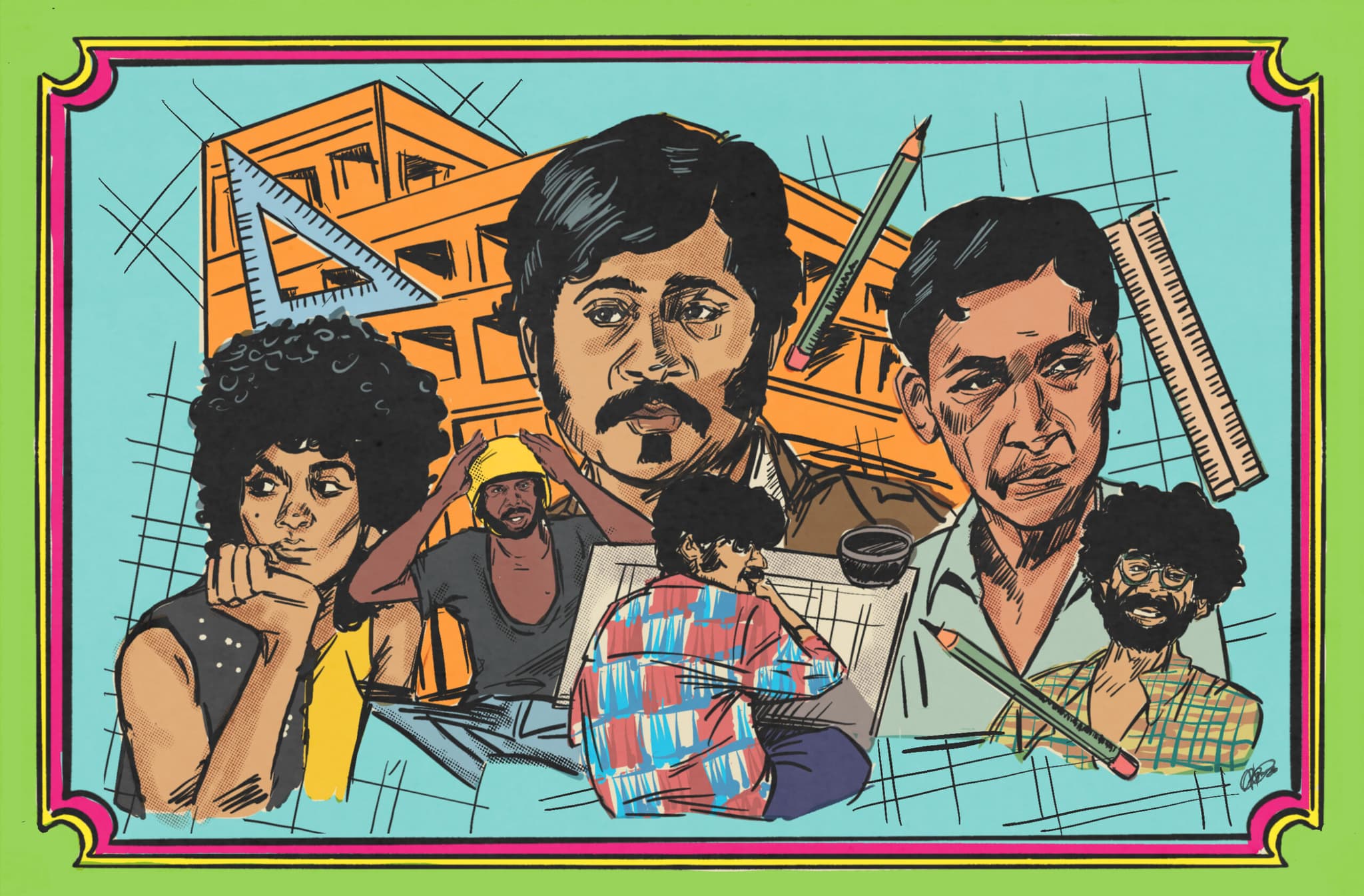
In 1976, Malik and Waleed started MPI Media Group and began distribution by renting films from studios and then renting them out to institutions and homes. In this sublet-like arrangement, the brothers carried the DigiBeta tapes and projector on their bicycles and dropped them off to customers.
“My brother always had an affinity for film. I was the more business-oriented brother, and we really made a great team,” says Malik, 73. “We invested in a film projector and operated out of my parents’ house.” Sometimes they’d even rope in their father to answer calls from customers in their absence.
MPI eventually grew to include a home video service, a horror production house, and a stock footage library.
Courtesy Watermelon Pictures.
Malik’s sons, Hamza and Badie, decided to expand the company even further and launched Watermelon Pictures, the company’s name and logo inspired by the symbol of Palestinian resistance. In less than three years of existence, the distribution company has been instrumental in seven Academy Award campaigns.
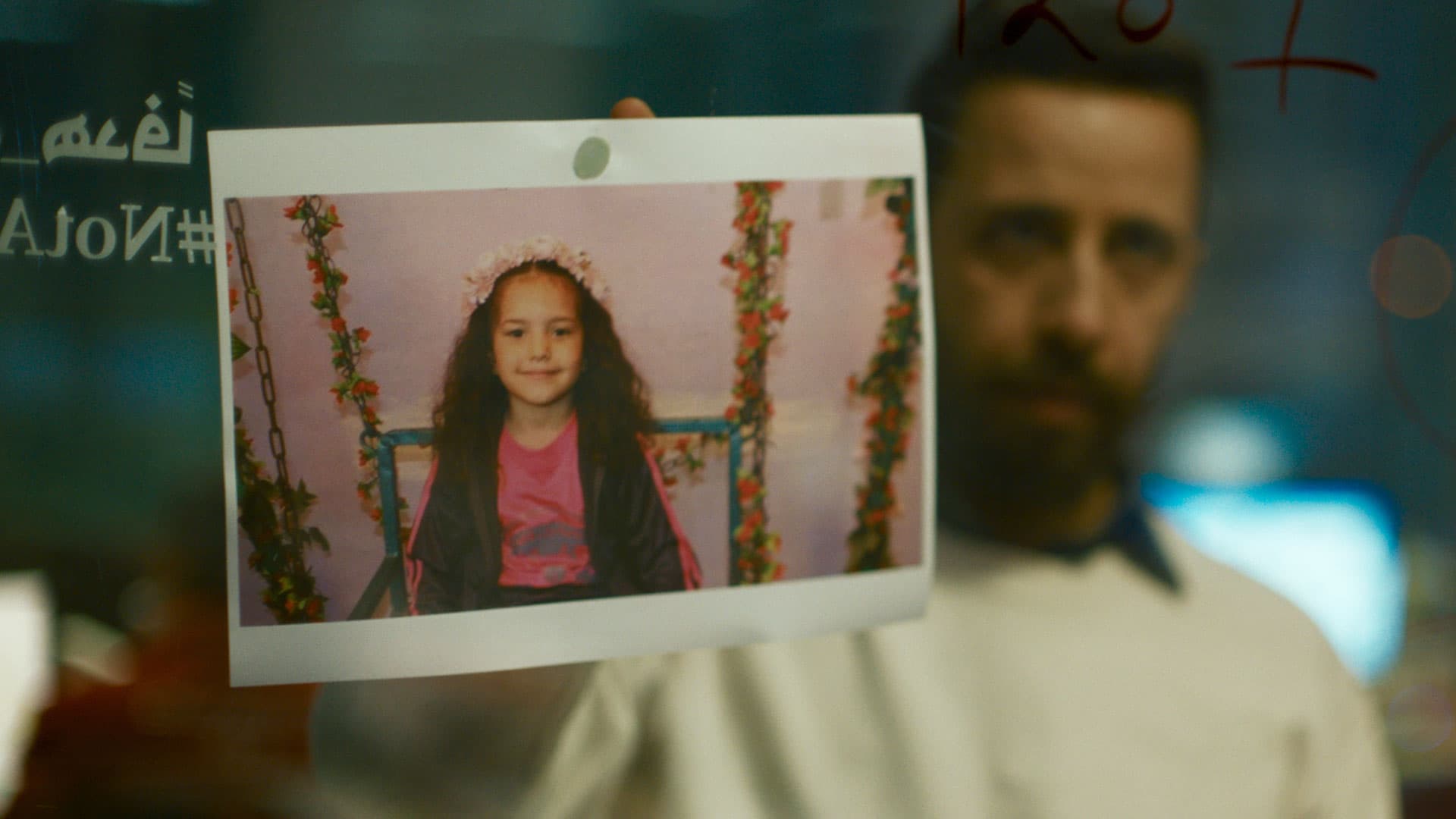
One of those films is Kaouther Ben Hania’s The Voice of Hind Rajab (2025), on which Hamza served as an executive producer. The film uses actual recordings of emergency calls made by Hind Rajab, a five-year-old Palestinian girl who was killed by the Israel Defense Forces in Gaza in January 2024. Ben Hania blends raw footage with scripted performances and lays out the horrific tragedy of young lives taken by Israel’s army. The film was lauded by critics and, with the help of Watermelon Pictures, earned an Oscar nomination for best foreign film.
The decision to start Watermelon and support a body of work that humanized Palestinians and their struggles preceded October 7, 2023. The brothers were acutely aware of a lack of representation of their community within the film industry, both in terms of religion and culture. With Watermelon, they wanted to start a label within MPI that would “normalize us,” Badie says. While the recent escalation of war and violence against Palestinians by Israel has been a catalyst to bring these stories to audiences, the brothers are invested in looking beyond the immediate news cycle and creating a visual vocabulary of the long tail of this historic struggle.
Courtesy Watermelon Pictures.
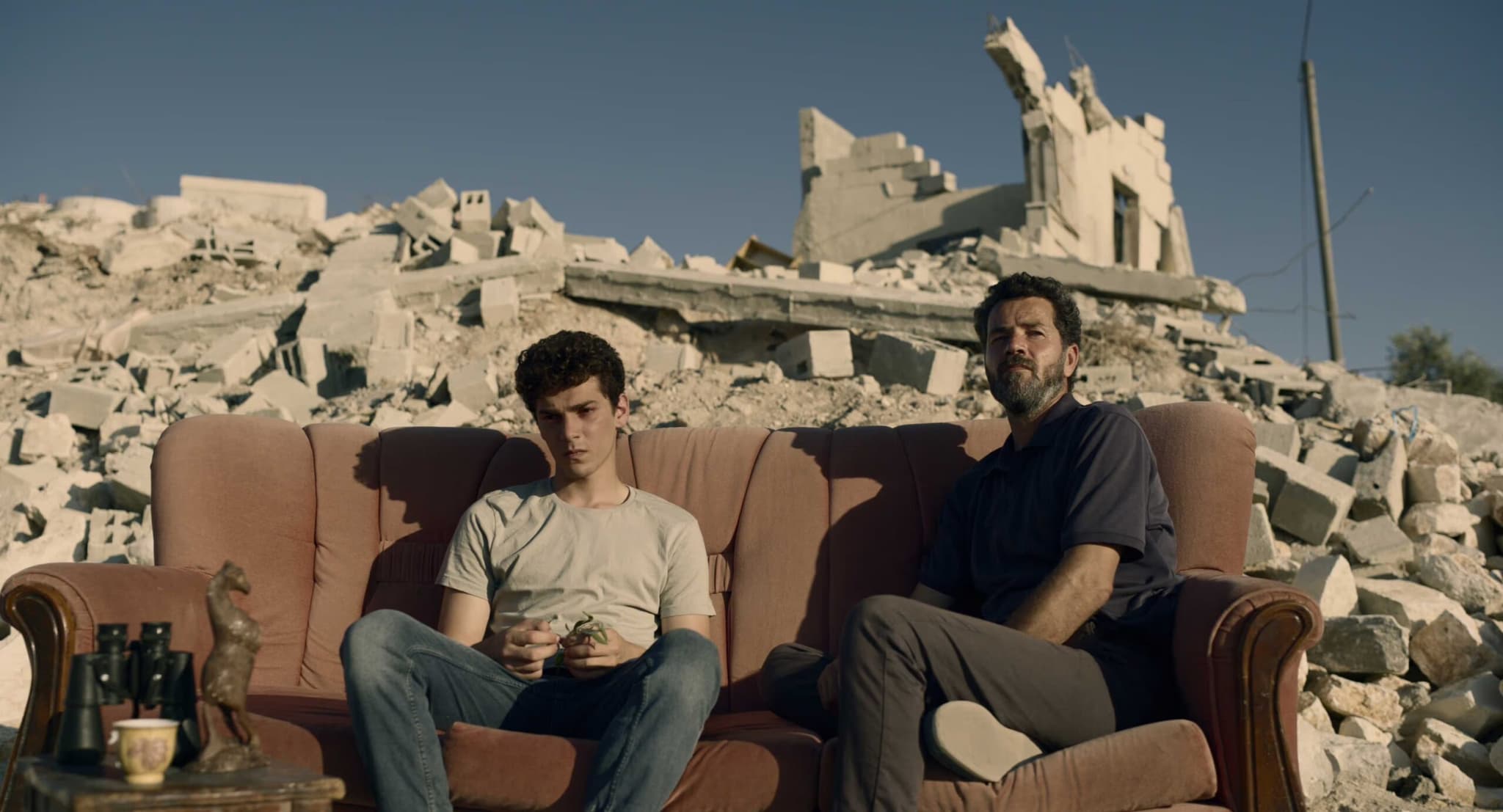
One of the earliest films Watermelon distributed was Israelism (2023) by Erin Axelman and Sam Eilertsen, which premiered at the Big Sky Festival. The documentary follows two Jewish American protagonists who, fueled by Israeli propaganda, are brought up feeling an affinity towards Israel. As they become more politically aware, they realize that everything they know about the country comes at the cost of suppressing Palestinian pain. Israelism depicts how the untainted idea of Israel as a nation-state is changing among Jewish Americans as they grow sympathetic towards the Palestinian struggle for freedom.
Only a few weeks before October 7, 2023, the film team for Israelism embarked on a self-organized, grassroots 60-city tour across the US, focusing primarily on college campuses. Within a few months, Axelman said, they realized that no big distribution house would pick up a film that was making a political statement against Israel, especially amid an environment of renewed censorship.
“Israeli consulates tried to cancel several of these screenings, many of which were held on invitation from Jewish groups on campuses across the country,” Axelman says. “We were already doing what we were supposed to be doing, in terms of starting a very public conversation and challenging some of these larger pro-Israel organizations, while also trying to bolster and support left wing Jewish organizations.”
In May 2024, Watermelon Pictures acquired Israelism for a larger release.
“It was a really beautiful symbolic gesture that the second film that they distributed was made by anti-Zionist American Jews. It was also incredibly beautiful to us that they saw the importance of anti-Zionist Jews and saw us being a critical part of the movement for Palestinian freedom,” Axelman says.
Had it not been for organizations centering anti-Zionist and Palestinian narratives, like Watermelon, Axelman said, “so many of us would probably still be Zionist.” Watermelon put Israelism through its distribution channels, including Apple TV and Amazon Prime, where the film remained on the most-watched lists for weeks.
As of this year, Watermelon Pictures and its streaming platform, Watermelon+, have employed a staff of nearly 40 and acquired close to 200 films.
Recent acquisitions like American Doctor (2026) and Landscapes of Memory (2026), both dealing with the Israel-Palestine conflict in different ways, have been lauded across film festivals and watched by thousands.
“Unfortunately, there’s no one else who would have taken these films,” Badie says. Working with Watermelon, therefore, becomes a ready admission of anti-Zionist politics, and that comes with risks. Filmmakers have been doxxed, team members have been attacked online and called antisemitic, and there have been active hate campaigns against Watermelon staff through blacklisting sites like Canary Mission
“The silver lining of all this,” Badie says, “is we know who we are. We know that these are lies about us, and we don’t have to work as hard as the lies. The truth is much easier. This is a movement.”
A movement that requires Watermelon to be nimble.
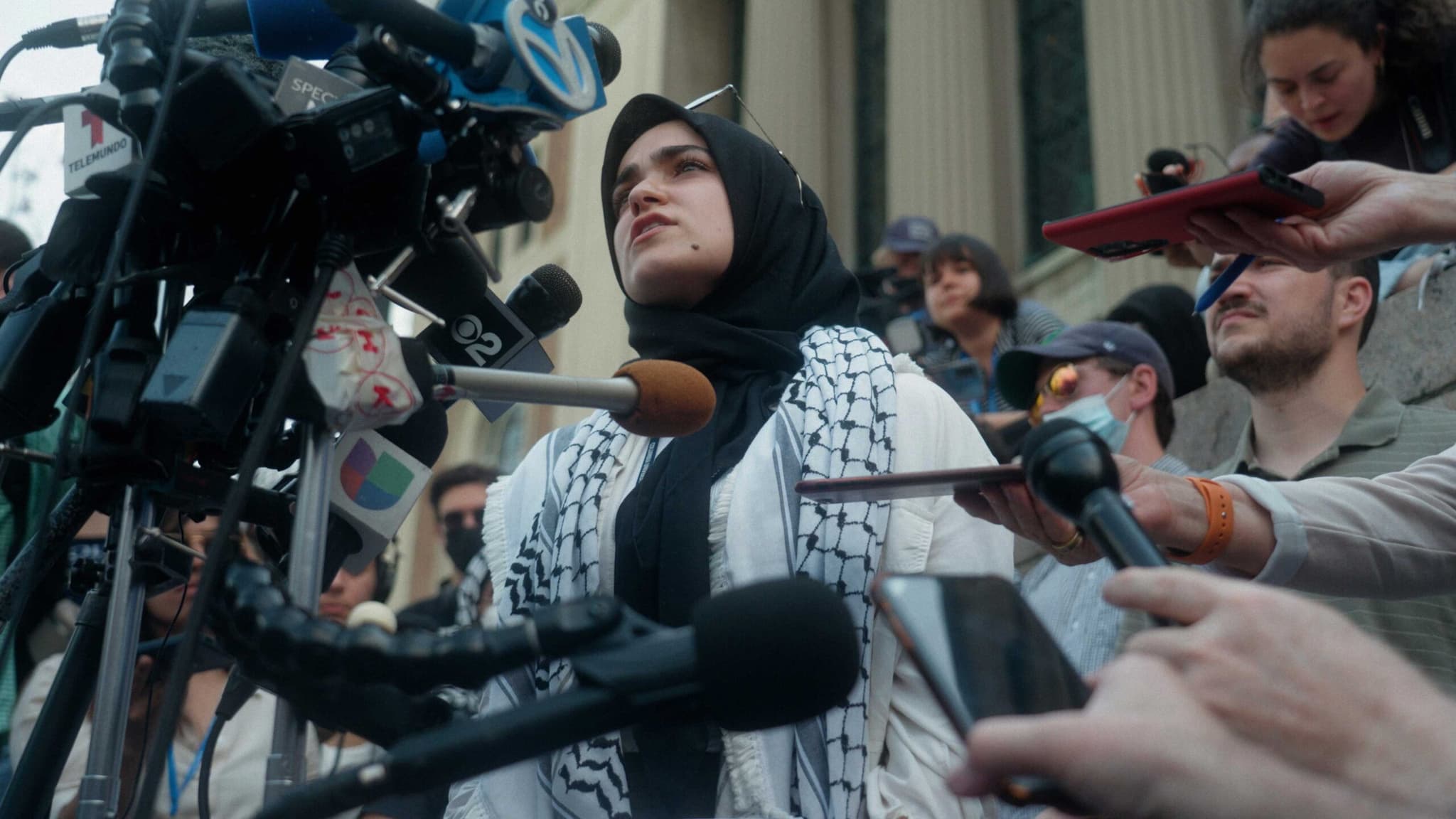
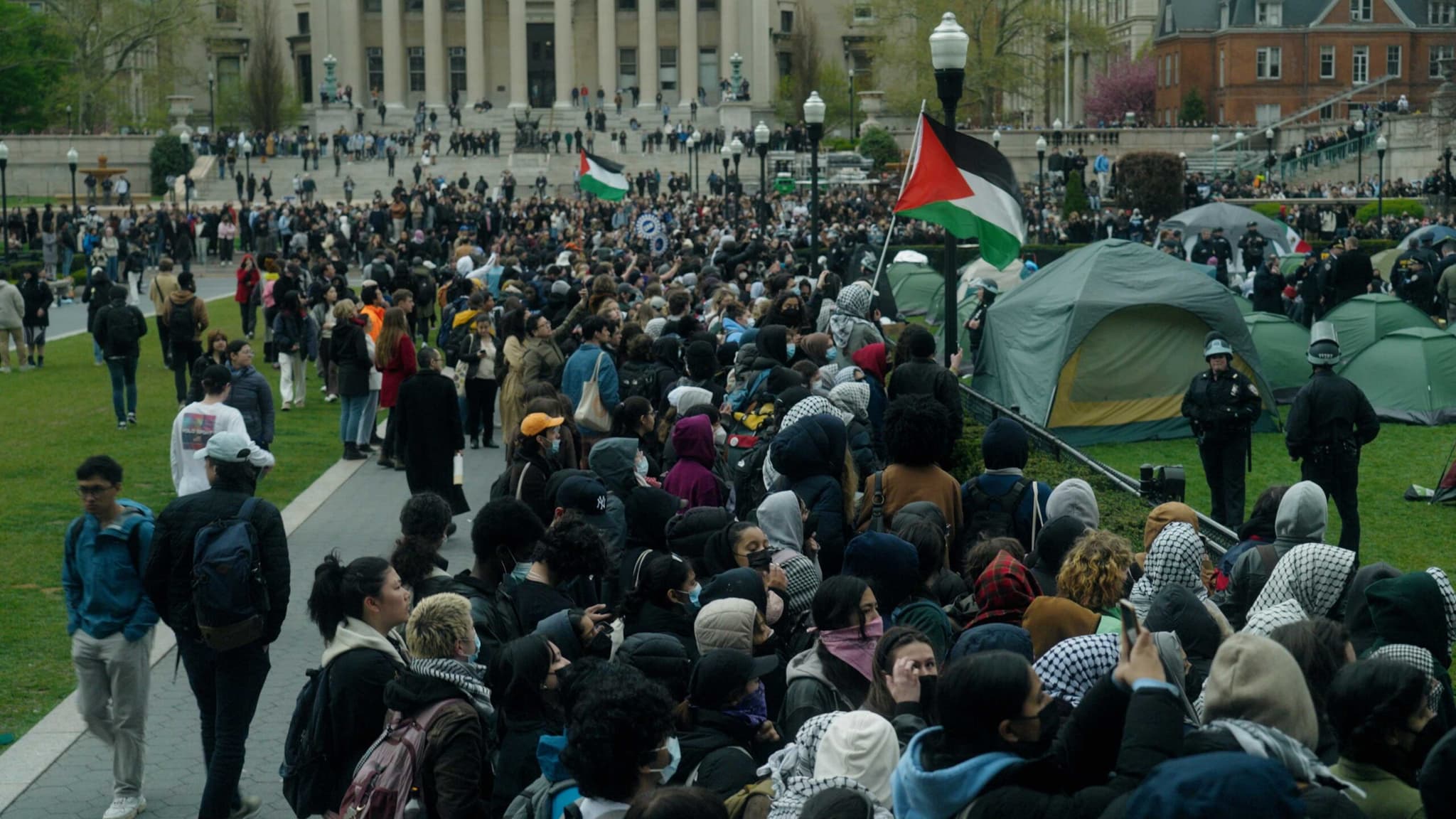
When Mahmoud Khalil, a Columbia University student activist organizing for a free Palestine, was arrested on March 8, 2025, Michael T. Workman and Kei Pritsker were just about done with making The Encampments. Their documentary, scheduled to be released later that year by Watermelon, centers pro-Palestinian students of Columbia University, like Khalil, who demanded that their university cut ties with the Israeli arms industry.
Courtesy Watermelon Pictures.
But with Khalil’s arrest and the Trump administration-led crackdowns on university campuses, Watermelon’s head of marketing, Audrey Delaney, realized the need to fast-track things.
The Watermelon team condensed the six months that would go into planning a campaign for Encampments into a few weeks. “We went from ‘We’ve just watched the movie’ to ‘We’re going to put it in theaters in a couple of weeks.’ It was all hands on deck, but so worth it. Because we needed to respond to the moment. We needed to make sure we were part of something that’s still going on,” Delaney says.
Delaney, a distribution industry veteran, also realized that theaters would not touch The Encampments: “Theaters were afraid. We had trouble running ads. The movie itself was almost like . . . dangerous. People asked for footage so they could identify students and have them arrested.” People who worked on the film even asked to not be mentioned in the credits.
Despite this, the film was released on March 28, 2025, through a limited theater run and streaming. It went on to have the “highest per-screen average opening for a documentary with an anticipated $80k+ and sold-out screenings at an exclusive run at the Angelika Film Center in New York,” Deadline reported.
What sets Watermelon apart from the mainstream distribution industry, Delaney says, is “its very authentic mission and vision [as] unapologetically political, anti-fascist, and pro-Palestine; a space that is occupied by very few media organizations.” Within a landscape of shifting loyalties and overnight buying and disposing of media outlets, Watermelon’s singular focus on championing stories that the mainstream media avoids has “really connected with audiences and also resonated strongly with the creative community,” Delaney adds.
The interest of mainstream distributors in Palestinian content, Axelman says, “always seemed fleeting and conditional on the politics of the time. . . . So when the right became resurgent in the US, all of those major distributors completely backtracked” in spite of a continued demand for such stories.
And it’s not just Palestinian political documentaries that Watermelon Pictures provides a home for.
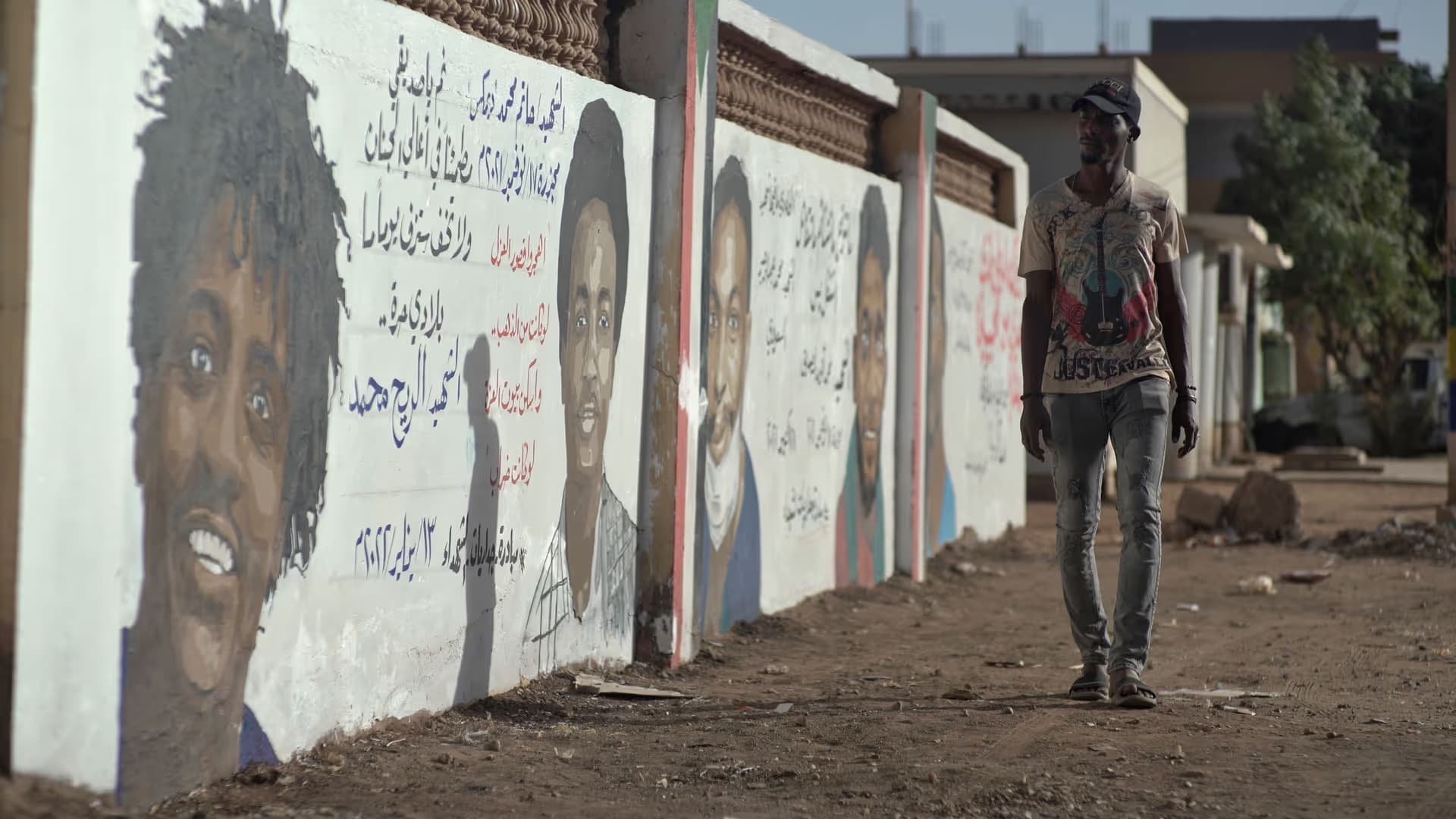
Among other films, Watermelon Pictures distributes Lebanese filmmaker Jude Chehab’s Syria-based documentary Q (2023), Shoot the People (2025) about photographer Missan Harriman, and Hind Meddeb’s 2025 documentary Sudan, Remember Us.
Courtesy Watermelon Pictures.
Each of these films tells a different story about people and places in conflict, told with nuances that are absent in the narratives mainstream media builds around them.
In Q, Chehab explores her mother’s devotion to an all-female Syrian religious order, and through it she ponders how she, her mother, and grandmother have formed their own definitions of love. Shoot the People follows Harriman as he photographs social protests and rallies demanding a ceasefire in Gaza, justice for George Floyd, and better action for climate change. In the film, Harriman reflects upon the protests he has witnessed and what it means to be the one documenting years of civil unrest and hope. Sudan, Remember Us, in a similar vein, is also a portrait of protest as it documents young activists in Sudan who resist authoritarianism through poetry and art.
What aligns them with Watermelon is their intent to show dissenters as human beings who deserve justice—and our attention. “They are really trying to become a place for political documentaries and fill a gap that, very sadly, has been created by the cowardice of the traditional film industry and the unwillingness of the traditional film industry to take risks,” Axelman says.
This tactic has also resulted in festival success and awards.
“The energy and engagement of the audience power the awards campaigns a little bit. The industry can feel it and can notice it,” Delaney says. “You can buy ads for a film, but you can’t fake enthusiasm.”
Badie’s hope is to step into more commercial content. Like the two-season Netflix series Mo (2022 and 2025) and the Disney+ series Ms. Marvel (2022), Watermelon wants to invest in comedies, perhaps another Muslim superhero, or even a romantic comedy set around Eid.
“What we’re doing at Watermelon is taking it many, many steps past representation,” Hassan says. “We’re not trying to fill a quota.”
For Malik, to see this vision emerge from MPI is a dream come true: “It was a mission my brother and I began 50 years ago but were not able to see to fruition. It’s beyond satisfying to see it happening now. I am incredibly proud of my sons, and I wish my brother was here to witness it.”
1. Jill Goldsmith, “‘The Encampments’ documentary on Gaza war protests at Columbia University sets milestone for new indie label – Specialty Box Office,” Deadline, March 30, 2025, https://deadline.com/2025/03/indie-film-box-office-the-encampments-documentary-columbia-university-gaza-war-1236354261/.
Share
Related