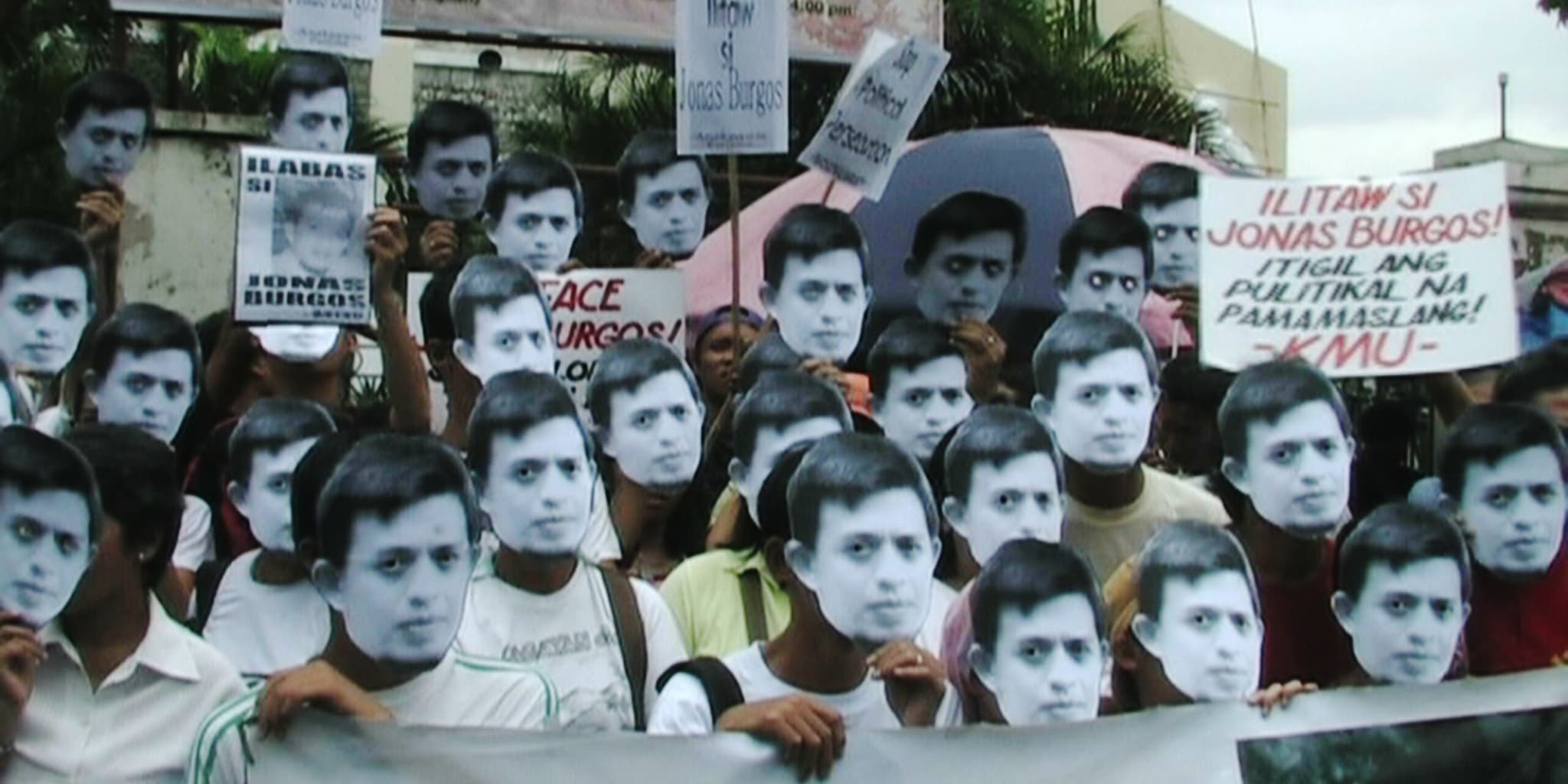
From Alipato at Muog (2024), dir. JL Burgos, courtesy Pulang Langgam Productions.
(Features)
Disappeared by the State
Issue 011
OCTOBER 21, 2026
In 2024, the Philippine government’s Movie and Television Review and Classification Board (MTRCB) censored two Filipino documentaries about desaparecidos, victims of enforced disappearance.
The MTRCB gave an X rating to Alipato at Muog (Flying Embers and a Fortress) (2024) for “undermining the faith and the confidence of the people in their government.” The film chronicles a family’s search for justice after a farmers’ rights advocate is abducted by the military. The X rating made it illegal to screen publicly.
The MTRCB also refused to review Lost Sabungeros (2024), a film about the 2021-22 disappearance of dozens of Filipino sabungeros, people who participate in cockfighting, a massively popular sport amongst primarily working-class men. The lack of rating meant the film could not be screened in commercial settings, including on GMA, the TV station that produced it. Citing a 1985 law signed by dictator Ferdinand Marcos, the MTRCB said it could not review any film concerning “a sub judice case, or a case that is ongoing and therefore prohibited by law from public discussion.”
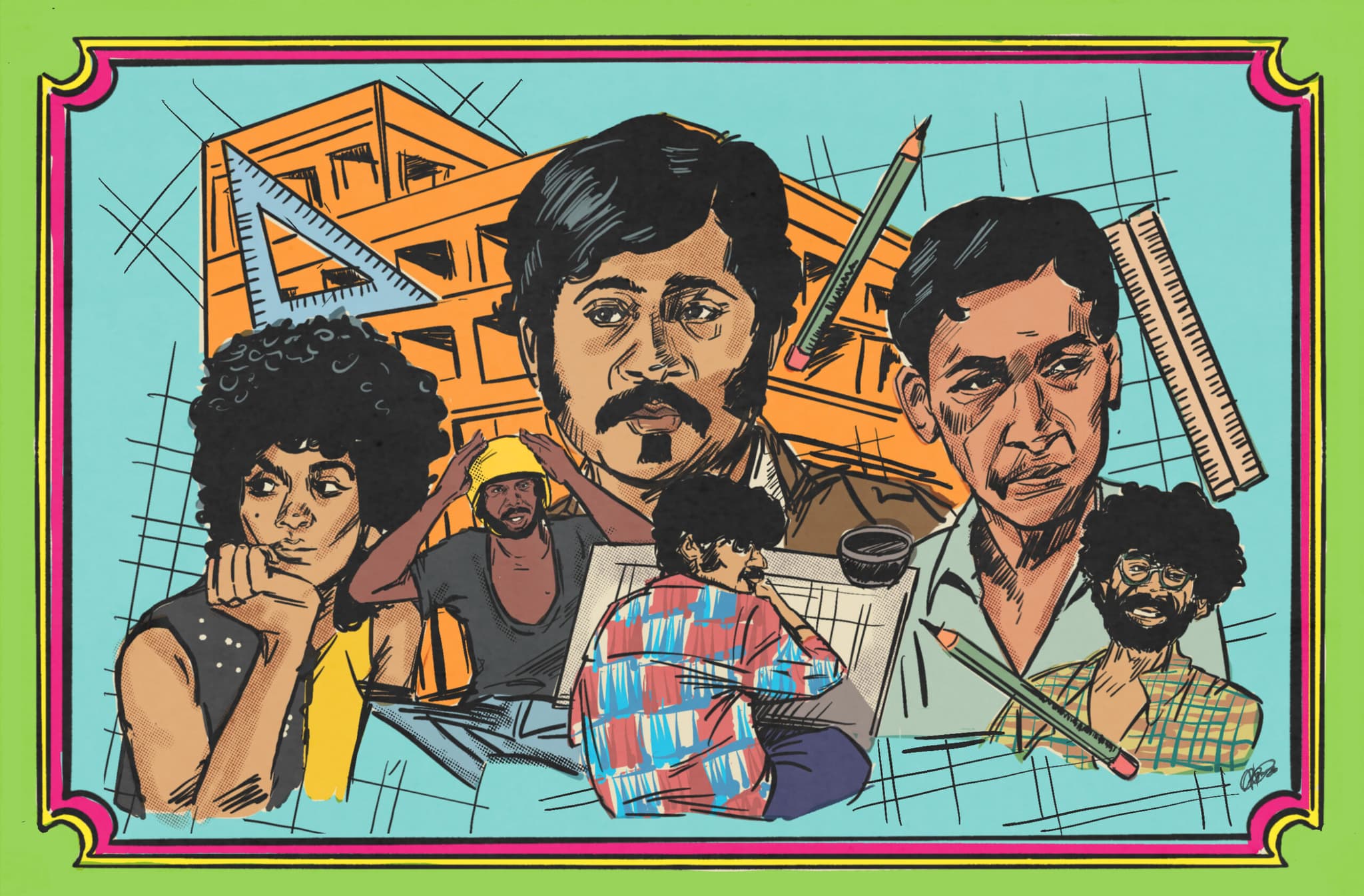
Political leaders have long sought to control Philippine journalism and pop culture because they understand the power of media. In 1901, during the American colonial period, Governor General William Howard Taft made it illegal to distribute any writing that advocated for Philippine independence. In the ’70s and ’80s, Marcos required film scripts to be approved before production. And in 2018, President Rodrigo Duterte attempted to shut down online news outlet Rappler, as it covered the impact of his deadly war on drugs

Artwork by Raquel Hazell.
This latest wave of censorship similarly aims to protect the powerful: in Alipato, General Eduardo Año, the military official accused of overseeing activist Jonas Burgos’s disappearance, and in Sabungeros, Charlie “Atong” Ang, the gaming tycoon accused of orchestrating the disappearances. The government has failed to hold either man accountable. Ang, currently the Philippines’s “most wanted man,” is at large, while Año ascended to top spots in the armed forces, retiring from his role as national security advisor in 2026.
What’s striking, though, is how these acts of suppression have targeted films that center members of Philippine society not often considered sympathetic: sabungeros, thought of as poor men who gamble away money meant for their families, and activists, who are perceived as troublemakers and communist rebels. Tell a Filipino that a sabungero or an activist was disappeared and a typical response might be: “Well, what did you expect?”
Alipato and Sabungeros embed themselves in the worlds of sabungeros and activists and depict their grief, their rage, and their contradictions; we witness their search for answers and their private longings. We even see their willingness to cooperate with a man who admits to having taken part in their loved one’s disappearance. It’s through this intimate storytelling that the films’ indictments of the Philippine government are made even stronger.
—
At the beginning of Sabungeros, a Filipino man with salt-and-pepper hair and arm tattoos feeds the roosters on his farm. “My life just wouldn’t be complete without my gamecocks,” Butch Inonog says in Tagalog. “Their strong bodies, their beautiful colors—it’s like you’re holding a sexy woman.” He then gets emotional talking about his missing son, John Claude, who was a driver for a sabungero. Inonog’s eyes get red. “I can’t focus enough to work,” he says. “I’m living a nightmare.” Already, our conception of a sabungero—as a hypermasculine man—is being challenged.
Midway through the film, Ang, the wealthy businessman accused of orchestrating the disappearances, accuses Inonog of cheating—betting against his own cocks. Director Bryan Brazil doesn’t shy away from this accusation or scrub it from the film. Instead, producers ask Inonog about the accusation on camera. He denies it, adding: “That’s no reason to abduct people. . . . If you think anyone cheated, call the cops.”
This line of questioning escalates when Inonog withdraws his case against Ang’s security team. “This is how it is if the enemy has money: they get their way,” says Jaja Pilarta, John Claude’s partner. Meanwhile, Butch Inonog declines to answer questions about why he withdrew his case and if he was paid off.
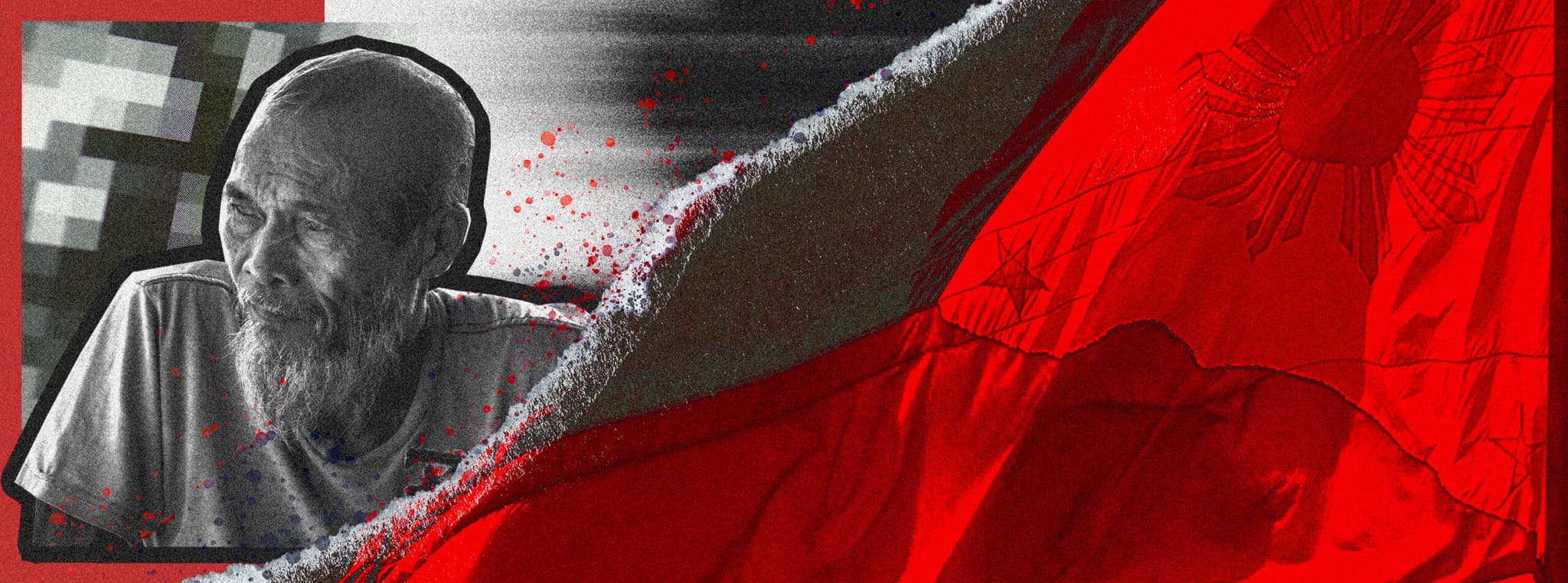
Artwork by Raquel Hazell.
Sabungeros builds sympathy for the victims’ families by showing how deferentially they engage with Ang’s former security chief, Julie “Dondon” Patidongan. Patidongan names his boss as the mastermind behind the killings and confirms this by saying that he was the one who carried out Ang’s orders.
In one of the most compelling scenes of the film, Patidongan meets with the families, telling them he wants to help, but he also asks them to pray for his safety. When one woman holds up a picture of her relative and asks if Patidongan remembers him, Patidongan says he can’t remember because there were so many men. “I wanted to ask because didn’t you say you were the one who did the abducting?” she asks politely in Tagalog. “It feels like you’re fighting with me,” he says. She apologizes and eventually thanks him, as the rest of the families do. They applaud him as he exits. It’s a deeply uncomfortable testament to the families’ desperation and the way they see their place in the hierarchy of Philippine society. They don’t scream or accuse the man who’s admitted to carrying out the disappearances. They show him respect.
—
Alipato at Muog follows a family’s campaign to find Jonas Burgos and hold his captors accountable. Jonas, a 37-year-old farmers’ rights advocate, was abducted in broad daylight at a Metro Manila mall in 2007.
Jonas’s parents, Edita and Joe, ran an independent newspaper during martial law¹, a time when journalists were routinely arrested and disappeared. JL Burgos, Jonas’s brother and the director of the film, employs journalistic practices in his storytelling process but brings us even closer to the story because of his intimate connection to it.
In one scene, Edita and JL visit a police precinct to look at photos of a dead man’s body. The pain that washes over Edita as she realizes it’s not her son—that it’s someone else’s son, disfigured and bloodied—is just one of the quiet, private moments JL is able to capture on film.
In another, Edita testifies against the promotion of Año, the general they believe should be held accountable for Jonas’s capture. After she learns Año will get the promotion, she’s told, “But we thank you, Mrs. Burgos.” This scene is not shot with the gaze of an observing documentarian but the eye of a son watching his mother. She lets him linger in this moment because he’s also experiencing its excruciating truth.

From Alipato at Muog (2024), dir. JL Burgos, courtesy Pulang Langgam Productions.
JL’s intimacy with the subject matter is evident in the level of access he gets to others who were close to Jonas. When JL interviews Jonas’s best friend, he’s angry with Jonas. “He had other choices,” the friend says, implying he could have chosen not to become an activist.
Toward the end of the film, JL narrates in voice-over. That we can only hear him, not see him, evokes a Catholic confessional. “I want to clean a gravesite,” he says in Tagalog. “I want to offer flowers to a tomb.”
The film explores Jonas’s work by interviewing those he helped—farmers, many of whom are illiterate. Jonas had been assisting them with reading and writing legal documents so they could understand their rights to land under land reform. Hearing from these farmers and seeing the relationships Jonas built make Jonas’s work tangible, in turn making him, and the activists, harder to dismiss as “communist rebels,” as the government has labeled them.
In the years following Jonas’s disappearance, Edita becomes an advocate for desaparecidos, joining a movement led by Filipinos who have lost kin to state violence. Their collective rallying cry: “Surface all victims of enforced disappearance.”
In one scene, Edita attends an event where two environmental activists who had been missing for two weeks, 21-year-old Jonila Castro and 22-year-old Jhed Tamano, speak about their capture by the military. They’re both visibly shaken. The government described their capture as a hoax perpetrated by “leftist organizations.”
But when Edita addresses the crowd, she ends her remarks by asking the two young women activists for hugs. It’s a surprising, tender moment that transports the formal event to the realm of the familial, the parent-child. As she hugs the women, we feel as if Edita is hugging Jonas.
After the MTRCB gave Alipato an X rating, JL rallied supporters to protest the decision. The board eventually lowered the rating to R16, allowing the film to be screened to viewers over 16. Sabungeros continues to be in limbo, limited to showings at community and school screenings.
The directors of Sabungeros and Alipato are clear-eyed about the impacts of censorship. “It’s going to keep killing the film industry,” JL said, in Tagalog, to a room full of students after a screening at Pamantasan ng Lungsod ng Maynila, a public university. It costs 20,000 Philippine pesos (about $324) to apply to the MTRCB. “So when we pay 20,000 and get an X rating, that money’s gone,” he said in a mix of Tagalog and English. “And when you appeal, you have to pay another 20,000.” Not everyone has the money or the legal support to fight the MTRCB—or the will to go public about an unfair rating, as JL did.
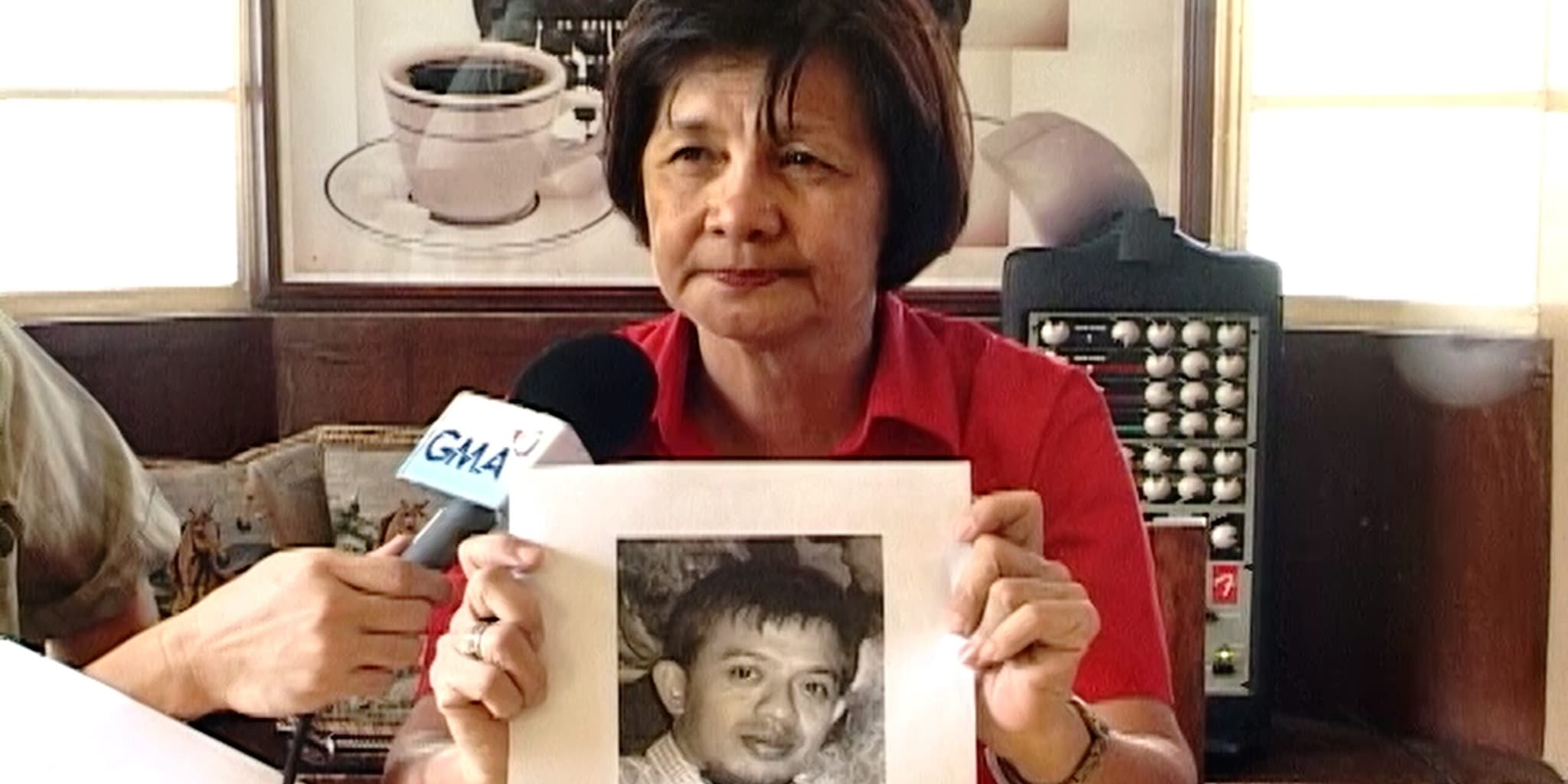
From Alipato at Muog (2024), dir. JL Burgos, courtesy Pulang Langgam Productions.
Censorship has also impacted independent film festivals in the Philippines, once thought of as safe havens for artists since the ratings of the MTRCB don’t apply there.
In 2024, Cinemalaya, one of the country’s biggest independent film festivals, abruptly canceled the debut screenings of Sabungeros, citing “security concerns.”
The following year, another indie film fest, PureGold CinePanalo, canceled screenings of the feature documentary Food Delivery: Fresh from the West Philippine Sea (2025), which shows the plight of fishermen in waters being encroached upon by China. In both cases, it’s suspected the screenings were canceled because of business and personal relationships—with Ang in Sabungeros and with China in Food Delivery.
After the Alipato screening at Pamantansan ng Lungsod ng Maynila, students lined up at the mic to ask JL questions. Some cried. One asked if it was emotionally difficult to watch the film at screenings.
He responded by saying that there were certain scenes during which he leaves the room because they still affect him, like ones where his mom is speaking. “But because of screenings like these, our family keeps getting bigger,” he said in Tagalog. He recalled a screening at the University of Santo Tomas that 700 people attended. Afterward, people lined up to hug his mom. “More and more people,” he said, “are calling for Jonas to be returned to us.”
1. Marcos imposed martial law from 1972 to 1981. He was ousted by the People Power Revolution in 1986.
Share
Related