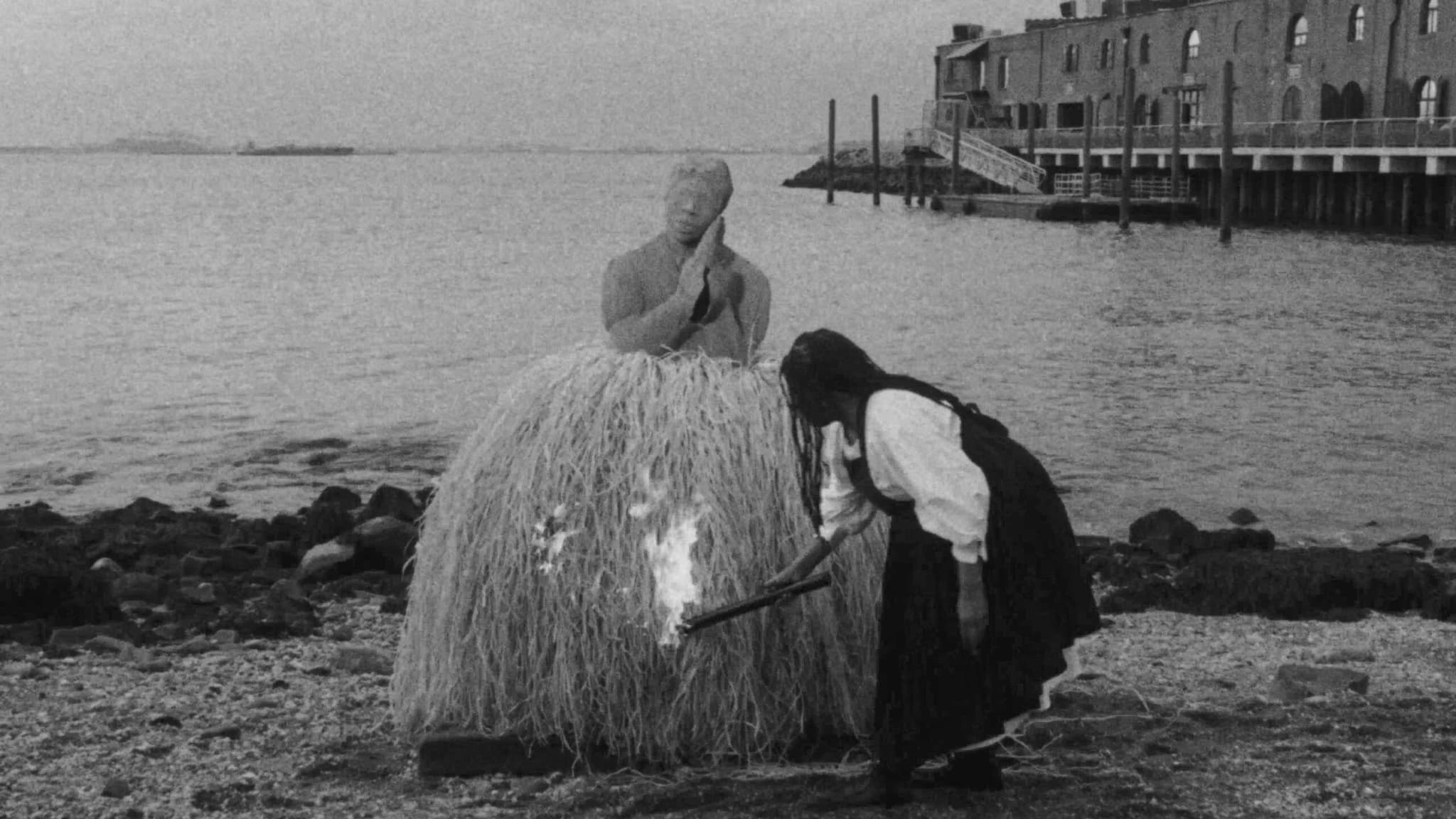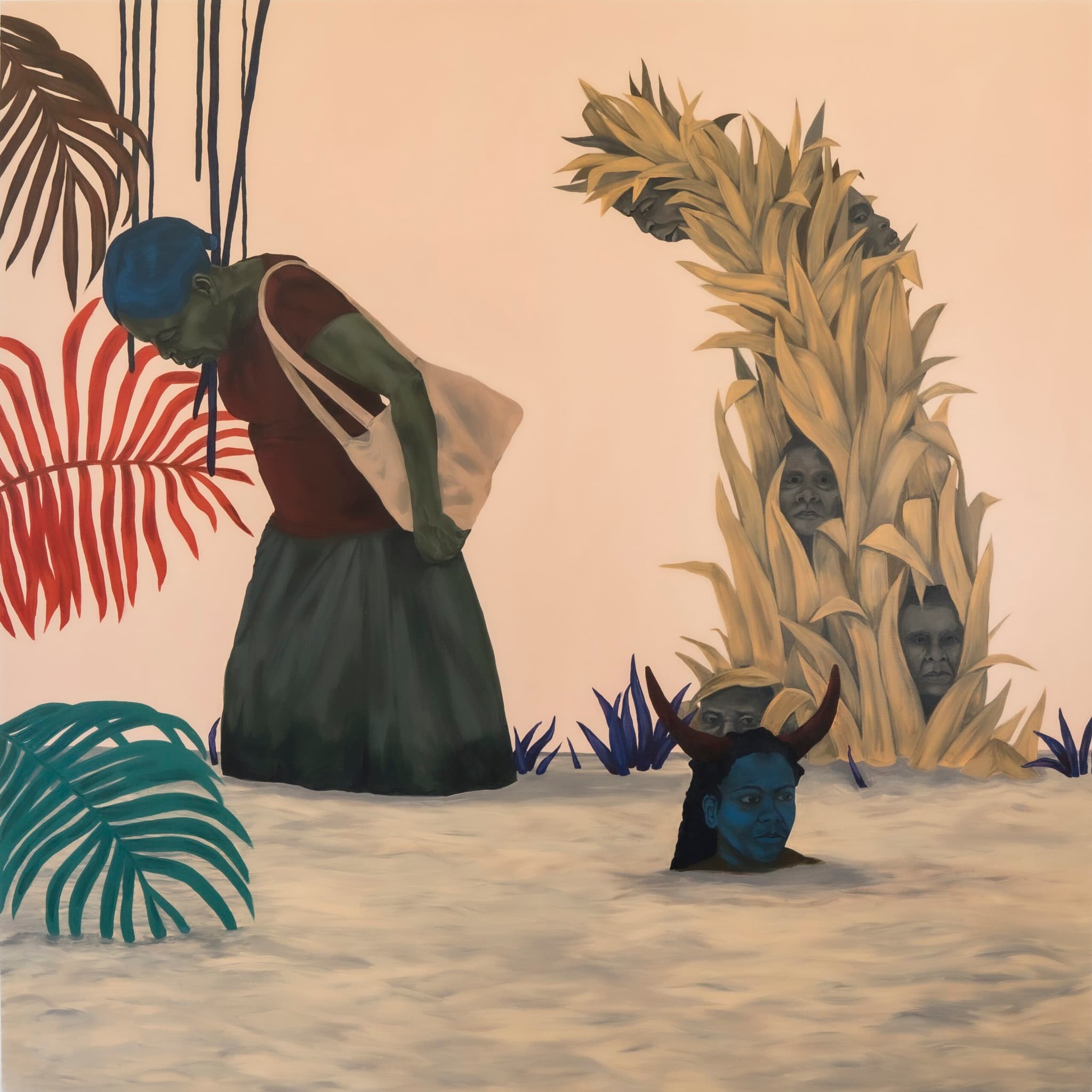
Illustration by Majid Bita
(Essays)
The Tension of Marjane Satrapi’s Legacy
Issue 011
OCTOBER 21, 2026
Solidarity with Iranian civil society has become a stress test for the political left.
In August, an “Open Letter to Iran’s Political Prisoners, Trapped ‘Between Two Blades of a Scissors¹’” was published in The Guardian and signed by international intellectuals, abolitionists, and former political prisoners including Angela Davis, Ricardo Jiménez, and Yassin al-Haj Saleh who sought to offer solidarity and recognition to people currently held in Iran’s prisons. A Massachusetts-based academic, Vijay Prashad, who held a tenure track position at Trinity College in Connecticut for over 20 years and who has never faced imprisonment or physical consequences for dissent, set off a campaign against the signatories of the letter. Taking semantic issue with the two blades of a scissors metaphor, which he argued created a symmetrical equivalence between US/Israeli aggression and Iranian state repression and violence. The metaphor of the scissors came directly from a statement by an Iranian labor activist and former political prisoner, Keyvan Mohtadi, who wrote the day after Israel bombed Evin Prison in June 2025: “We were and remain worried about our loved ones, who are caught between the two blades of the scissors.… We are truly being cut between the two blades of the scissors.”² Mohtadi was worried for his wife, Anisha Asadollahi, who was imprisoned in Evin at the time of the attack. The point was never about the symmetry of the blades, but rather about the positionality of being in danger.³
In his critique, Prashad, an anti-imperialist who writes freely from the seat of empire, insists that “neutrality or a third space does not exist in the midst of a war of aggression.”4 The demand makes it so that Iranian political prisoners must either align with the regime that imprisons, tortures, and executes them or be considered complicit with foreign aggressors. This rhetoric denies Iranian people the political agency to oppose both foreign attacks and the domestic carceral system that defines their daily life. That logic hardened into accusations that the vast majority of Iranian political prisoners are likely Israeli agents or CIA proxies, reinforcing the exact accusation Iranian authorities are using to justify killings, mass arrests, and executions. Simply put, the political left is virulently objecting to a letter in solidarity with political prisoners who have risked life and limb to fight for their freedoms, because they align themselves with the official state narrative of the Islamic Republic of Iran.
The Islamic Republic of Iran is not a champion for justice or savior of the oppressed, no matter what it claims. Those of us who have suffered from the regime’s violence, lost friends and family because of it, or fled it know what the Islamic Republic is. We know this representation of itself is not reality; it is a ruse, an alibi for its own geopolitical ambitions. Still, there is a feeling of profound alienation when whole swaths of the left, including many of my friends and comrades, choose to stand in solidarity with a carceral state over political prisoners.
This is how I find myself most days, in exile, and lonely, on the “left.” Marjane Satrapi was here too for many years, until she died of a broken heart on June 4, 2026, at the age of 56.
Satrapi was widely recognized by literary critics and scholars as one of the most influential graphic novelists in the world and likely the most prolific Iranian artist of her generation. Accolades published in Vogue, The Guardian, Le Monde, The New York Times, NPR, BBC, and The Atlantic praised Satrapi’s aesthetic and narrative innovation, her bold and clear perspective, and her tenacity carving a path for a whole generation of Iranian writers and illustrators. But the friction around Satrapi’s legacy is held in the gap between ideology and lived experience, representation and reality.
Satrapi’s most well-known work, Persepolis (2000–2003), is a visual autobiography with the feeling of a private diary. She lays bare her family’s political perspectives and history in the lead-up to the 1979 Islamic Revolution in Iran and her own experience coming of age in its aftermath. Satrapi presents her family as upper-middle-class Marxist intellectuals who are critical of the Shah and SAVAK, his secret police.5 Her stand-in is Marji, a 10-year-old girl who, at the beginning of the book, innocently idolizes the Shah as the manifestation of love of God and country—as she’s been taught at school, to her parents’ horror. Marji’s beloved Uncle Anoosh (Anushirvan Ebrahimi) is a member of Iran’s communist Tudeh party who must flee to the Soviet Union after the execution of his own uncle, Fereydoon Ebrahimi, a leader of the Azerbaijan nationalist movement that’s crushed by the Shah’s forces. Persepolis traces Marji’s political awakening: playing “revolution” with neighborhood children; pretending to be Che Guevara, Fidel Castro, and Leon Trotsky; fantasizing about overthrowing the Shah. Solidarity with Palestine is also a part of her family’s leftist political inheritance: Her father tells her how the Shah and Anwar Sadat made a fatal mistake in aligning with Israel and betraying the Palestinian cause.
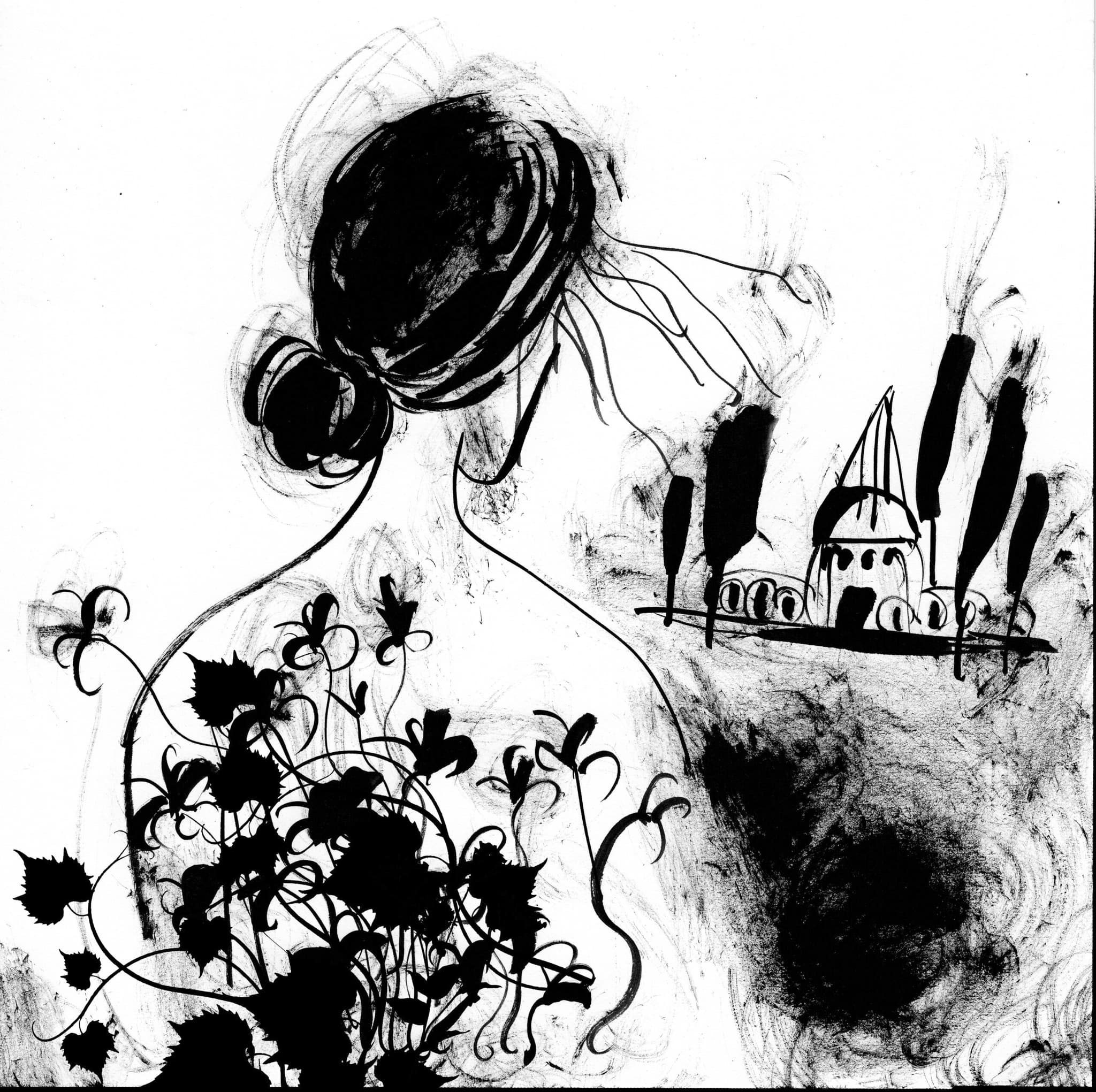
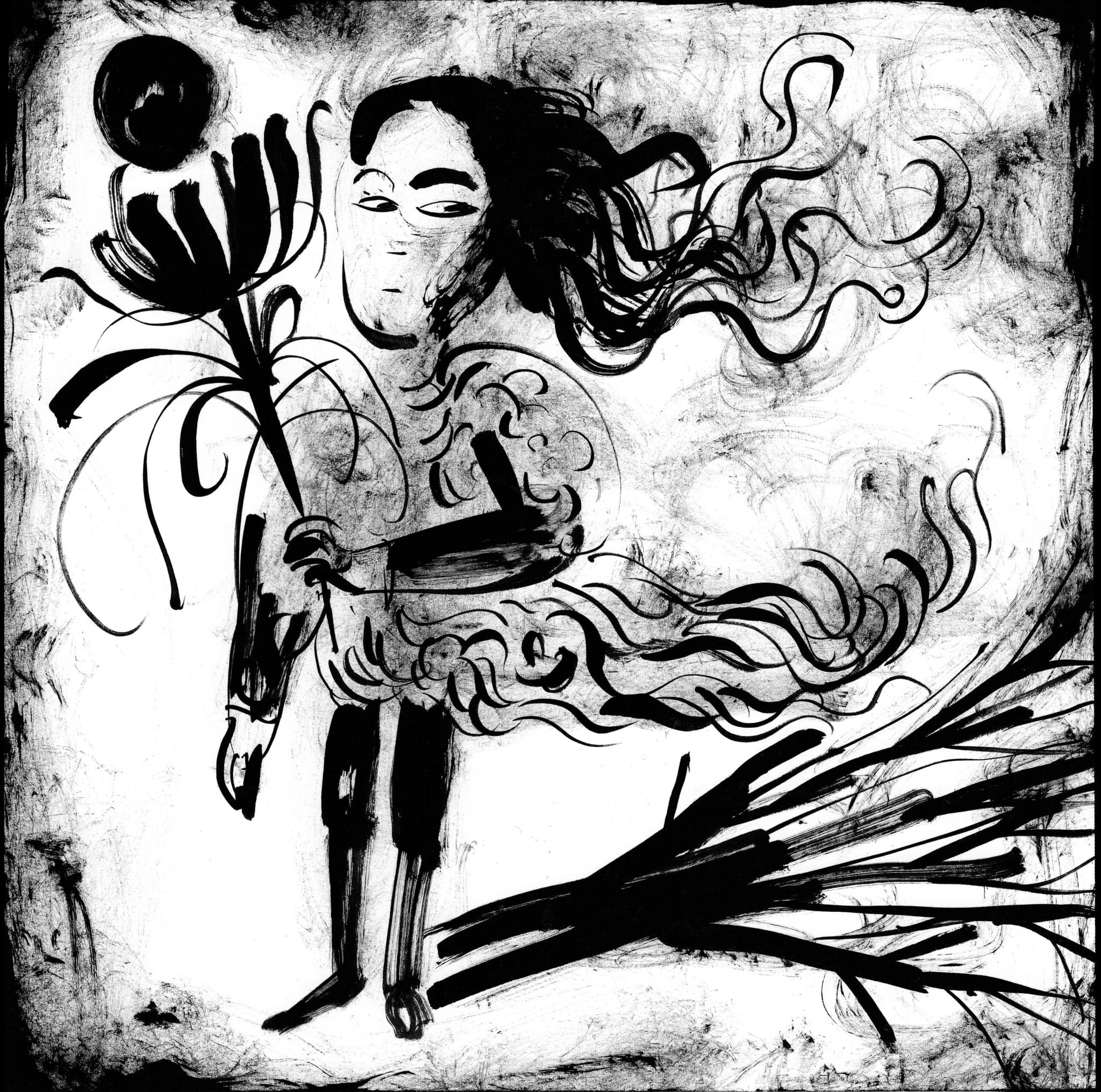
Illustrations by Majid Bita
And then the Revolution finally succeeds. The Shah flees. Khomeini returns. A new constitution is written. But Marji’s family soon feels betrayed when the reality of the newly established Islamic Republic sets in, an intensified crackdown on leftists and intellectuals, a series of discriminatory laws against women, stripping their autonomy. When Uncle Anoosh finally returns from exile after the revolution, he is one of thousands of leftists that the new regime systematically arrests and then executes.6
Satrapi had a distinct vantage point on the 1979 revolution. She was too young to advocate or dissent from it; she just experienced it. Satrapi came of age between the Shah’s reign and the Islamic Republic’s establishment. As an almost-teen, Marji goes in search of culture and all things cool. She walks the streets looking for an Iron Maiden cassette tape, hiding her handmade “Punk is not Ded” shirt and Nike sneakers from the Guardians of the Revolution. In a desperate attempt to protect 14-year-old Marji, her mother sends her to Vienna to live with a distant acquaintance. But Marji has no family there and no money.7 So when her host forces her to leave, she must move from place to place. She deals with overt and subtle racism, shitty boyfriends, and a robbery. It’s in this state of alienation—exiled from her country, missing her family and friends—that she develops a creative practice and becomes an artist.
Sick and depressed, Satrapi eventually returns to Iran in Persepolis 2: The Story of a Return. But after six years of experiencing the suffocating conditions as a woman and artist in Iran, she leaves a second time, this time for France. Chicken with Plums (2004) and Woman, Life, Freedom (2024) both demonstrate her love of Iran, its culture and people, and recount the long, tortured deliberation artists face when choosing between their creative practice and staying in Iran.
In the 1980s and 1990s, many Iranian writers, poets, translators, and intellectuals fled Iran because their creative work made them targets of the regime. Leftists were targeted under the Islamic Republic just as they had been under the Shah. These exiled creatives tried to raise a global alarm about the dangers of religious authoritarianism and the regime’s human rights abuses. Between 1988 and 1998, the Islamic Republic’s operatives assassinated more than 80 artists living in exile across Europe, the Americas, Canada, and Iran itself. Each death was staged to look accidental—a car wreck, a heart attack, a robbery. In the autumn of 1998, five writers and intellectuals were killed within two months inside Iran. These murders came to be called the qatl-haye zanjire’i—the Chain Murders.
Satrapi began drafting Persepolis as the Chain Murders were happening. The graphic novel was a loud, visible, undeniable counterpoint to the regime’s narrative, as she detailed the experiences of people protesting the Islamic Republic’s oppressive gender and labor policies. She knew exactly how far the regime would go to punish anyone—children, the elderly, even the dead8—who pierced its image in public. And she published Persepolis anyway.
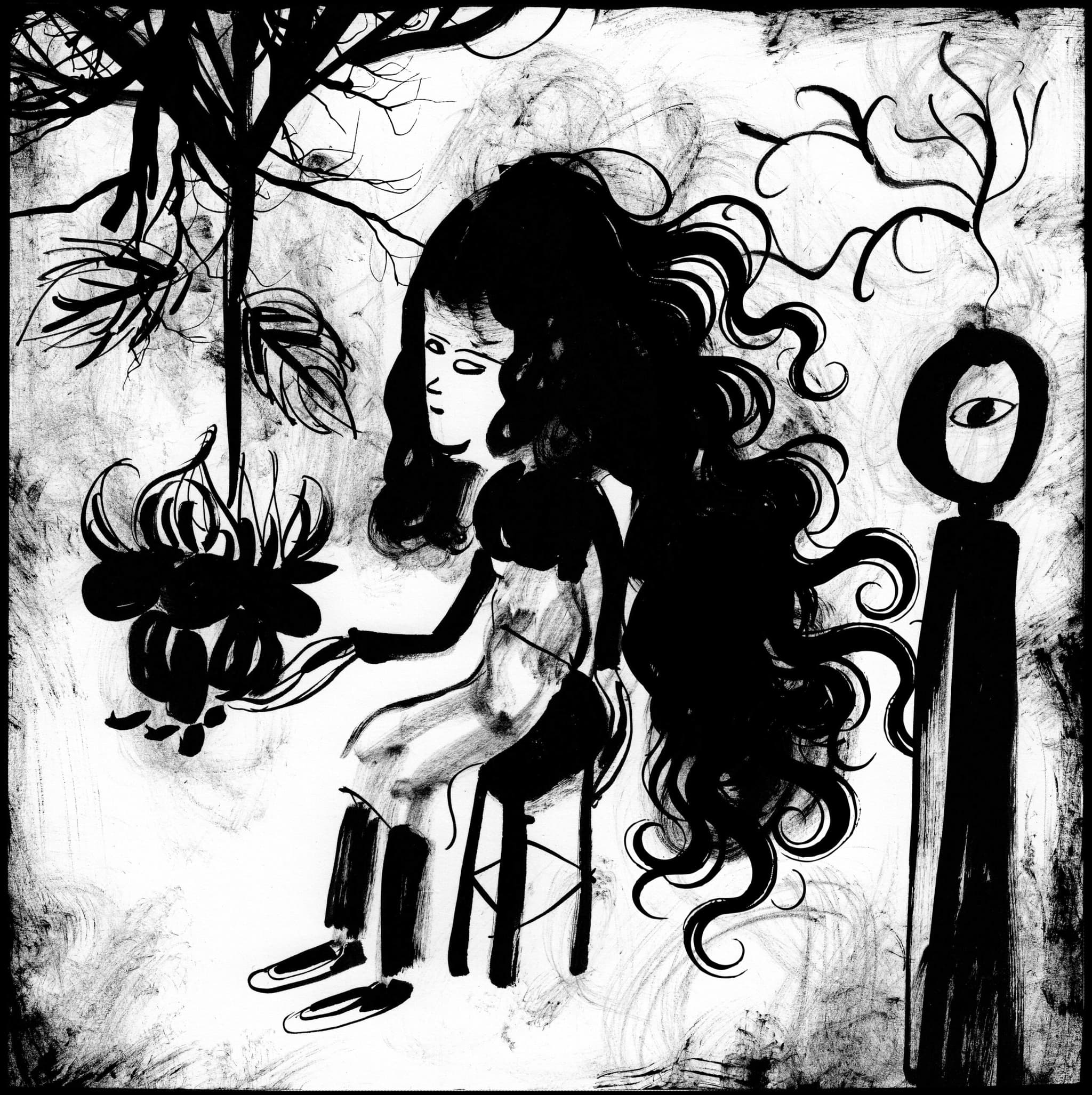
Illustration by Majid Bita
Nevertheless, when Satrapi died, she was attacked from multiple ideological positions. Monarchists disputed her portrayal of the Shah’s government and SAVAK as repressive. Using the kind of language Iranians usually speak only amongst ourselves, monarchists condemned Satrapi as a communist and a “chapool”, a slur for leftists—one wrote “ye chapool kamtar” (one less leftist) in an Instagram post (@atekehss, June 7, 2026). Others questioned Satrapi’s love of country, insisting that anyone who doesn’t unabashedly call for the return of the Pahlavi monarchy is no patriot. From the opposite direction, the self-declared anti-imperialists raged at her for daring to criticize the Islamic Republic at all. Another called her “a western puppet who spread orientalism and danced for her white masters by reinforcing their favorite prejudices” (@pir_private, June 9, 2026). To these critics, it didn’t matter that Satrapi had turned down France’s Légion d’Honneur—the highest distinction available to a French citizen—the year before her death in protest of what she called the French government’s hypocrisy.9
Over the past few years, particularly in relation to Iran, Palestine, and Kurdistan, I have thought about what it means to stand in solidarity with oppressed peoples without letting ideology and geopolitical analysis elide the people most vulnerable and exposed to state violence. Solidarity requires listening to people from the positions in which they speak. As our many struggles against the US state continue, as our protests for the ongoing genocide in Palestine continue, we must remain vigilant and critical of state rhetoric that demonizes people who are also fighting for their own liberation.
Since January 8, 2026, the Islamic Republic has used internet shutdowns and severe communications restrictions to conceal mass killings and prevent families, journalists, and human rights groups from documenting them. It is now advancing a “Countering Foreign Infiltration” bill that severely restricts contact with foreign media, human rights organizations, and even UN investigators.10 The penalty is 30 years in prison.
The political “left” in the United States is headed in a dangerous direction. The way forward is to build coalitions across people’s movements, particularly those movements that center women, not to take the side of oppressive totalitarian states against the very people they abuse. Militarized, state-centric politics cannot counter injustice, because these systems prioritize power and capital over people and safety.
Satrapi’s literary intervention was to refuse the binary frameworks so often mapped onto Iranian politics. She was critical of the Shah and his secret police, while still showing the ways that violence and persecution increased exponentially under the Islamic Republic of Iran, while being critical of Western racism, hypocrisy, and power. She narrated a world of incompatible truths existing in the same city, the same family, the same person. She let memory be messy and fractured. She let grief eclipse political certainty.
1. “To Iran’s political prisoners, trapped ‘between two blades of a scissors,’” The Guardian, August 20, 2026, https://www.theguardian.com/commentisfree/ng-interactive/2026/aug/20/iran-political-prisoners.
2. Keyvan Mohtadi, “Political Prisoners Between the Two Blades of the Scissors,” June 24, 2025, https://khawaran.wordpress.com/2025/06/24/kh-608/.
3. Farah Mokhtareizadeh, “Who Names the World? Anti-Imperialism and Iran’s Political Prisoners,” Left Renewal, August 24, 2026, https://leftrenewal.org/articles-en/mokhtareizadeh-who-names-the-world-en/.
4. Vijay Prashad, “Iran, Imperialism, and the Left’s Dangerous False Equivalence,” LA Progressive, August 24, 2026, https://www.laprogressive.com/foreign-policy/dangerous-false-equivalence.
5. SAVAK was established in 1957 with CIA training, organizational models, and equipment and later trained by Israel’s Mossad, according to SAVAK’s own deputy director, Hossein Fardoust. It surveilled, tortured, and disappeared political dissidents until the 1979 revolution.
6. A 1982 Amnesty International report cited by the Abdorrahman Boroumand Center records more than 4,000 executions between February 1979, when the revolution happened, and February 1982: https://www.iranrights.org/library/document/96/amnesty-international-amasses-reports-of-torture-in-iran-over-4000-executed-since-revolution.
7. Satrapi reached Vienna in 1984, during the Iran-Iraq War, when the Islamic Republic tightly controlled access to foreign currency through a multiple-rate, rationed exchange system. Iranian families could not transfer money abroad reliably.
8,The Islamic Republic has used possession and disposal of the dead as an instrument of repression: refusing to return bodies, imposing conditions on their release, secretly burying victims or burying them without family consent, concealing graves, moving or exhuming remains, and destroying, paving over, building upon, or otherwise desecrating individual graves and mass grave sites.
9. Satrapi wrote in an open letter on January 13, 2025: “I can’t ignore what I see as a hypocritical attitude towards Iran. I can’t continue seeing the children of Iranian oligarchs come to spend their holidays in France, even become naturalized, while at the same time young dissidents have difficulty obtaining a tourist visa to come to see what the country of the Enlightenment and human rights looks like.”
10.Amnesty International, “Iran: Internet Shutdown Hides Violations in Escalating Protests,” January 9, 2026, https://www.amnesty.org/en/latest/news/2026/01/internet-shutdown-in-iran-hides-violations-in-escalating-protests/; Human Rights Watch, “Iran: Internet Shutdown Violates Rights, Escalates Risks to Civilians,” March 6, 2026; https://www.hrw.org/news/2026/03/06/iran-internet-shutdown-violates-rights-escalates-risks-to-civilians; UN Independent International Fact-Finding Mission on Iran, cited in Justin Tuminello, “Iranians Risk Arrest Over Foreign Contacts Under Proposed Bill, UN Fact-Finding Mission Says” Jurist, September 4, 2026, https://www.jurist.org/news/2026/09/iranians-risk-arrest-over-foreign-contacts-under-proposed-bill-un-fact-finding-mission-says/.
Share
Related