Screenshot
(Essays)
A Frame That Changed My Life
Issue 011
OCTOBER 21, 2026
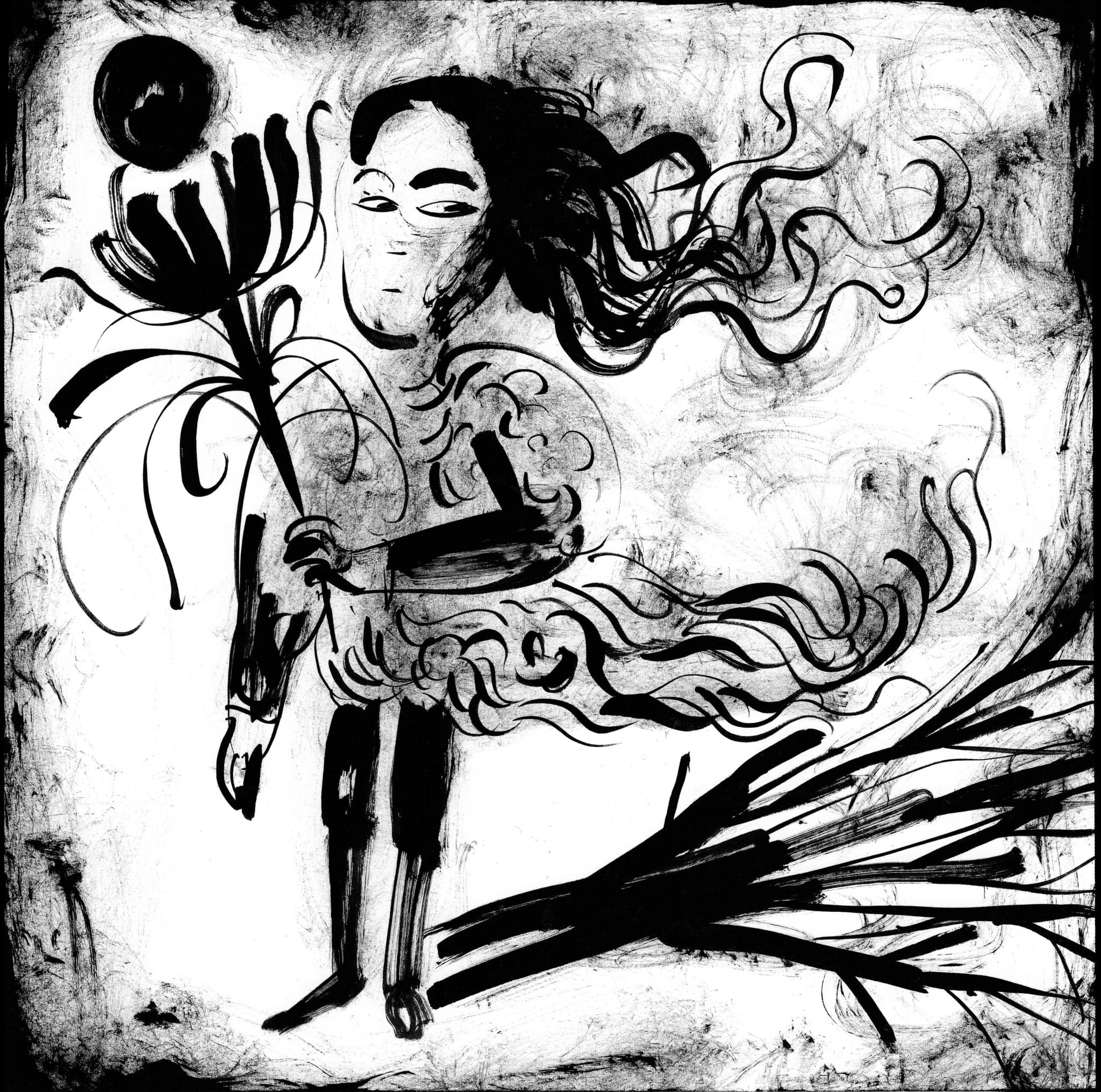
A central figure guiding my meditation and divination practices is the Hindu goddess Kali, with her blood-thirsty tongue, skirt made of human arms, and necklace of 50 decapitated heads strung like enormous freshwater pearls. Kali’s name comes from the Sanskrit root word kala, which translates to “time” and “black,” among other nuanced meanings. Sometimes Kali is called Kali Mata, or the dark mother.
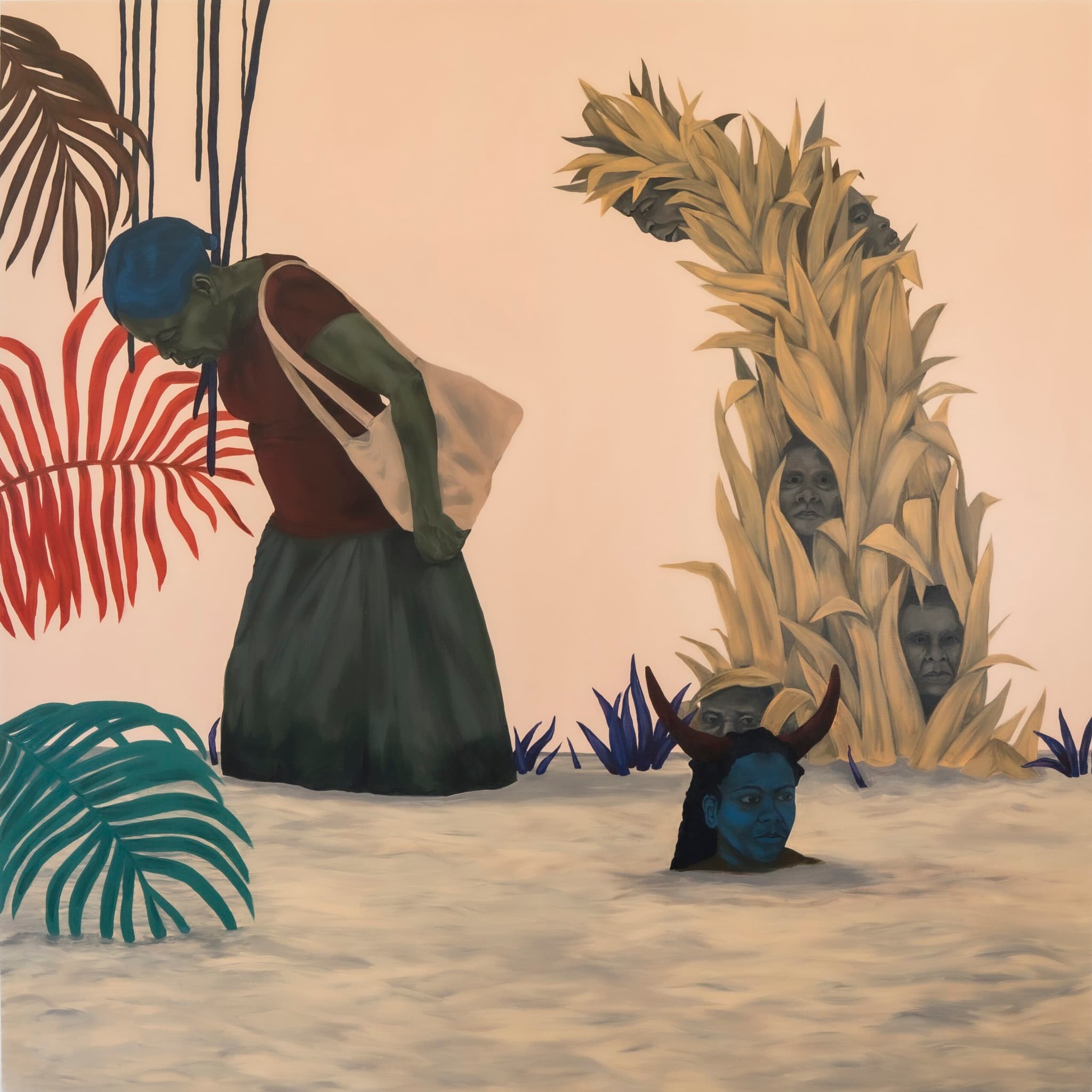
I have always been drawn to Kali’s insistence on destruction, transformation, and liberation. Maybe it’s because I have an Aries stellium, always brimming with righteous rage. Maybe it’s because Kali is often depicted with luxurious blue-black skin—a lord of the bottomless, milky darkness I swim in while communing with my guides. Whatever the reason, her myth is one that grounds me in times of turmoil and metamorphosis.
Kali’s hands have long entranced me. She has four in total: one sometimes holds a sharpened scimitar, another a trident, the third a severed head, and the fourth a bowl to gather the blood from battle. To some, the four hands symbolize the full cycle of human existence and transcendence—from birth to death to rebirth. Many believe the decapitated head to symbolize death of the ego and ignorance, a necessary step to experiencing enlightenment.
This affinity for Kali has also made me very susceptible to depictions of fire on-screen—how it levels all. There is something in the promise after purification that injects a glimmer of hope in my eyes. There is something in the courage it takes to kill your darlings that I find deeply inspiring. This goes for art as well as empire.
The flames are a conjuring of sacrifice—a kind of disavowal of the unbearable claustrophobia brought on by simmering too long in outgrown skin. A peeling back, an erotic lust for release.
On a temperate yet drizzly early spring morning, I made my way to the Hirshhorn Museum and Sculpture Garden in Washington, DC, to catch Simone Leigh’s solo exhibit, which debuted in 2023. The selections from the exhibit expanded upon pieces from Sovereignty, her landmark 2022 presentation at the Venice Biennale, where Leigh was selected to represent the United States.
Initially I went to the Hirshhorn to get a sense of the scale of these ceramic and bronze sculptures I’d only seen in photos. I wanted to feel their presence and listen to the wind passing through their hollowed-out interior spaces, which had been molded like standing sarcophaguses.
For hours, I stood inches away from Leigh’s towering, stoic goddesses and surreal cowry shell apparatuses, but I was unexpectedly stunned by the looping short film, Conspiracy (2022) by Leigh and Madeleine Hunt-Ehrlich, who was recently awarded a 2026 Guggenheim Fellowship. Leigh and Hunt-Ehrlich have had a long history of collaboration that led to Hunt-Ehrlich’s Spit on the Broom (2019), a surrealist short she made after the two artists engaged with the archives of the United Order of Tents, the oldest Black women’s organization in the United States, founded by two formerly enslaved women, Annetta Minkins Lane and Harriet R. Taylor.
Conspiracy is a meditation on divine Black feminine creativity and was largely inspired by Hands of Inge, a 1962 documentary about another celebrated Black femme sculptor, Ruth Inge Hardison. Conspiracy moves elegantly through Leigh’s studio, where we see the artist and their team working on sculptures with ritualistic precision. Throughout the film we transition into more abstracted frames that give viewers access into the multifaceted philosophical framework that forms the bedrock of her monumental work.
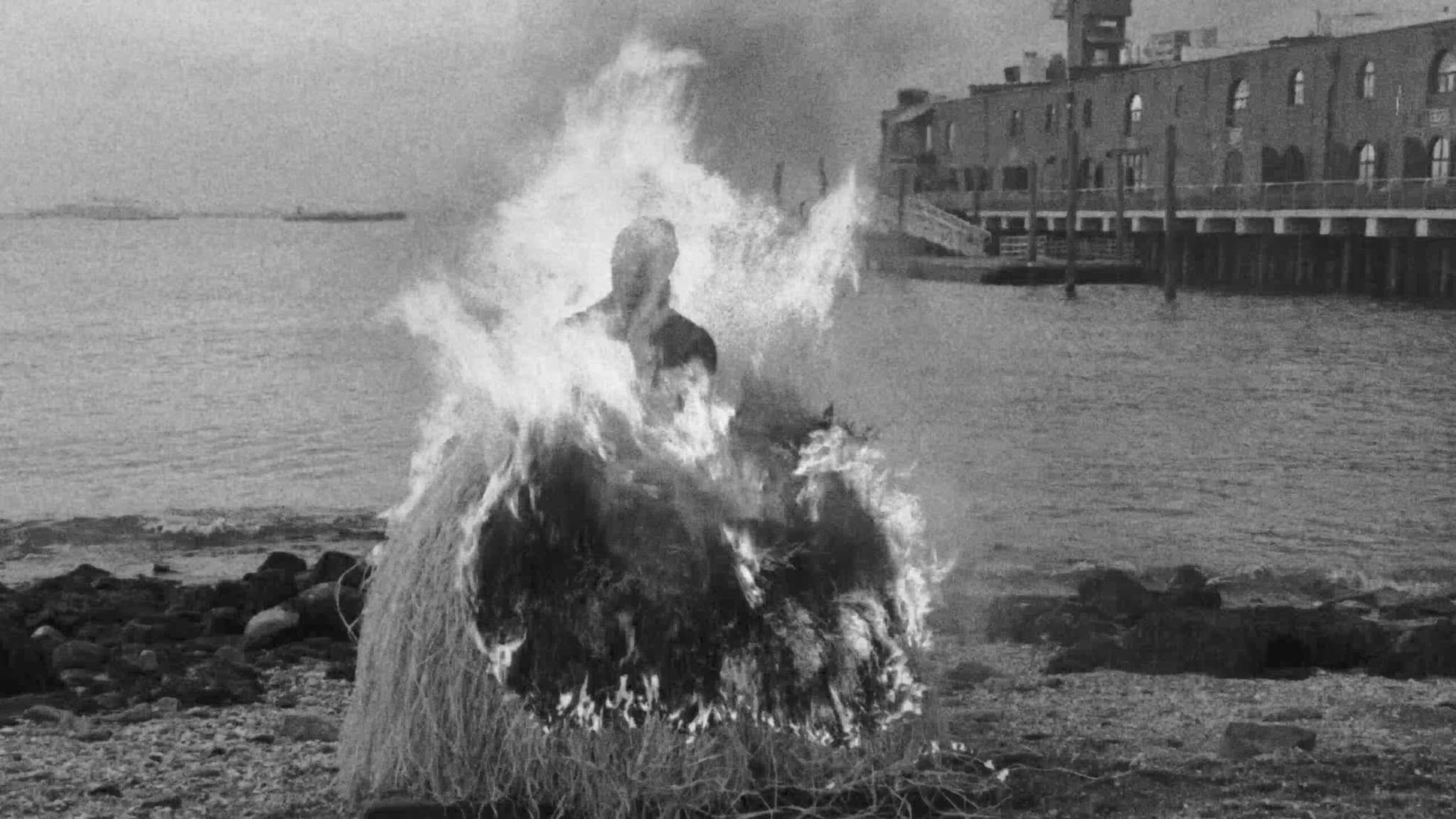
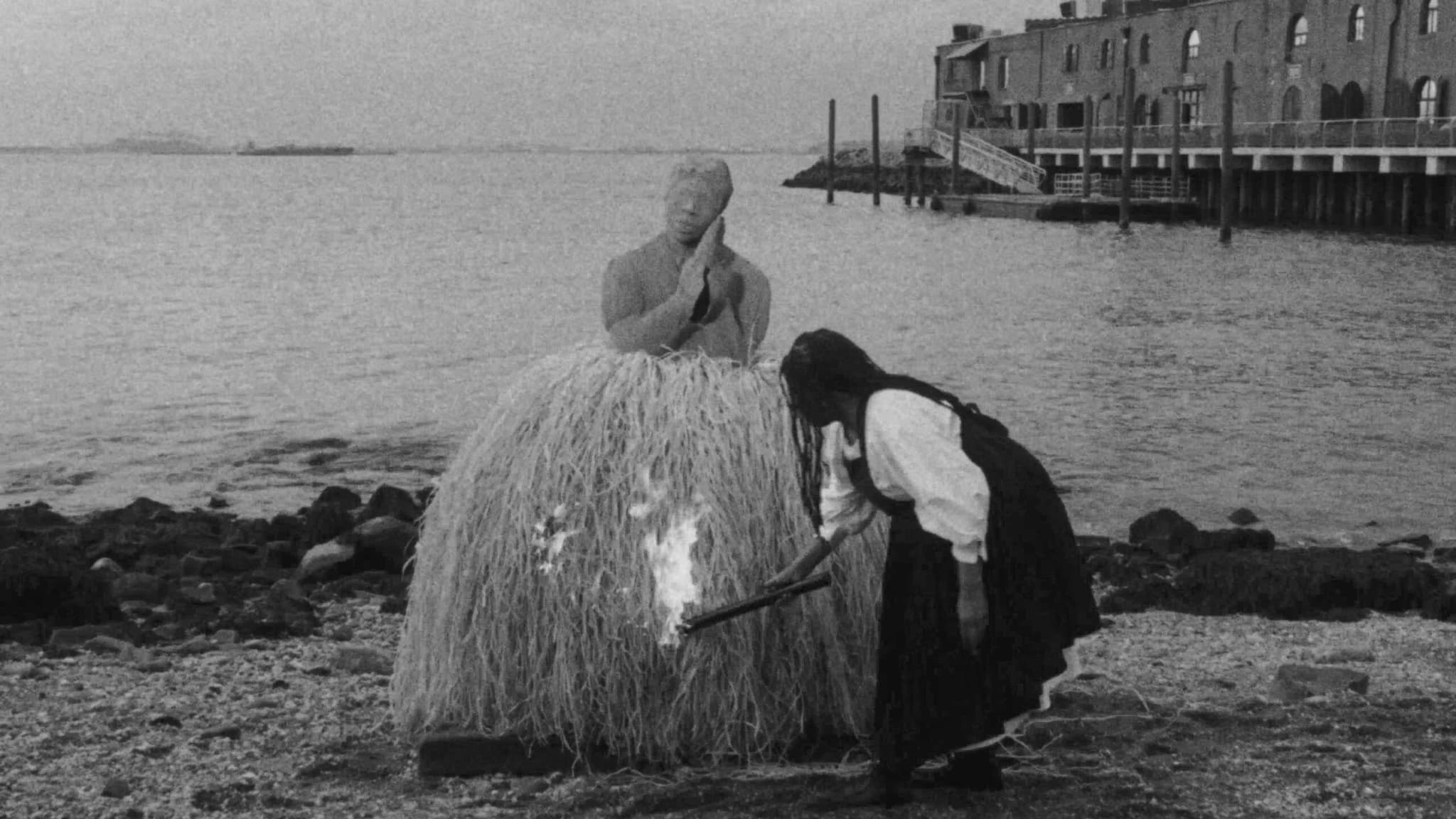
© Simone Leigh, courtesy Matthew Marks Gallery / Madeleine Hunt-Ehrlich.
The final scene from Conspiracy remains with me. Leigh enters the frame, unflinching, in chic boots and an apron with a voluminous white shirtdress underneath, dreadlocks nearly kissing the roaring flames rising from the torch in her right hand. Already staged is a towering ceramic sculpture standing by the pebbled shore. The sculpture has hands that seem clasped in prayer and a billowing skirt of raffia five times the width of Leigh’s body. The Red Hook Channel is unloading into the Hudson River in the distance. Leigh slowly circles the sculpture, placing the torch at the hem of the skirt before the entire sculpture is smothered in flames.
Was I a witness to the sentencing of some witch trial? Was I intruding on some ritual? Was this a reclamation? Was the smoke swirling overhead populated by spirits I couldn’t see? What was gained by watching it burn down to its scaffolding? Is there a difference between the fire of the kiln and the flames ascending from the torch? Was the torch a scimitar, the sculpture a demon?
Ultimately the scene exists as a window into a creative practice that honors ruination as a necessary component of transmutation and transcendence. That some things are meant to be destroyed because the destruction of the thing has more to offer folk than its preservation. I return to this idea in my own creative practice at moments when I feel stuck or too fixed in a way of thinking. When I strive to remember that reinvention is magic, I call on the powerful myth of Kali and the reality that nothing really arrives at its final form. That even when the work outlives my physical body, there are still opportunities for renewal and excavation. That nothing is too precious. That incineration can be a blessing, a refinement, and holy.
1. An astrological cluster of three or more planets in the same zodiac sign or house.
2. A single-edged, curved sword.
3. A three-pronged spear.
Share
Related