From The Watermelon Woman (1996), dir. Cheryl Dunye, courtesy Janus Films and The Criterion Collection.
(Essays)
Inventing History in Plain Sight: On The Watermelon Woman
Issue 010
MAY 20, 2026
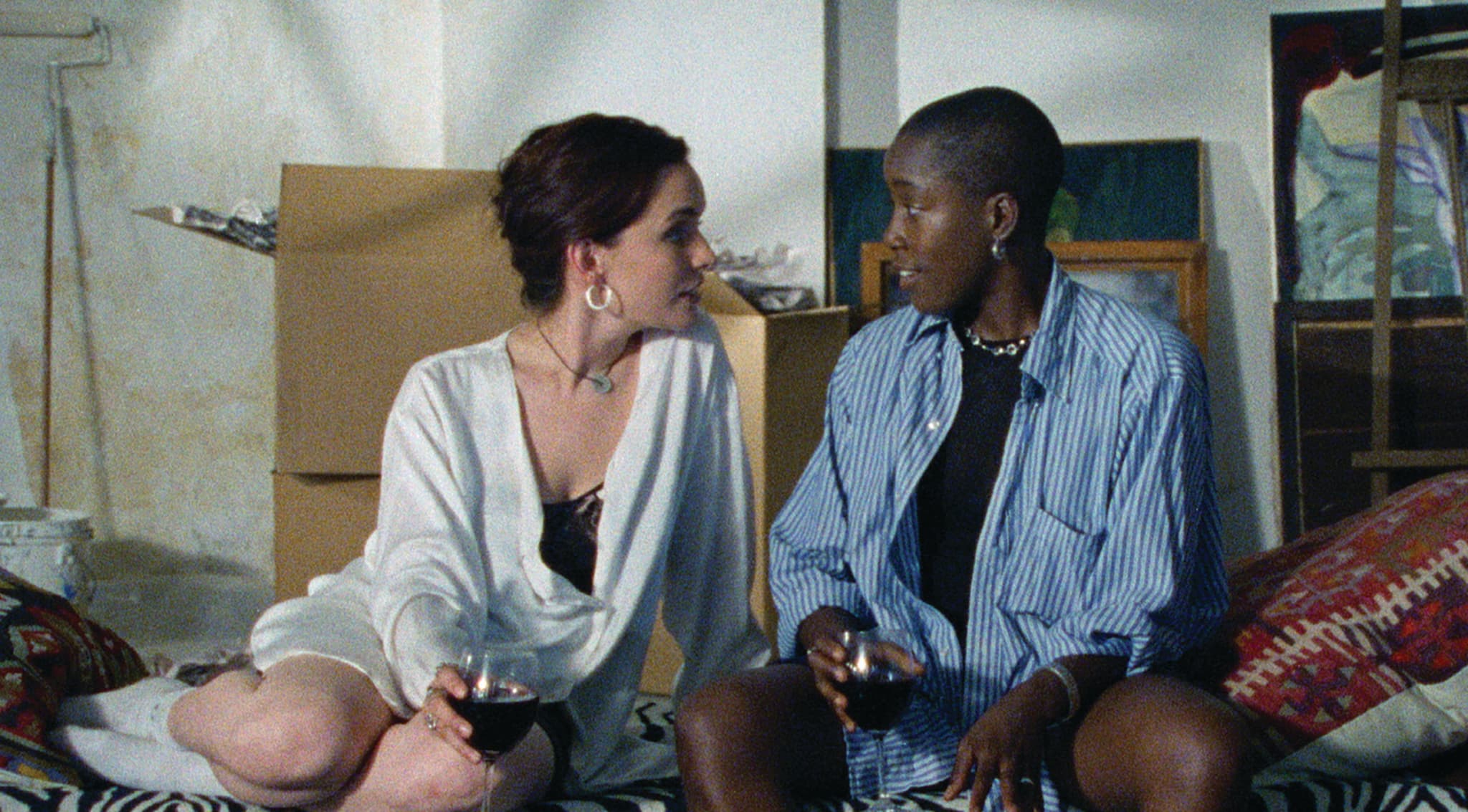
When I think about The Watermelon Woman (1996), what stands out most is the use of talking heads when Cheryl, the protagonist, summarizes her journey to find Fae Richard.
Known as the Watermelon Woman, Fae is a fictional Black lesbian actress from the 1930s who was relegated to playing stereotypical mammy roles throughout her career. The talking heads carry the clearest trace of how the film was made, how it thinks, and how it understands time. They were never intended to function as an explanation; they were designed as a space where authorship, memory, and uncertainty could coexist without being resolved. I was the final talking head; this part was filmed many months after we had completed principal photography. That temporal distance mattered. By then, the film had begun to take on a life of its own. I was no longer in the immediacy of production, no longer solving problems as they appeared. I was confronting the film as an object that had already separated from me. That shift made speaking about the work more difficult, not less.
There is a persistent pressure placed on filmmakers to summarize their films, to articulate meaning cleanly and conclusively. That pressure is especially intense for filmmakers working outside dominant narratives. I resisted that impulse then, and I resist it now. The Watermelon Woman was never meant to resolve the absence of Black lesbians in the film archives that it exposes. It was meant to sit with it, to make that absence visible, and to ask what it means to invent history when the archive refuses to acknowledge your existence.
My final talking head took multiple takes. Not because I was uncertain about the film’s stakes, but because I refused to perform hindsight as certainty. I did not want to offer a false sense of closure. The film raises questions that extend beyond its own frame, and I did not want the last voice the audience hears to suggest otherwise. What remains in the film is not a conclusion but a reckoning with process, frustration, humor, and unresolved desire.
That final interview marks a shift. By that point, I am no longer only Cheryl the character; I am myself, Cheryl the filmmaker, confronting the implications of claiming authority in a space that has historically denied Black lesbians visibility and legitimacy. The talking head becomes a site where that confrontation is allowed to remain incomplete. That incompleteness is not a failure; it is the point.
Throughout the film, the talking heads function as temporal layers. They collapse past and present. They foreground the instability of memory and the constructed nature of history. This was not an aesthetic choice made for novelty; it was a political and formal decision. The film refuses the illusion of objectivity. It insists that history is always mediated, always spoken from a position, always shaped by who is allowed to speak.
The Watermelon Woman does not pretend to uncover a hidden truth. It insists on invention as a legitimate historical practice. The talking heads make that invention visible. They keep the seams exposed. They allow the audience to see the labor of imagining a history that was never preserved. That visibility remains central to the film’s power.
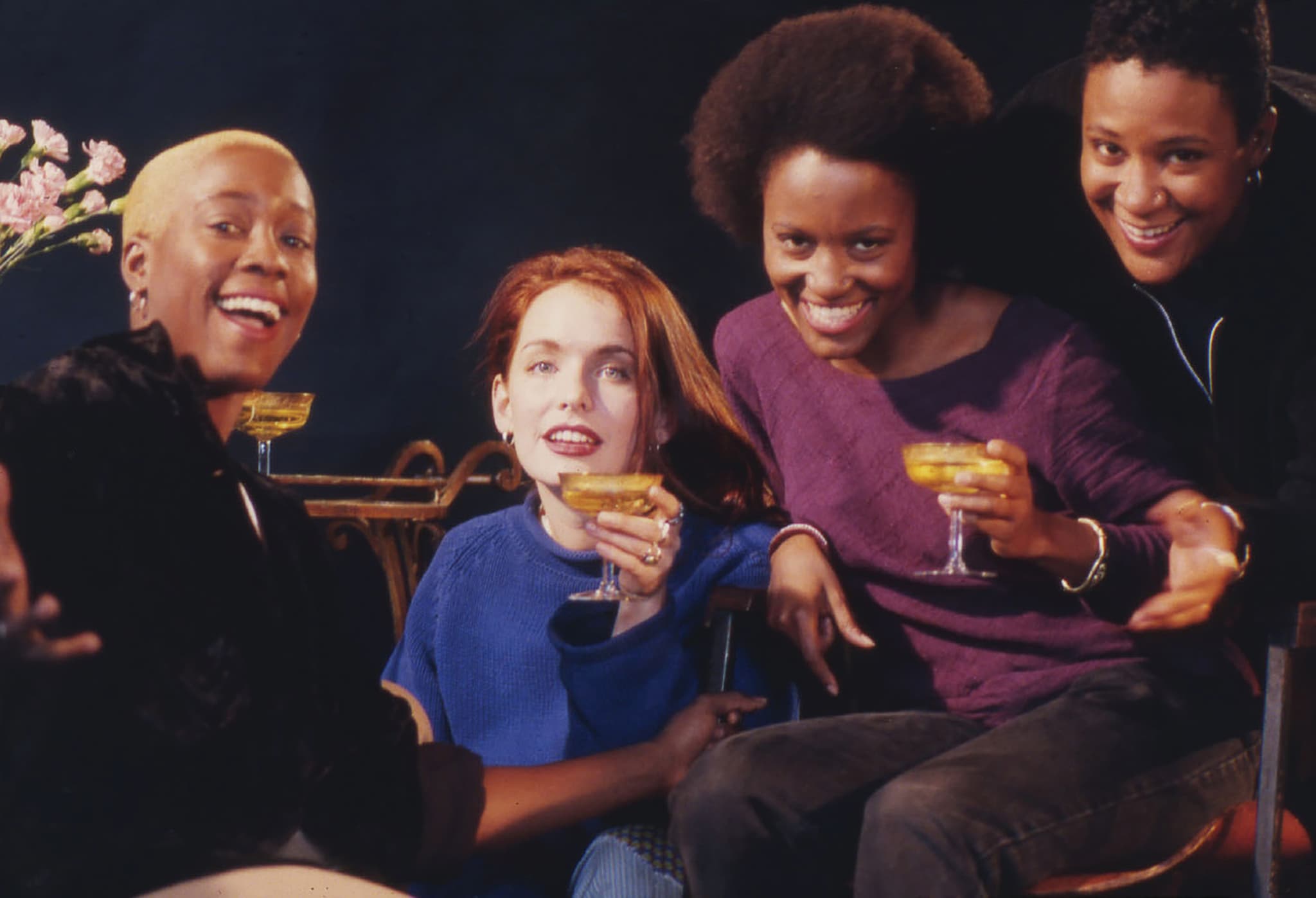
Courtesy of Cheryl Dunye and Alexandra Juhasz
The production of the film reinforced those values at every level. We were working within a community that shared resources, space, and belief. South Street, at that time, was a critical site of intersection in Philadelphia. It was where multiple scenes overlapped without hierarchy—Black artists, queer communities, the punk scene, filmmakers, activists. It was not curated. It was lived. That context shaped the film in ways that are not always immediately legible but are deeply embedded in its texture. The Theatre of the Living Arts gave us free space to use as production offices. That support was not institutional in the conventional sense; it came from community recognition and mutual investment. The film was made inside that ecosystem of early Philadelphia independent cinema with a Black lesbian filmmaker at the helm.
The wardrobe reflects that South Street community. What we wore in the film came from our own lives, thrifted pieces. The costume designer merged these into a single lived aesthetic. Clothing was not used to transform us into something else; it was used to ground us where we already were. I wore a dress from Zipper Head, a punk store on South Street. That store was part of my lived Black lesbian punk reality in Philadelphia. That mattered. South Street was cool then. It was the place where worlds touched. Wearing something from Zipper Head on-screen was not a gesture of style; it collapsed the boundary between my life and the character I was playing. That collapse was intentional. The film refuses the separation of performance and reality.
As the writer, director, and star of The Watermelon Woman, I was always aware that the film was operating on multiple levels simultaneously. It is a fiction that performs documentary. It is a comedy that emerges from loss. It is a research project shaped by desire. The talking heads and the production choices work together to hold that complexity without resolving it.
Looking back, I see how these choices anticipated conversations that are now more widely recognized around authorship, authenticity, and collaborative practice. During the culture wars of the 1990s, other artists and cultural producers and I were not naming those frameworks. We were simply working in alignment with how we lived. The film demanded that kind of integration.
If this reflection functions as a letter to Black queer filmmakers, it is grounded in that insistence. You do not owe anyone a clean explanation of your work. You do not need to resolve contradiction in order to be legible. Let time enter the film. Let distance complicate your understanding. That does not weaken your authority; it deepens it. Use what is around you.
Your communities are not background; they are infrastructure. Your neighborhoods, your punk stores, your borrowed office space—these are not anecdotes. They are the conditions of authorship.
The Watermelon Woman remains alive because it refuses closure. The final talking head does not end the film. It leaves it open. That openness is why the film continues to work. Then and now.
Share
Related