From Walkabout (1971), dir. Nicolas Roeg, courtesy 20th Century Fox.
(Essays)
A Frame That Changed My Life
Issue 010
MAY 20, 2026
I first saw Nicolas Roeg’s Walkabout (1971) during my sophomore year in high school. I had recently emigrated from the Jamaican countryside to a suburb outside of Washington, DC.
Across the street from us was a mall, and tucked inside it was a generic chain cinema. I loved movies and went every chance I was allowed. By this time, I was beginning to understand that film could be art, that it could inspire social, cultural, and political change. When I became a filmmaker, I sought—and still seek—to communicate cinematically through the lens, with a language that is unique to independent cinema.
In the 1980s, Washington, DC, had a robust independent and art-house film scene. I saw as many films as I could, from Betty Blue (1986) to Shoah (1985); I took in second-run double features with Prizzi’s Honor (1985) and Witness (1985) for a dollar, sharing the warm theater with truant high schoolers and the area’s unhoused.
It was during this time that I first saw Walkabout, a film about a young sister and brother who escape from their homicidal father into the Australian Outback and are rescued by an Aboriginal boy on his walkabout, a spiritual rite of passage that will usher him into adulthood.
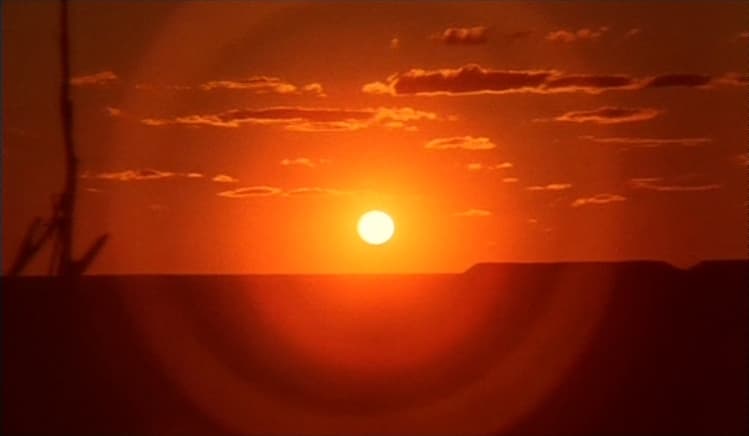
I was moved by Walkabout but I didn’t have the language to explain why. The film wove complex political themes of anti-colonialism, nature’s destruction, and racial divide, but I was most drawn to its imagery—its wide landscapes, shots of the main characters silhouetted against the searing sun, and close-up details of the natural world. When I made my graduate school thesis film, The Killers (1995), and my feature film Night Catches Us (2010), I borrowed many things from Roeg’s film: its meditation on nature; its attention to small, everyday details; and its journey storyline.
From Walkabout (1971), dir. Nicolas Roeg, courtesy 20th Century Fox.
Walkabout is a film with minimal talk and maximum imagery. Shots linger on the trappings of civilization that are gradually abandoned by the young protagonists: dishes left on a blanket, food consumed by ants, and plastic toys buried in the dirt. Dangling around the waist of the Aboriginal boy, there is a prize belt of dead lizards with flies. Documentary footage of white poachers slaughtering wildebeests also teach the Aboriginal boy about a wasteful colonial world.
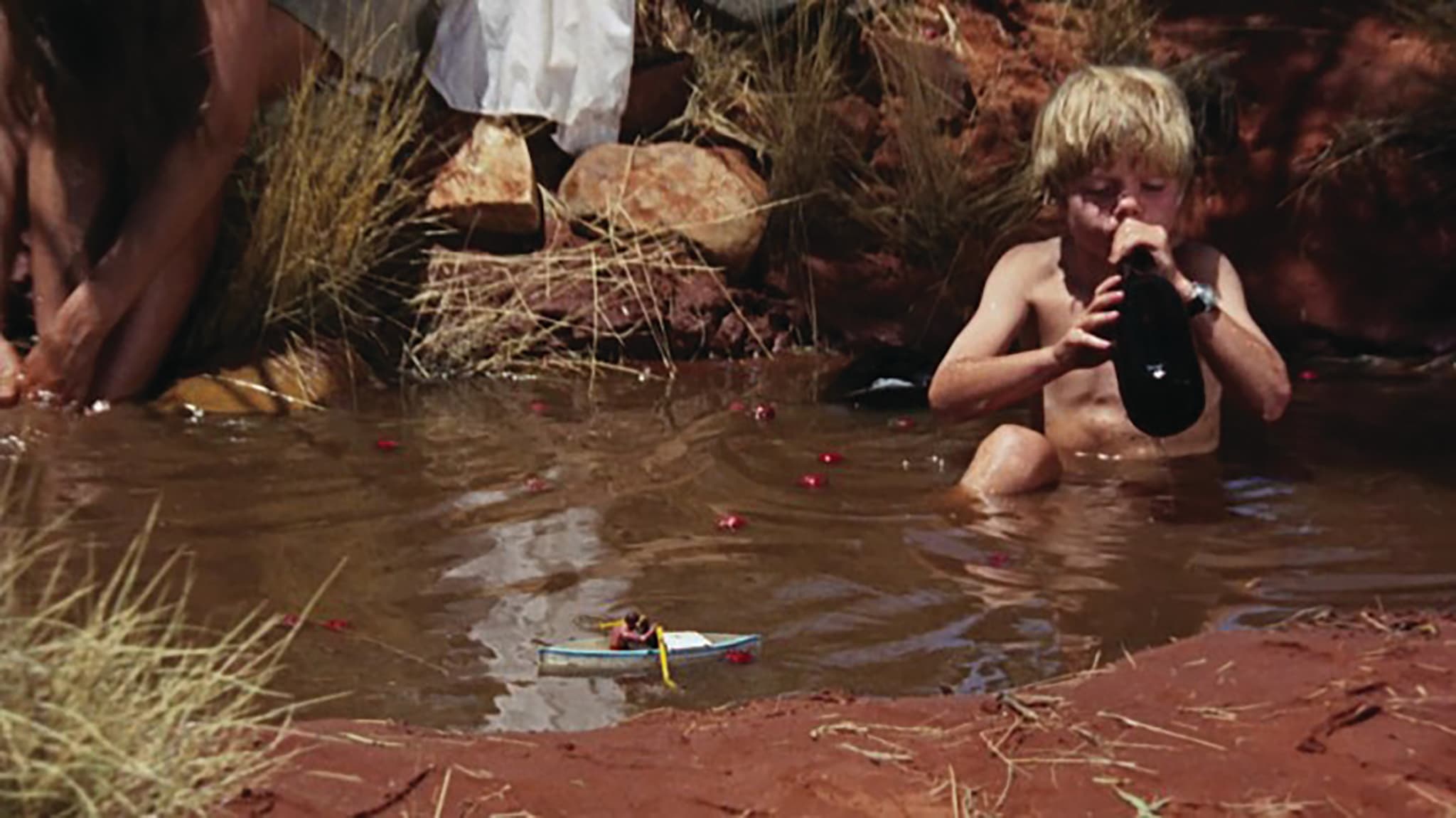
After escaping into the Outback, the sister and brother come upon an oasis where they drink water, swim, and play with a toy sailboat. They sleep, then wake up to a dry water hole where the oasis had been. I remember being taken with the before-and-after imagery: a close-up shot of a toy man in a toy boat, rowing through a watering hole surrounded by red bird berries; and later, after the water evaporated into mud, a shot of an empty bottle being plaintively tossed onto the man in the toy boat. Something about these two frames struck me.
I had a distant memory of my own toys left in the red dirt of my family’s yard in Jamaica. Those toys were buried under debris and abandoned when I emigrated
to America. I had only been in America for a few years, and what I retained from my Jamaican life were artifacts: photographs, toys, and remembrances of nature. My journey and all that I had left behind on the island had already begun to fade. My memories were involuntarily replaced by new American experiences. I think the man in the boat tapped into my sensory memory, my Jamaican DNA. That moment in Walkabout reminded me of the countryside where I was born.
The film had unexpectedly taken me home.
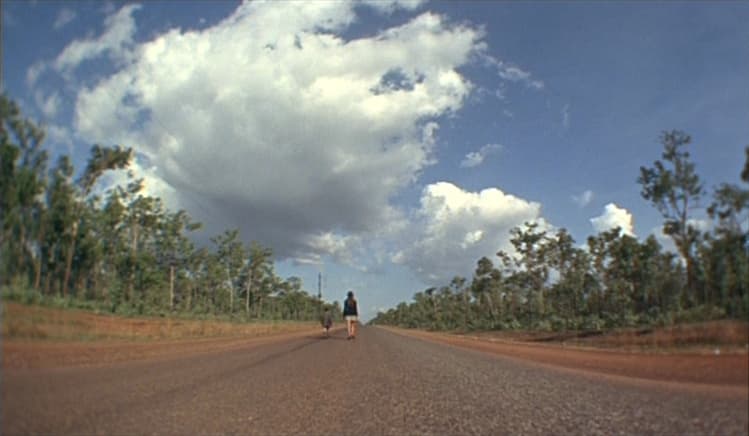
From Walkabout (1971), dir. Nicolas Roeg, courtesy 20th Century Fox.
Share
Related