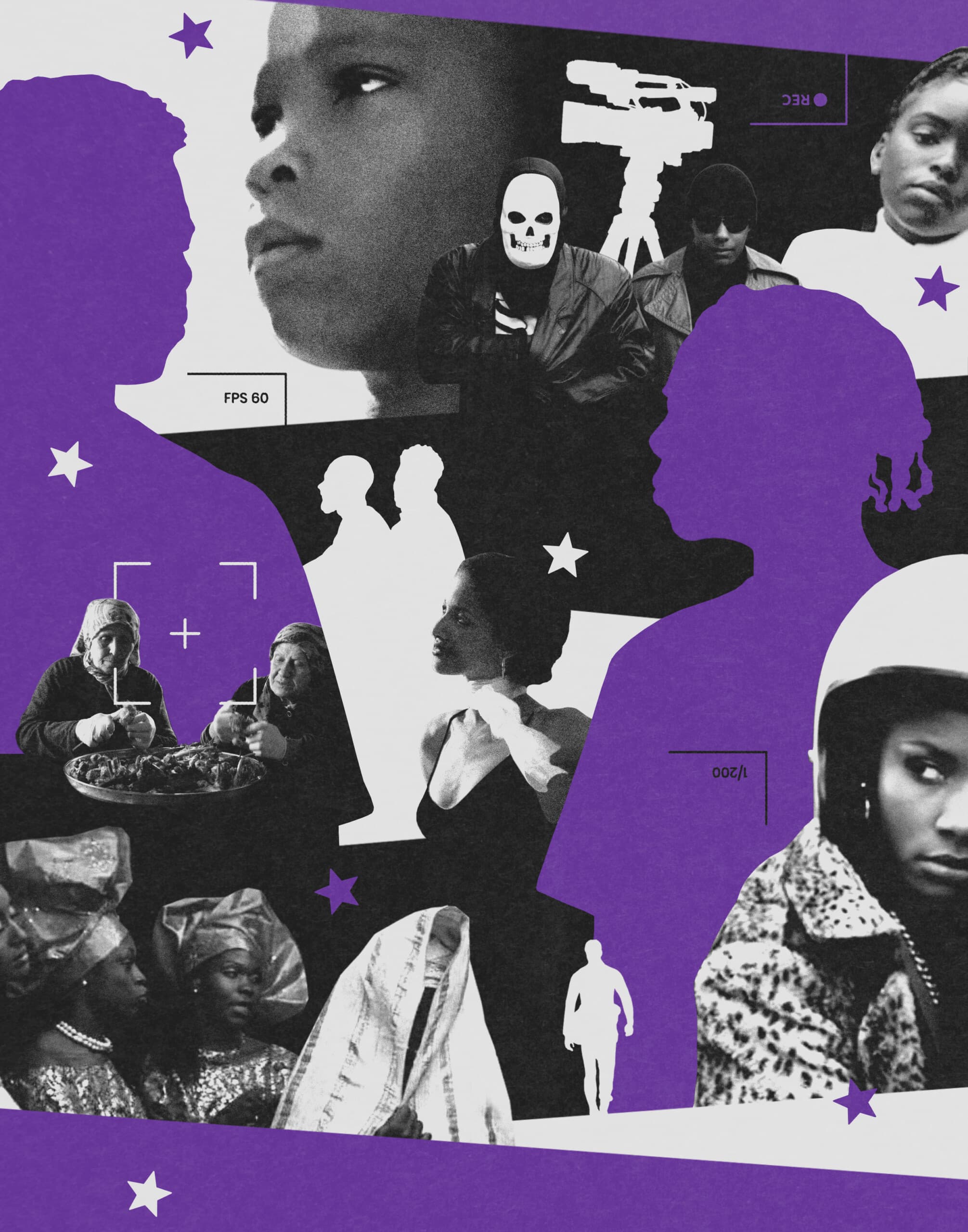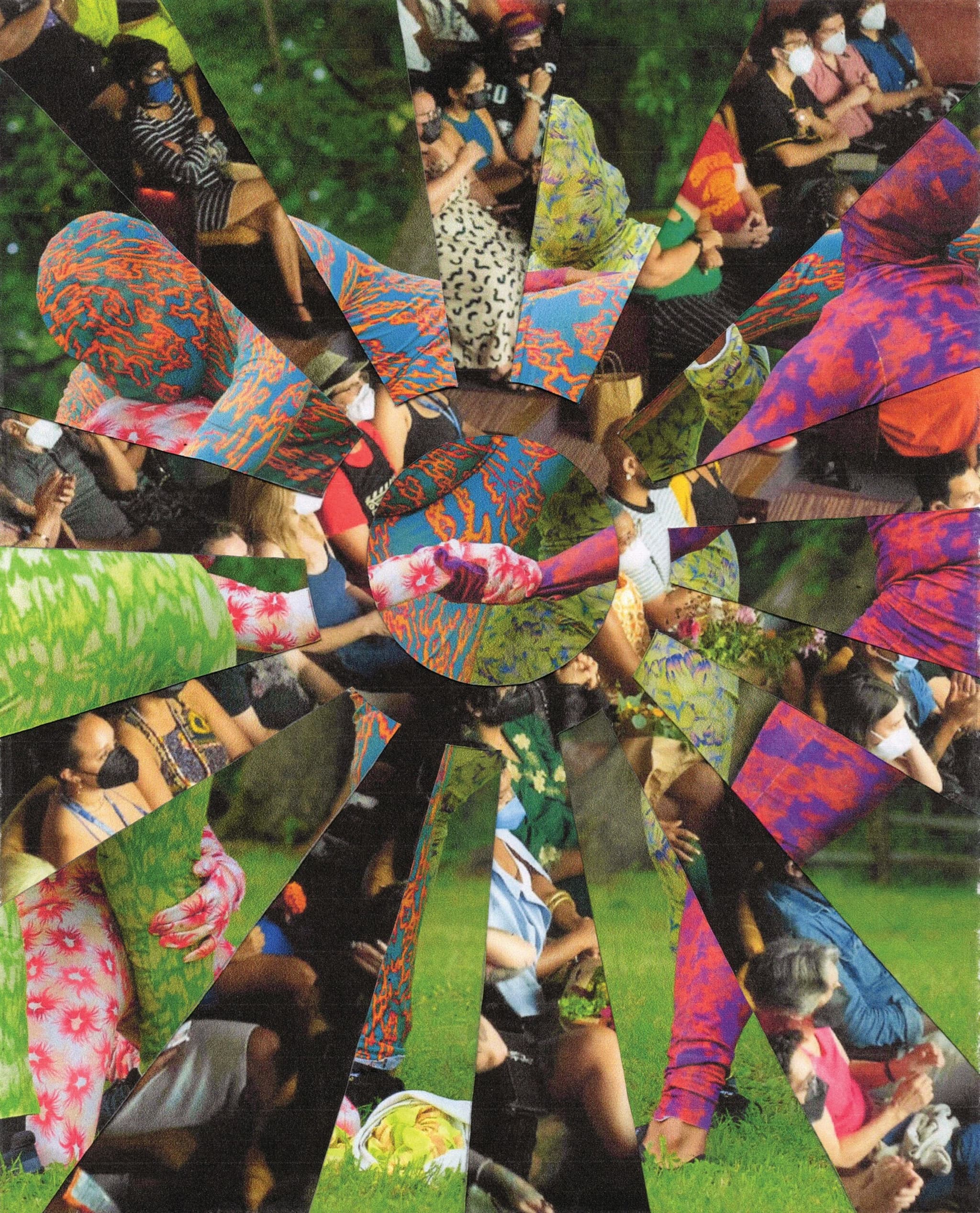
Collages by Ian Woods. Original photography by Mochi Robinson and Naomieh Jovin.
(Essays)
Cinema Is Live
Issue 010
MAY 20, 2026
She is a vessel—a container, a path, a way. BlackStar.
The name is not metaphor; it is legacy. The Black Star Lines—the original founded by Marcus Garvey, and another one decades later by Kwame Nkrumah—were not just shipping companies. Black Star is a declaration of collective determination that does not promise arrival but instead navigates toward liberation.
One doesn’t “attend” BlackStar Film Festival; one enters it and is held by it. The festival offers a method of moving through an assemblage of images, sounds, bodies, histories, and processes—in a shared room, breathing, together. This safety is not incidental. It is designed. It is curated. It is practiced. BlackStar insists that the most radical gesture may be the creation of a space where people are not required to perform or prove their humanity. The questions here are not how cinema will circulate but who it is accountable to.
BlackStar understands cinema as something that happens between people, not simply on a screen. In an era of endless scrolling and fragmented attention, the insistence on physical presence matters. To be at the festival is to feel held inside that motion. Not spectacle. Not aspiration. Not proximity to power. But presence. Breathing together through images, sounds, emotion, grief, joy, beauty, anger, together. Call and response across fields of time and space. Laughter that interrupts the screen. Cinema not as a product but as an encounter. Not something consumed but something that moves through people and rearranges them. The room becomes a forum, sometimes a church, sometimes something closer to a rehearsal space for futures we do not yet have language for. Obedient, sitting still, being quiet is not the vibe.
The decorum is your full presence. The audience brings life, in unison, in sync.
Cinema is a violent medium. Its grammar was built through colonialism; its technologies have been instruments of surveillance, classification, domination. BlackStar bucks that violence by falling out of bounds of conventional, institutional approaches to cinema, film criticism, and exhibition. Music spills in with rhythm before grammar, vibration before rule. Fashion moves through the room from on high and low. The electric slide multiplies by the hundreds. Here, cinema is elastic.
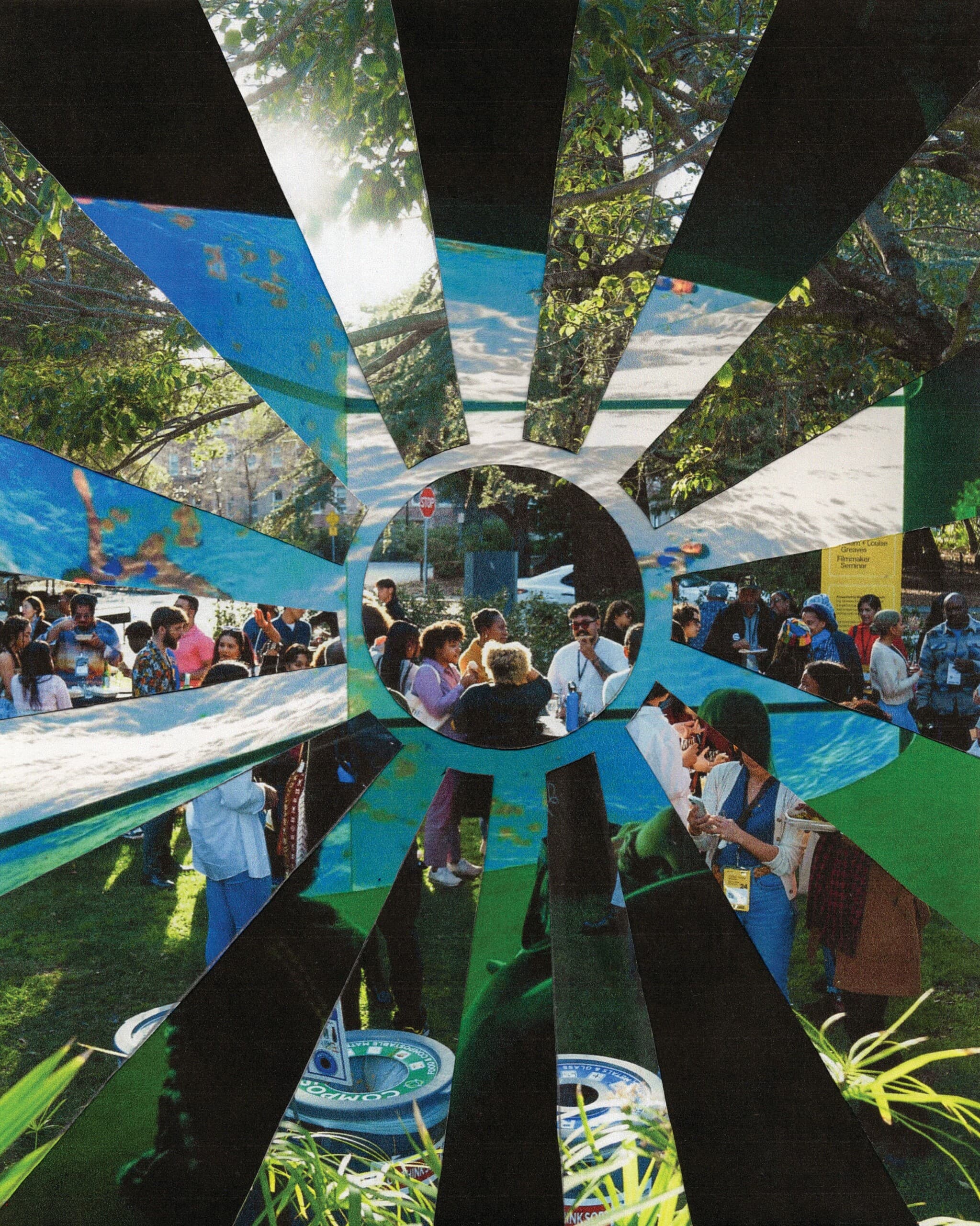
Collages by Ian Woods. Original photography by Biak Tha Hlawn and Constance Mensh.
BlackStar does not conform to market logic. This is not excellence as polish or restraint. It does not prioritize legibility or compliance. But this illegibility is not a failure; it is a resource. It allows BlackStar to remain responsive rather than prescriptive, attentive rather than extractive. It allows the work to arrive unfinished, unresolved, still becoming. It allows ambiguity to remain intact.
Experimentation is not a luxury; it is strategy. Western aesthetics designed to estrange and
mask exploitation. BlackStar reclaims aesthetics as utility: beauty that shelters, joy that protects, craft that cultivates connection, life.
BlackStar is homecoming, a family reunion. Intergenerational exchange happens not because it is programmed but because people keep coming back. Younger artists watch older ones navigate risk. Older artists witness new grammars forming. Memory is stored not only in archives but in these intergenerational relationships. Knowledge moves horizontally as emerging artists and established figures encounter one another without the usual stratifications of access and prestige. Questions about survival, failure, and process are treated as collective concerns rather than individual liabilities. What has emerged over the past 15 years is not a canon imposed from above but a living archive—one that records not only films but the conditions under which they were made and received. BlackStar canonizes not by fixing meaning but by making transparent the process by which we—in the present—are forging new grammars that we can rehearse for futures we do not yet have language for.
Philadelphia matters here. Not as backdrop but as condition. Decades of Black organizing, experimentation, and cultural production inflect BlackStar’s character. Its grounding makes BlackStar accountable to Philadelphia—to its people, its rhythms, its histories. And from that grounding, an ethos reverberates that enables transcendence, globality, universality.
Blackness here is not a category or identity. It is capacious. It is infinite. It stretches across geographies, across languages, across histories of struggle that recognize one another without requiring sameness. Blackness as method. Blackness as frequency.
BlackStar is a ship. She gathers and cares across the oceans, toward a homeland that has no walls or flag. She cultivates beauty and safety in tandem. She is festival, seminar, cathedral, theater, journal, and archive. She guides us to a horizon that continues to recede, always in practice, and forever at the edge.
Share
Related