All images from The Perfect Neighbor (2025), dir. Geeta Gandbhir, courtesy Netflix.
(Interviews)
The Trauma of Justice : The Perfect Neighbor
Issue 011
OCTOBER 20, 2026
In January 2025, I attended the Sundance Film Festival for the very first time. I wanted to go, in part, because Oscar-nominated filmmaker Geeta Gandbhir’s film The Perfect Neighbor—about the tragic, senseless murder of Ajike Owens in June 2023 by her white neighbor Susan Louis Lorincz—was a featured film.
To say I was wrecked by the time I finished the film is an understatement. In one scene, the father of Owens’s children tells them that their mother has been killed. As a Black mom, it hurt to see young kids process the murder of their mother in real time. The film is constructed using police body cam footage, which further complicated my feelings and underscored my rage at the injustice and pain of Owens’s murder. These emotions have remained with me.
What has also stayed with me is Gandbhir’s remarkable ability to craft a powerful, visceral story out of body cam footage. After watching, it was clear to me that The Perfect Neighbor was groundbreaking.
In November 2025, the New York Times podcast Cannonball dropped an episode titled “‘The Perfect Neighbor’ Is an American Nightmare.” Host and critic-at-large Wesley Morris talks with critic Parul Sehgal about the film’s “moral and ethical questions.” Does the body cam footage actually subvert the police presence and decenter them? Why not shield audiences from the devastation Owens’s children experience when they find out their mother has died? And why expose Owens’s children in this way at all? As director of the Documentary Accountability Working Group (DAWG), which promotes ethical and accountable nonfiction filmmaking, I asked Gandbhir if she would be open to talking with me for a DAWG webinar about the ethical dilemmas she faced. She kindly agreed.
What followed was a frank and friendly conversation, the type that’s necessary and possible when we work through the challenges of documentary filmmaking together. The webinar took place a few days prior to the Oscars, where The Perfect Neighbor was nominated for best documentary.
Below is my conversation with Geeta from that webinar. The transcript has been lightly edited for content and clarity
From The Perfect Neighbor (2025), dir. Geeta Gandbhir, courtesy Netflix.
Natalie Bullock Brown: I really appreciate your willingness to talk about your process and the ethics of your filmmaking practice for The Perfect Neighbor. First, share with us how the story of Ajike Owens came to your attention and why you decided to tell her story.
Geeta Gandbhir: Ajike Owens was a family friend. She was my sister-in-law’s best friend, and when I say “sister-in-law,” she’s my cousin-in-law actually. But she calls me her sister-in-law.
She and Ajike lived in Florida together and were raising kids together, and my sister-in-law used to live in the apartment that Ajike lived in. So when she moved out, she was the person who told Ajike she should move in there, because it was this beautiful community where the kids could play in the street and the neighbors would look out, and she said, “This is the place you want to be.” So my sister-in-law also, I think, felt terrible responsibility for what happened in some way, even though Susan moved in around the same time.
NBB: Wow, so what happened? How did you find out that Ajike had died?
GG: We got a call the night Ajike was murdered, or perhaps early in the morning the next day. And when I say we, I mean myself, my husband, Nikon Kwantu, who’s a producer on this film, and then we alerted my team at Message Pictures, Sam Pollard and Alisa Payne, and we were immediately on the ground. We quickly became media liaisons for the family, because we understood that without media coverage, Ajike’s case would probably get swept under the rug.
Susan was not immediately arrested because of Stand Your Ground laws. It took about four to five days for them to arrest her. My sister-in-law, Takema, is a community organizer, and she organized a vigil and protests, and we filmed those things to put on social media and to give to the news. We also were able to get the family on The View. Joy Reid came on board, and Sunny Hostin and Whoopi Goldberg also spoke out about the case, and it really helped.
Susan was arrested, and we remained in contact with the family and the lawyers. Two months later, the lawyers sent us the body camera footage. They had gotten all the police evidence they’d gathered for the case. They used the Freedom of Information Act, and in Florida, once files are released using the Freedom of Information Act, they become public record.
From The Perfect Neighbor (2025), dir. Geeta Gandbhir, courtesy Netflix.
NBB: They belong to the people. This is under the Sunshine laws.
GG: That’s right. It was about 30 hours [of tape], and they asked us to go through it. I used to be an editor, so I took two weeks and off hours to string it out. I realized that it went back two years, and it was seeing that footage when the idea of making a documentary film about this was actually born.
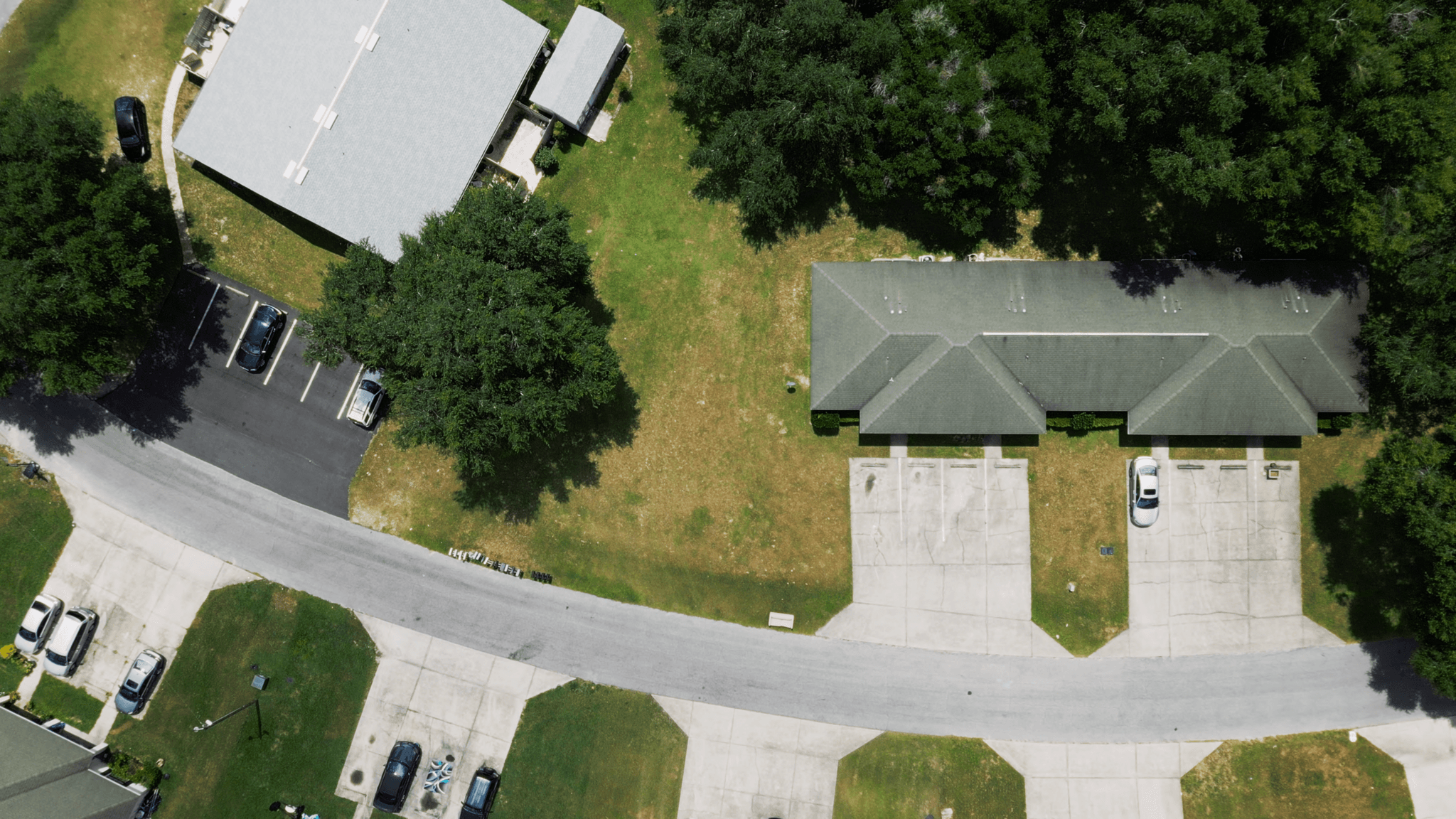
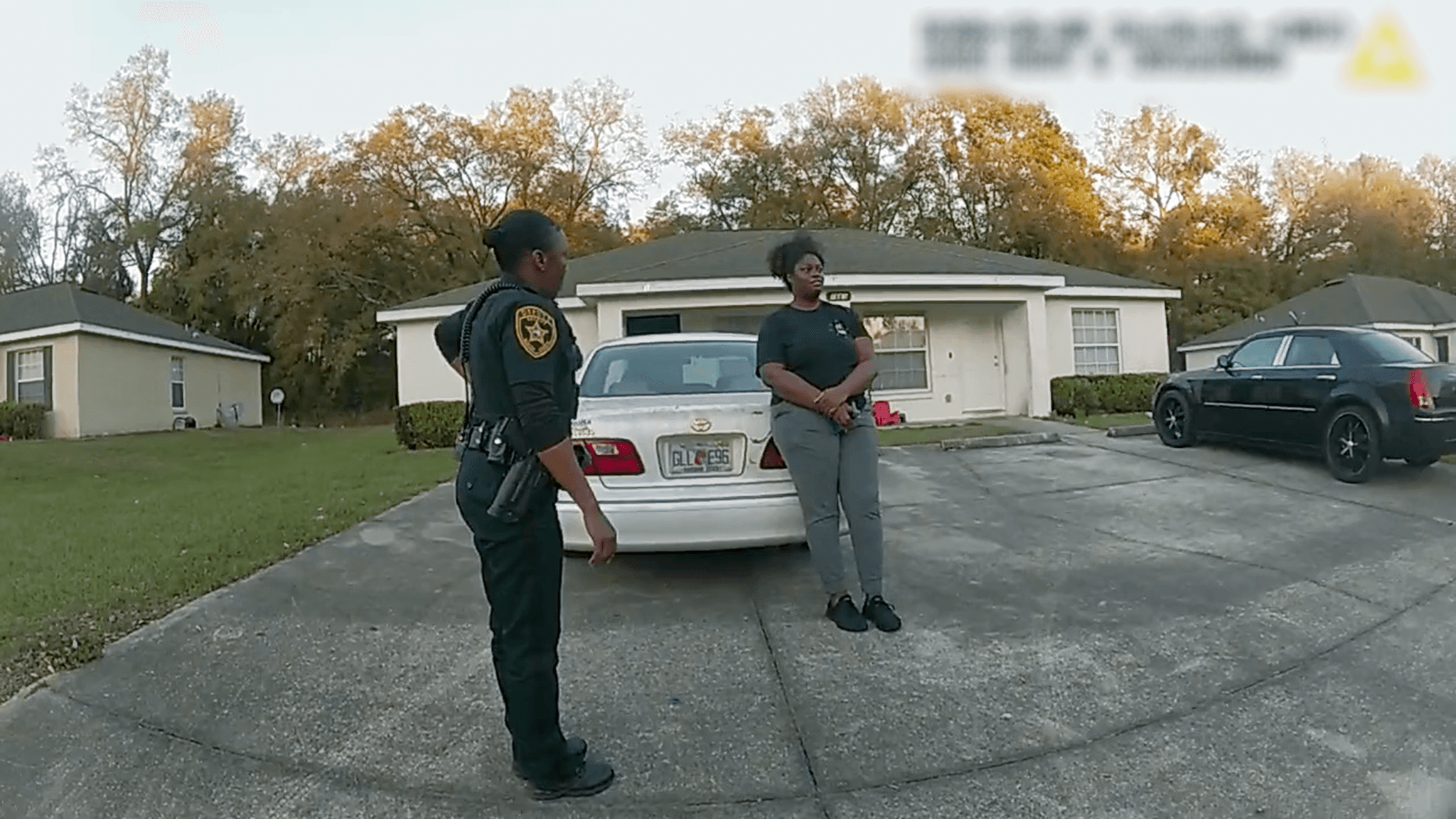
In that footage, the police were called to [the] scene multiple times by Susan, who was complaining about children playing in a yard next to her house, where they had permission to be, [and] you get to see the community as they were before. You see this beautiful, multiracial community living together, loving each other, raising children together, a really strong social network, doing everything right. They are essentially the American dream. This is the best of us, our society.
And you see how this one outlier was symptomatic of all the ills in our society that are being used against us by the powers that be. Weaponized racism, manufactured fear, lax gun laws, and then predatory laws like Stand Your Ground, which emboldened people to commit crimes and try to claim self-defense afterwards. You see all those issues manifest in this neighbor, Susan Lorincz, who, when her complaints go unheeded by the police, takes matters into her own hands.
In this footage, you see the entirety of systemic failure. Oftentimes body camera footage is a tool of surveillance, to dehumanize us as people of color. We thought we could flip the lens on that and use it to humanize this community. And again, after terrible crimes happen to us, we are often criminalized, our children are adultified. We felt the footage was undeniable and, again, could show the community as they truly were, and with no influence of a filmmaker being on the ground, with no influence of a journalist.
From The Perfect Neighbor (2025), dir. Geeta Gandbhir, courtesy Netflix.
NBB: I’m wondering if there were any concerns about using police body cam footage to tell Ajike’s story.
GG: I think if we had not had the footage, there would not be a film, because I did not want to go back and retraumatize the community by sitting them down and making them talk through a horrible incident that they had all lived through, so the body camera footage in some ways felt like a way to tell this story without retraumatizing the community or making them relive it.
But the concerns were definitely there for the people in the footage. If people were going to appear in this footage, we wanted to know that they knew what we were doing and that we had their permission. So, we actually went through a very long process of backtracking and trying to locate all the people in the footage. And luckily the community was tight-knit, so we made sure to contact everyone. That block was so popular that there were kids who would come from the neighboring area to play. Some people we could not find, so we redacted their faces and made sure that they were not seen. What’s interesting is that the police also redacted some people’s faces.
NBB: In the footage?
GG: In the footage. You see this large, kind of hideous square if we couldn’t find people, [to] make sure they were not visible and you couldn’t identify them. We also made sure to talk to everyone and tell them what they were doing [in the footage] and made sure they understood.
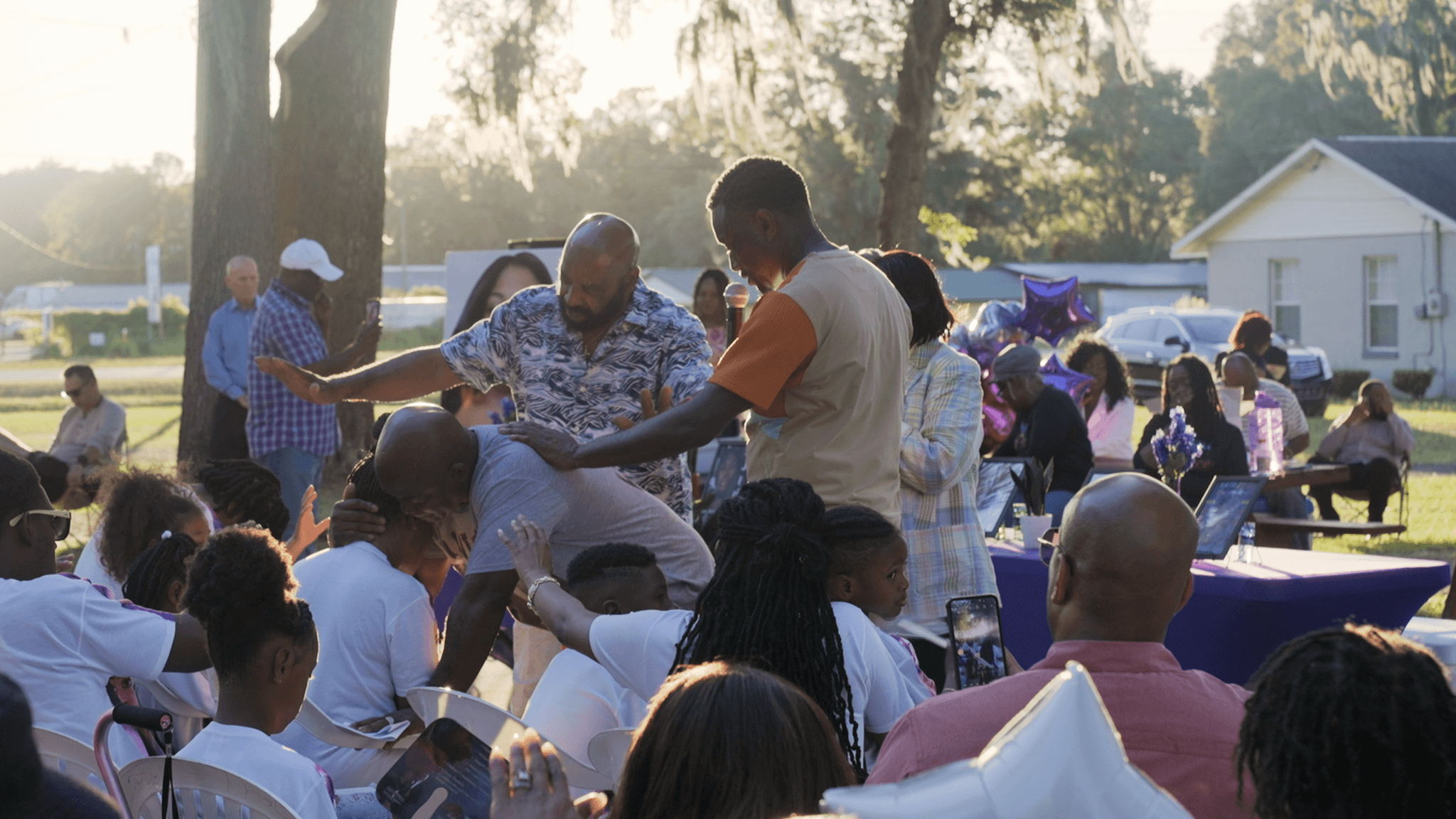
We held a community screening before the film aired on Netflix to make sure that people remained true to their consent, because consent can be fluid. When we shared it, their reaction was visceral. There were tears, there was crying, they were talking to the screen, they were reliving it. And my producers were like, “Have we made a mistake? Do we need to shut this off?”
But afterwards, they talked about it and they said that it was cathartic for them, and that they needed to walk through it, and they understood what we were doing, and no one rescinded their consent. They said that they wanted the film out there, because they didn’t want any other community to have to go through what they went through. Ajike’s mother was there too for that screening.
We also made sure to let all of them know that we would provide counseling, therapy, anything that they wanted around the time the film was released or even before the film was released. We didn’t have anything to offer them as far as financial support, but I had this pipe dream that if we made this film, maybe someone would pick it up, and we could give the money to the family.
We made the film very independently, with no money. We put in our own money, and we begged and borrowed and did all the things, but then it went to Sundance and it sold to Netflix. I paid my crew and team for all their love and unpaid labor. But we were able to give the majority of the money to the family. So, that to me was one of the biggest wins.
NBB: As you were talking about consent, I thought about Susan. How did you handle consent with her?
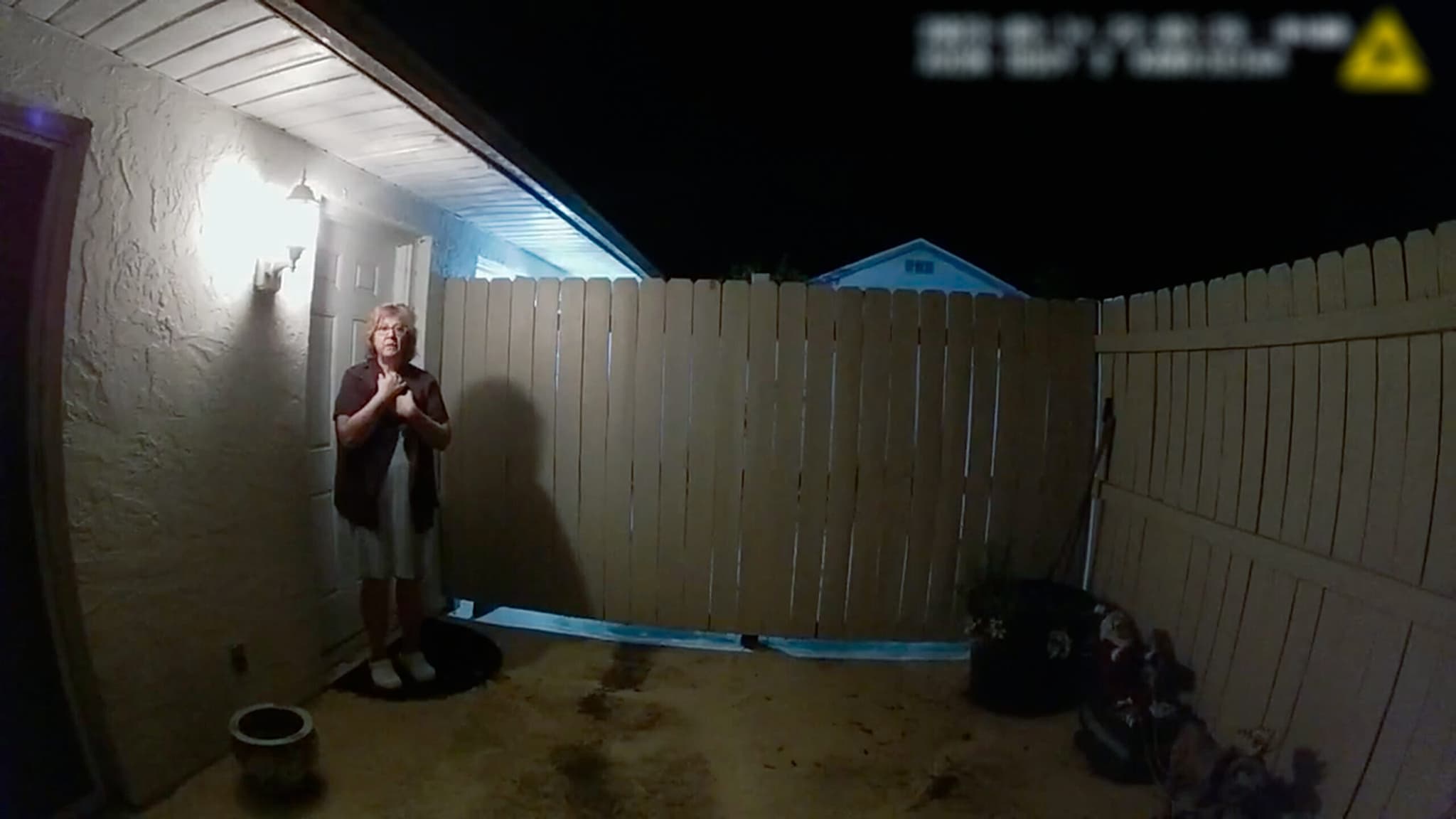
GG: We were not able to talk to Susan. We tried to give Susan as much of a voice as possible in, again, her grievances, real or perceived. It was important to us to showcase them. Susan actually has more time on-screen than Ajike does. But Ajike and the community function as one side of the story, and Susan is the other. We tried very hard to—as you are meant to in documentary films—show both sides, so Susan’s perspective is in there, unvarnished.
And I believe 100% that the system failed her, because this was entirely preventable. She should never have had access to a gun, but because she was just seen as a nuisance, never as a threat, she was able to escalate on the police’s watch and do something very dangerous.
From The Perfect Neighbor (2025), dir. Geeta Gandbhir, courtesy Netflix.
NBB: I will move into what has seemed, at least from my perspective, to be a hotly contested issue of consent, which is with Ajike’s kids. On police body cam footage, they are told by their father that their mother has been killed. You had concerns about keeping it in the film, and you talked with Ajike’s mother about that. Can you tell us about why you decided to keep it in?
GG: One of the things we did not want to do was dwell too much in the shooting. So we chose not to do anything around recreating it, or the way I think in this country we see violence against Black bodies on repeat [with] viral videos, et cetera. It’s traumatizing to the community and also numbing to folks who just start to normalize it.
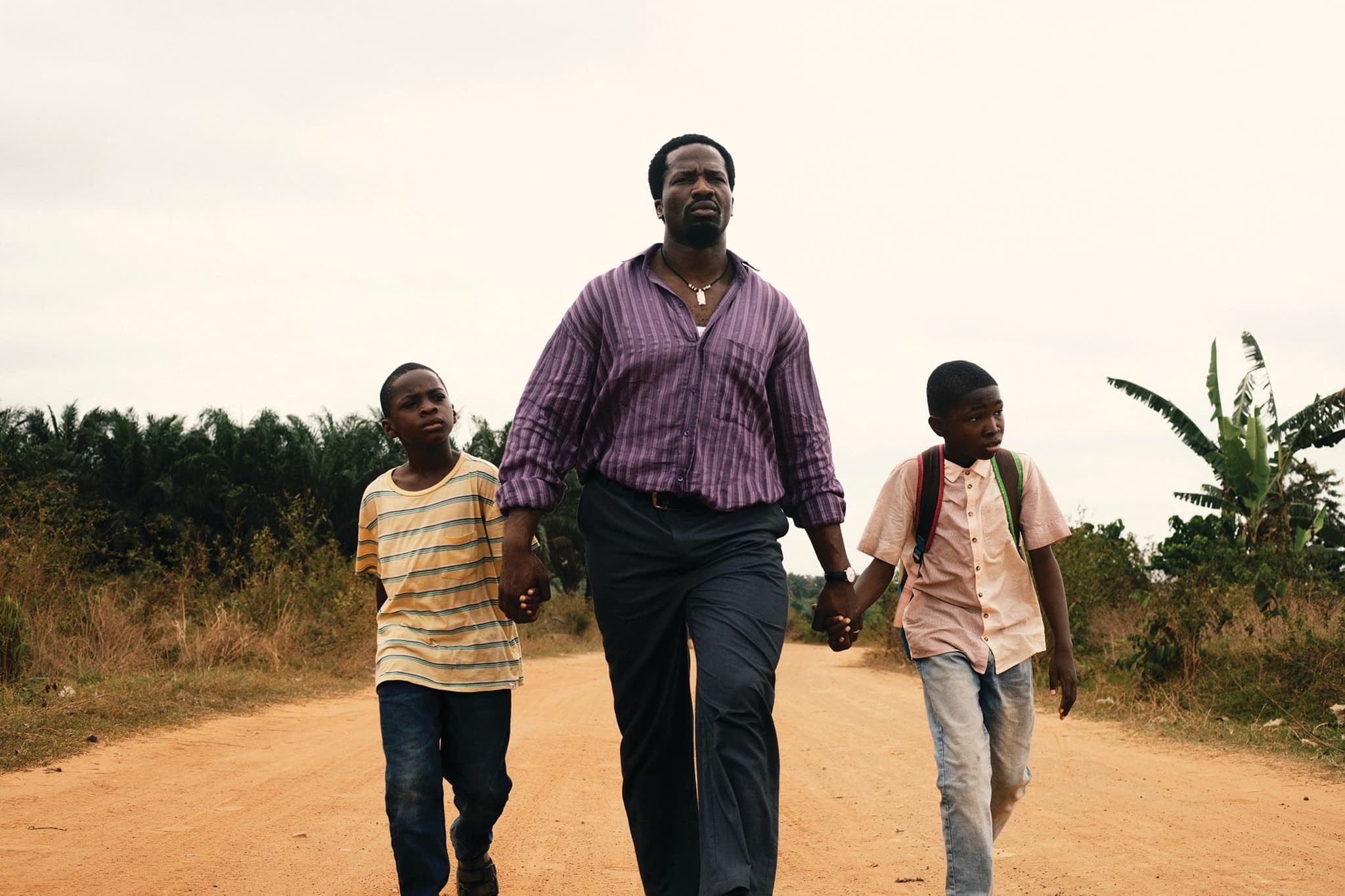
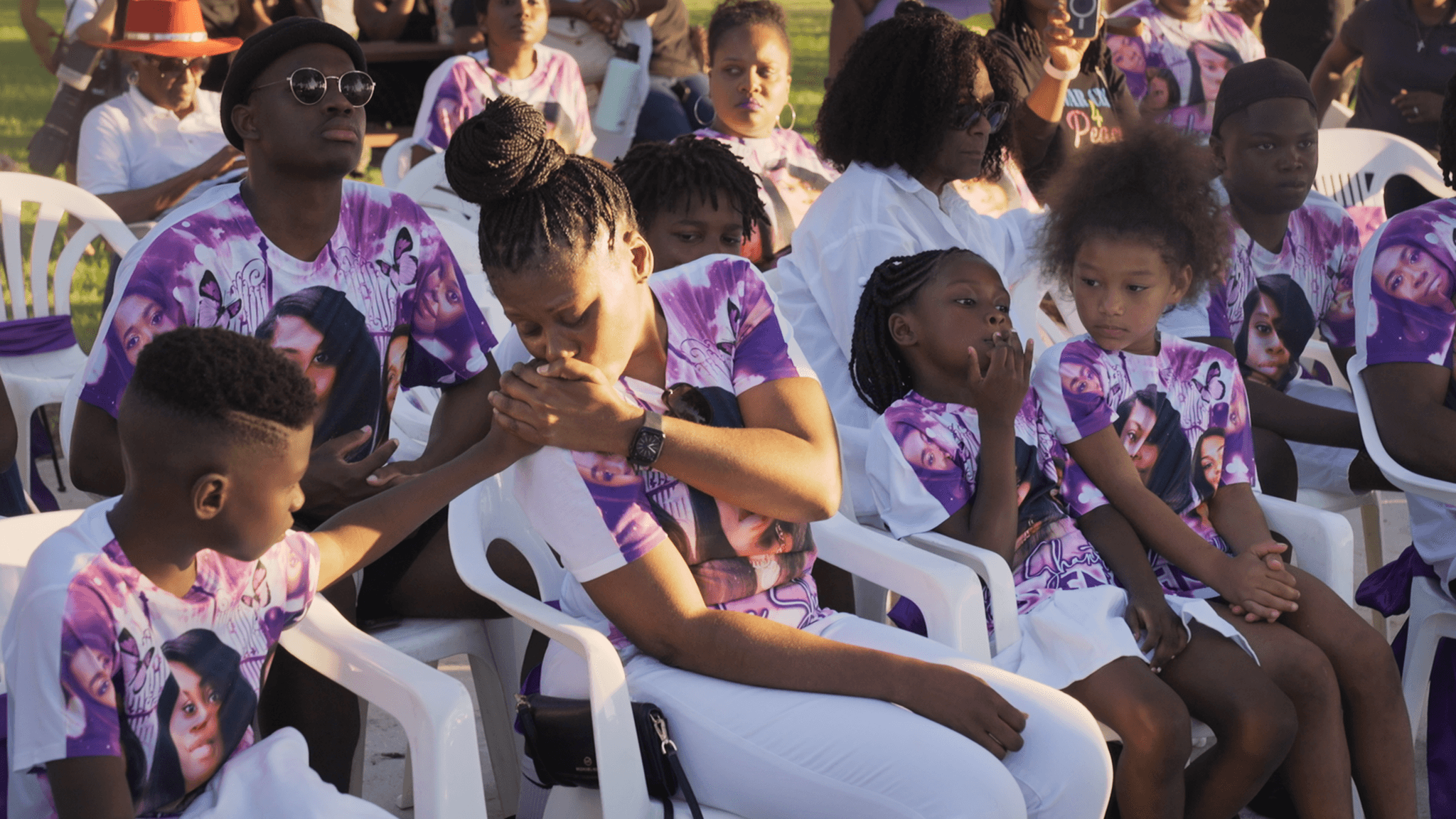
The father showing up and then choosing to tell the children right then and there was shocking to us. What you see in that moment is probably the worst moment of these children’s lives. You see grief in a way that is devastating. And it is so interesting, because people are almost more devastated by the grief than they are [by] the shooting. Violence is so common that we are no longer shocked by shootings, but seeing those children break down and wail and cry is something that people are just floored by. So when we saw it in the privacy of the edit room, we were devastated by it.
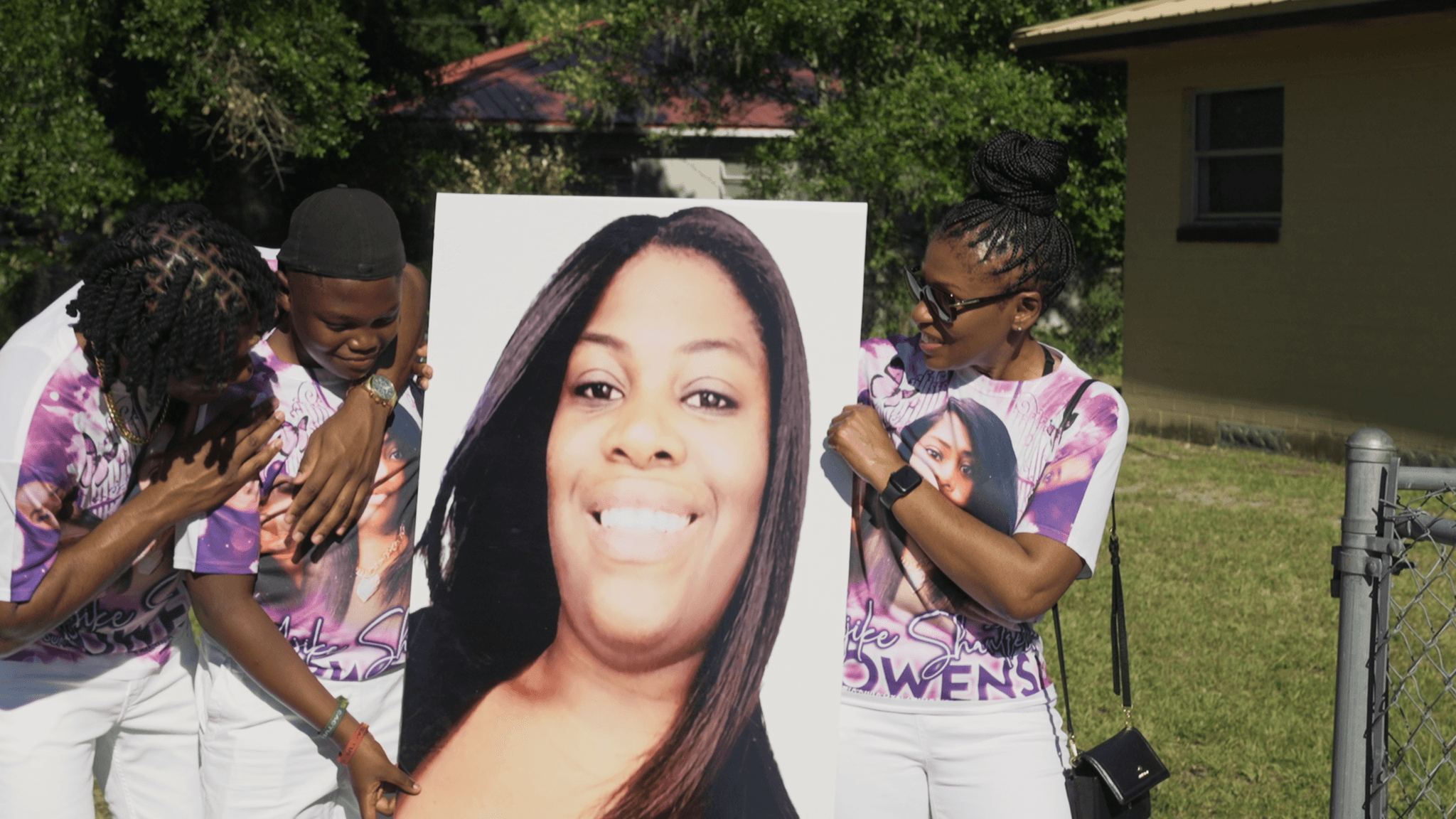
I left it in and showed it to Ajike’s mother. Before this film went to Sundance, it was really important to me that she see it and that she give permission to proceed, because this is her daughter’s legacy, it’s her grandchildren, so I sent it to her. She wanted to watch it alone, and I said, “This is up to you. You tell me what you want to do. If you want to throw this in the garbage, it goes in the garbage.” And she said the first time she watched it, it actually made her physically ill.
Then she took another day or two and watched it again. And she said, “I want this out there.” We talked about that moment, the worst day of your grandchildren’s lives. They’re gonna grow up and eventually see this. Do you want this out in the world? And she was like, “No, you leave that in. That is the true cost of gun violence, and people don’t care about the fact that my daughter was shot. If my grandchildren had to go through that, then the world can witness it, because the shame is theirs, a shame is on the system.”
She takes a lot of strength from Mamie Till. Emmett Till was brutally lynched, and his mother shared pictures of his body afterwards, had reporters come in and take photos and share them, because she wanted the world to know what happened to her baby. So we left it in.
NBB: The scrutiny that has come from that scene, seeing these kids break down, have to learn of their mother’s death—just the whole thing wrecked me. And I think part of what we have seen debated [in] podcasts and media is this idea that that was an unethical decision that you made. Talk about the type of scrutiny that The Perfect Neighbor has received. It seems to be a part of a larger trend around social impact or social justice films, especially when they are made by people of color. Can you speak to that?
GG: So I do think it’s very interesting, because there are other films about war [where] you watch people die. You watch people shot dead, and they die on camera, and you see incredible violence. They are not critiqued in the same way. When we make films about people of color, particularly films about racism, there’s greater scrutiny around everything that we do and our choices. I think some of the discomfort around this film is about the fact that Susan, the perpetrator, is a white woman, and the victim and the victim’s family are Black. And Black and Brown people are so often dehumanized. We’re not allowed to have those feelings. The shame that comes with watching the children’s grief makes everyone uncomfortable.
But I’m gonna say this. I came up with Spike Lee, who was my training ground. So, I didn’t come up with the idea [that] we’re making films to coddle anyone. Films are art, and films are meant to make statements, and ethics absolutely have to be kept in mind. We have to be conscious, particularly in documentary, [that] these are real people, these are real lives.
But at the same time, I have often heard people say, “Well, Susan was clearly mentally ill, and most people who are diagnosed with mental illness harm no one.” [They’re] wanting to find excuses for Susan, wanting to find ways to kind of justify what happened. Susan was absolutely evaluated with a thorough psychiatric evaluation, and it was found that mental illness didn’t play into the case.
I think when we are harmed, when we are murdered, when terrible things happen to us, our grief makes people uncomfortable. This is a film that speaks about the intersection of racism. Institutionalized racism, manufactured fear, and gun violence. And oftentimes, particularly white audiences feel accused. When we make films about these topics, they don’t like it. So I think that scrutiny comes from that. I don’t want to say it just pertains to white audiences, because it can be anyone. Not everyone watches a film to be made uncomfortable, you know?
I made this film as an expression of my heartbreak and rage. I didn’t know what to do with it. That’s why we make art, you know? Someone described the film as a howl, and I think that’s true.
From The Perfect Neighbor (2025), dir. Geeta Gandbhir, courtesy Netflix.
NBB: What was your editing process when dealing with this amount of footage? What was your first step in sorting through everything before creating a structure, and what did the editing team look like?
GG: The editing team was Viridiana Lieberman, my incredible editor, and me, and that was it. My producers would weigh in, and we would share cuts along the way, but it was us. Viri and I knew from the beginning that we wanted the viewer to feel immersed in this community.
I also come from a scripted background, and to me the film played like a horror film. People often ask me what documentaries I thought of, but I didn’t think of documentaries when I made this film. I thought of films like The Blair Witch Project (1999) and Paranormal Activity (2007), because the footage sort of lent itself to this horror film, and I also believe that the community and Susan lived out a real-life horror experience. So I wanted to make something that would hold audiences in that way, that was really gripping and immersive and propulsive.
NBB: There are so many questions in the chat. “I am so impressed with Gita’s thoughtfulness and care for the subjects of the film. I’d love to know where she learned to approach filmmaking in this way.”
GG: Thank you for saying that. I worked on a film called Take It from Me (2001) that was about welfare reform and people impacted by that, and the young filmmaker who was making that film had been a caseworker and then decided to make a film because she saw how welfare reform was harming people. She had relationships with all of the people in the film, and it was important to continue to support them, because she had been their caseworker. So that was a model.
And then Spike Lee. I worked on When the Levees Broke (2006), and his relationships with the people of New Orleans who he interviewed for the film continue today. He saw it as not just an extractive maneuver to make these films, but he felt it was incredibly important to continue to care for them.
Collectively, there’s a number of us who have been speaking about and working on decolonizing documentaries in the Western world. [Documentary] has traditionally been a colonial exercise, people from one community going into another community and telling their stories, but oftentimes with an imbalance in the power dynamic and in the racial dynamic. And it’s often a white lens and can be very extractive. That’s something that we have been working collectively to change.
I’ve learned from my colleagues as well, who are constantly striving to do better. We used to call people in our films “subjects,” which is so colonial, [as if] we are royalty and they are subjects. Where did that come from? Now we say “participants” or “collaborators,” and making decisions based on that and a code of ethics has been really, really important to me. So I’m super grateful to this community, having people who hold you accountable and who ask these hard questions.
Share
Related