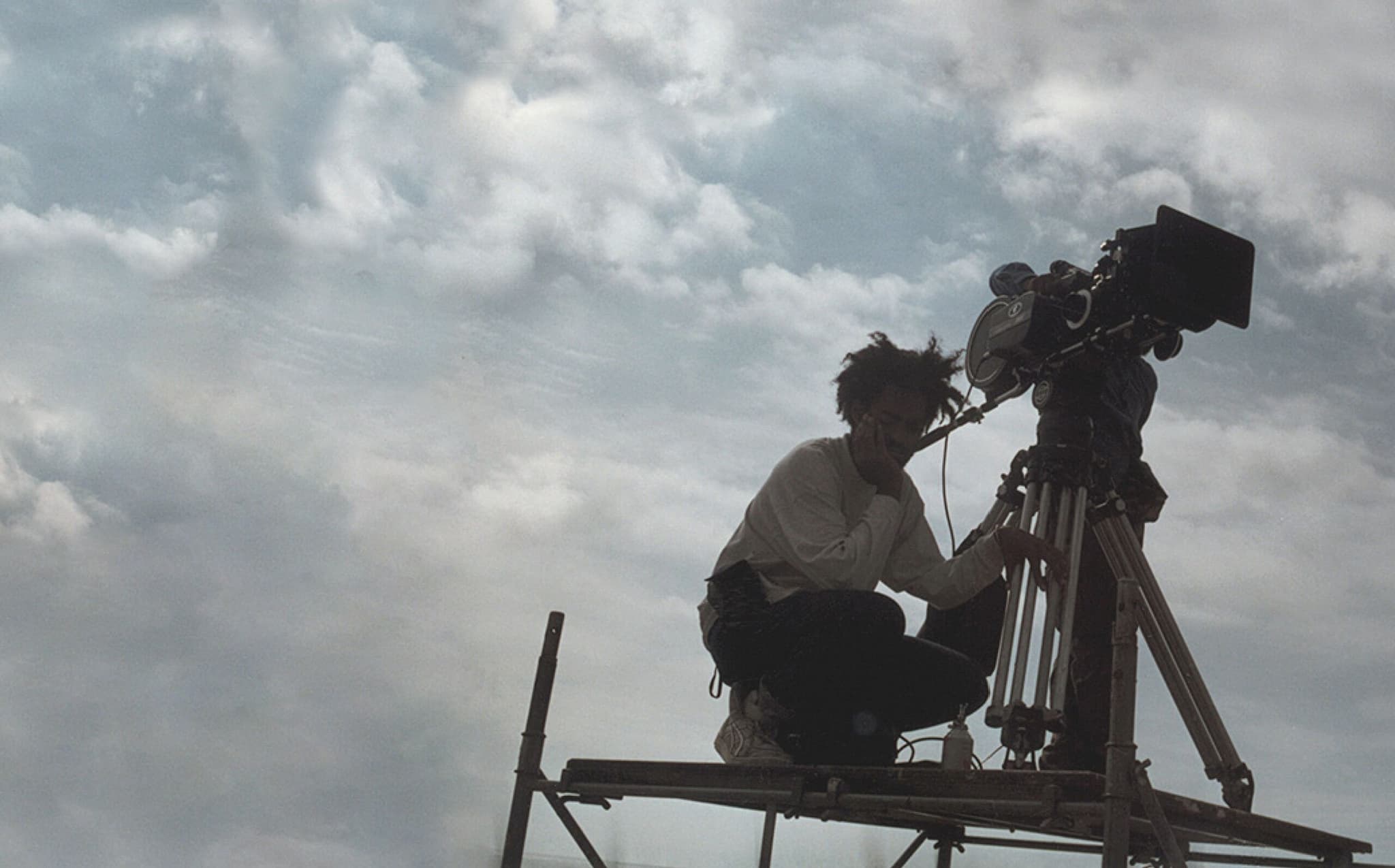
Arthur Jafa photographed by Kerry James Marshall on the set of Daughters of the Dust, 1989.
(Interviews)
Arthur Jafa Returns to Cinema
Issue 010
MAY 20, 2026
To most people, Arthur Jafa isn’t emerging. With a career spanning decades, he has worked as a cinematographer on seminal films such as Daughters of the Dust (1991) (for which he won the award for best cinematography at the Sundance Film Festival) and collaborated with directors Spike Lee and Stanley Kubrick, along with musicians such as Kanye West and Solange Knowles.
He has achieved his greatest acclaim as a visual artist. His 2016 video essay Love Is the Message, the Message Is Death (which had its festival world premiere at BlackStar) is considered a defining meditation on Black American life and is held in several major museum collections. In 2019 he was awarded the Golden Lion award at the Venice Biennale for his film The White Album (2018) and has since exhibited extensive new bodies of work at 52 Walker, Gladstone Gallery, Sadie Coles HQ, and more. His practice spans video art, installation, music video, film, and multimedia, and at 65 years old, Arthur Jafa (nicknamed AJ) is recognized as one of the most influential contemporary artists of our time.
However, according to him, he is still emerging. He is an artist acutely aware of timing, contingency, and historical unevenness: of generations whose visions exceeded the conditions that could sustain them, and of an art world that only belatedly makes space for certain forms of Black experimentation. He situates his own trajectory alongside figures such as Jean-Michel Basquiat and David Hammons, not as icons to be imitated but as positional landmarks, as artists whose lives clarified what was possible, even when full realization remained structurally foreclosed.
Our conversation traces AJ’s long, nonlinear emergence, from growing up in Clarksdale, Mississippi, and studying architecture at Howard University, to cinematography, the difference between movies and cinema, the dynamics of the art world, and the unrealized ambitions of Black independent filmmaking. Along the way, AJ reflects on formative encounters with movies, the difference between consumption and authorship, and how world-building, affect, and culture shaped his visual imagination. AJ speaks candidly about ambition, trauma, delayed fruition, and the experience of returning to cinema later in life, at the precise moment when his artistic influence has begun to register most strongly with a younger generation. Now, as he turns once again toward filmmaking, toward “movies,” AJ is at a point of reckoning: reflective but unsentimental, skeptical of legacy, and still, fundamentally, oriented toward all of his unfinished work ahead.
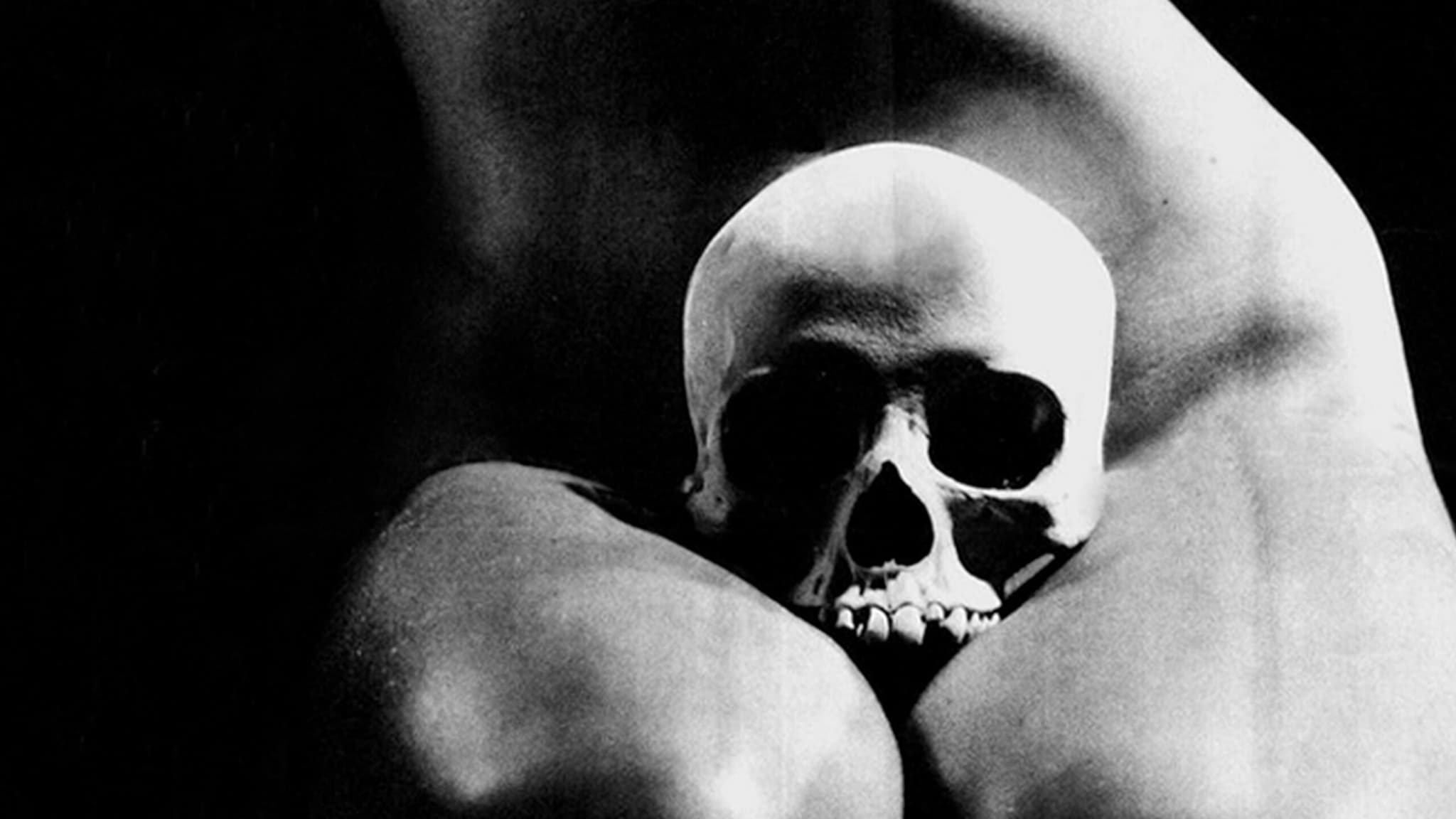
From APEX (2013), dir. Arthur Jafa, courtesy the artist, Gladstone Gallery, Sprüth Magers and Sadie Coles HQ, London.
Roisin Tapponi: You left Mississippi to go to Howard University to study architecture. While you were there, you met Haile Gerima, who sent you off to work as an assistant cameraman with Charles Burnett on My Brother’s Wedding (1983). Was that the experience that made you want to become a filmmaker?
Arthur Jafa: Oh no, not at all. But I had become ambivalent about architecture as a career path, even though I love the art form. It was my first love, really, in conjunction with my longstanding interest in movies.
I grew up interested in movies, not cinema. And when I got to DC, a large urban cosmopolitan area, I was able to see a lot of things that previously I’d only read about. I was exposed to a ton of films that until that point I had never experienced before. And this was pre-VHS and home video. At the time, you either saw a film when it came out or when it would pop up on television or something like that, but it was just very hard to see things. There was no sort of library culture, so to speak, around movies. But DC had this very great repertory theater. So, in conjunction with being at school and being shown films in school, I was also able to go out on a fairly weekly basis to the theater. I could read about a film and see it within six months to a year of reading about it, which was unprecedented for most anybody, certainly for me, at that point.
So, that’s how I stumbled into the so-called Black indie, Black cinema thing. Initially, I grew up on horror films and monster movies—Alien (1979), things like that.
RT: Is that what you meant when you said there’s a difference between movies and cinema?
AJ: If you say “movies,” it’s more like you’re a consumer. It’s different from cinema, the product of an auteur’s vision. I thought of movies the same way I thought of cars. I never thought of a person designing a car. I just thought of a car being made or manufactured or something. I didn’t think of cars coming from somebody who had a dream, who had a vision, and who actually built it.
RT: What was your earliest memory of cinema?
AJ: Star Wars (1977) was the first film where I was aware that a person had made it, because all of a sudden it was on the cover of Rolling Stone, and there was all this talking about George Lucas and how he went to USC Film School and the whole USC versus UCLA thing.
I still remember seeing the trailer for THX 1138 (1971) in the movie theater, and it blew my mind. It just didn’t look like anything I’d ever seen. But it was also very much a movie. And I don’t think it actually ever came to Clarksdale. I [also] remember seeing 2001 (1968) in the early ’70s and how profound an impact it had on me.
RT: THX 1138 showed you something new.
AJ: The thing about THX 1138 that made it so different from anything that I had associated with a Hollywood movie was that it had a kind of veneer. It had a kind of weird coolness that ultimately I would associate more with European films. In a Hollywood film, it just felt very strange to watch everybody be nonexpressive and kind of flat. 2001 and THX 1138 had a very similar, I don’t want to say tone, but they had a similar feel. Everybody’s vibe was slightly like they were on meds, the level of their emotional affect.
RT: You expanded your practice beyond cinematography and established yourself in the art world. In terms of kinship, Jean-Michel Basquiat is primarily known in the art world as a painter, but when you look at the artist, he was so culturally prolific and impactful. You similarly move across many creative spaces. I actually think it’s a big reason why a lot of people my age—I’m Gen Z—gravitate towards your work.
AJ: I don’t know if I agree with that formulation. [Basquiat] was a brilliant cat, but I think he was just a painter. I think that he had an interest in a lot of things, and no doubt he could have done almost anything he put his mind to. Certainly no one was, in my opinion, more talented than him.
But his impact was more a combination of things like his skillset, his ability to circumnavigate some of the Black/white art world stuff in a way that some of his peers couldn’t because of their backgrounds, coming from more working-class situations. The stories of Basquiat’s mom taking him to the museum and being a member of the Brooklyn Museum. He had been exposed to a whole lot of things and had gone to progressive schools that gave him certain things in addition to his smarts.
He had a kind of cosmopolitanism that wasn’t typical of Americans. It’s not typical of Americans, for a person his age, to have lived in all these different places. He spoke three languages fluently. You know what I mean? He was a unicorn in a lot of ways, but nevertheless, he also greatly benefited from emerging in a moment that was very dynamic, certainly in the 20th century.
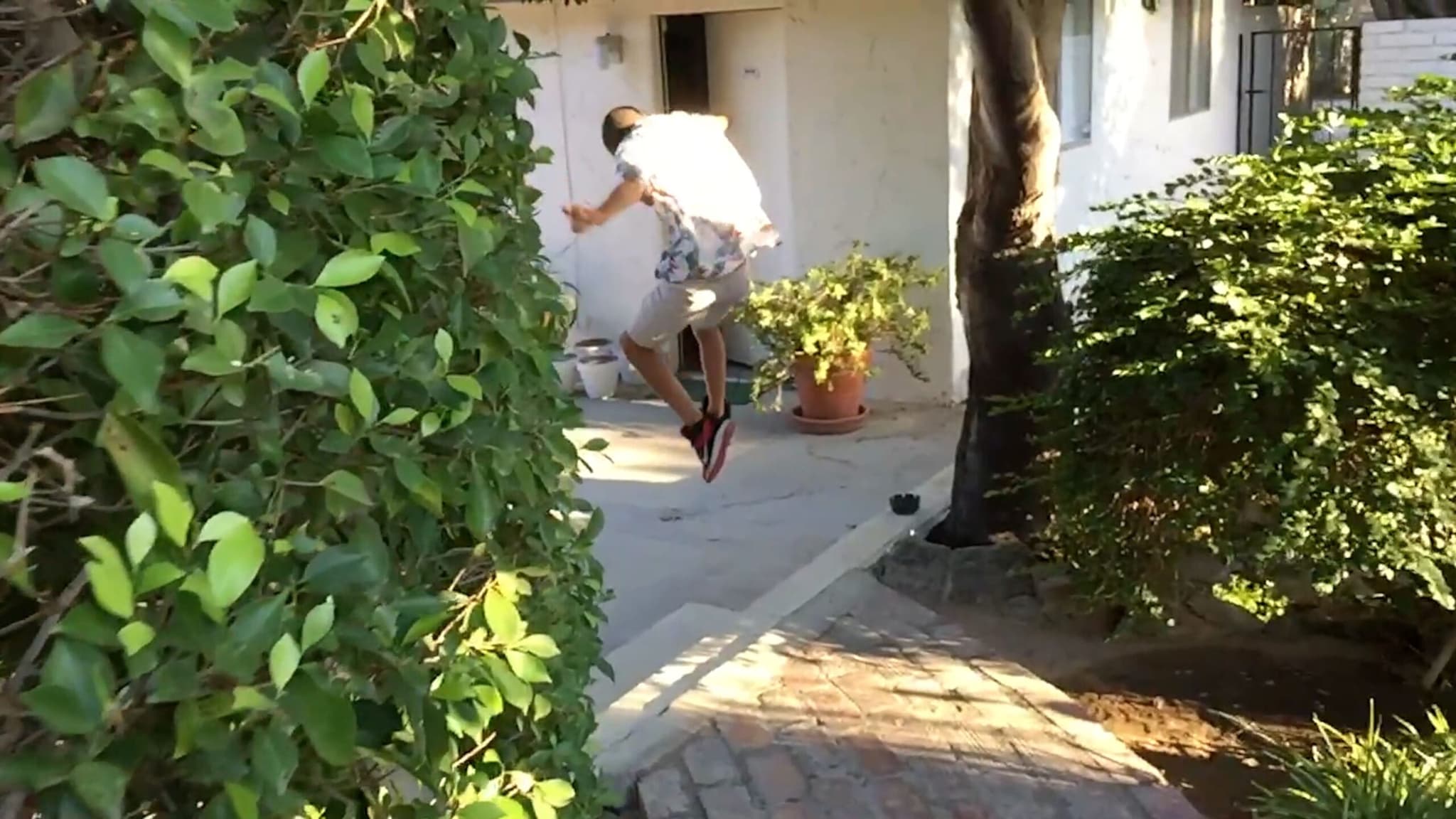
From Love is the Message, the Message is Death (2016), dir. Arthur Jafa, courtesy the artist, Gladstone Gallery, Sprüth Magers, and Sadie Coles HQ, London.
RT: What made him a genius for you?
AJ: There are choices and decisions he made that are examples of his genius—and not just his genius, but how exceptional he was. He was interviewed by Interview, which was a big deal at the time, after his first few shows as an exhibiting artist, only a year or so into his career. Interview wanted to do the profile, but he was the one who suggested that James Van Der Zee took the photos. You could write a whole book about that, or an essay, about his choice of James Van Der Zee at that particular moment. It’s mind-boggling, actually, that a young cat could make choices that were not just prescient, but so nuanced and complex in terms of the images that would be generated and in terms of the implications of [those] images.
He made himself into a kind of timeless figure from the beginning. You see it in those photos by Van Der Zee. Van Der Zee’s style normally gets talked about as documentarian, but when you see Basquiat in those pictures, he looks like he was around during the Harlem Renaissance. Which is not possible when you see his hair, but you’d think that. He’s a cat from the future.
I think a lot of that kind of stuff has been underappreciated or unacknowledged or undertheorized about him. So, let’s just say, I have emerged in the wake of Basquiat, but I was also emerging then too.
RT: You were there.
AJ: I was on my own trajectory at the same time. I’m a little reluctant to say this publicly, but I’ll just say it. The affinity I feel with Basquiat is, as they say, an elected affinity. But it is not just with Basquiat. It’s with Rammellzee, Fab 5, and the whole subway graffiti thing, none of which I had any direct contact with. I was very much an observer of it as it was happening.
Even when I was amongst them, I was definitely an outsider. I didn’t grow up in New York. I grew up in a small town in Mississippi. So even when I ended up in New York in the early ’80s, when I first was sort of hanging around in New York, I was more of a fan than anything else, but not also just a fan, because I was the same age as those guys.
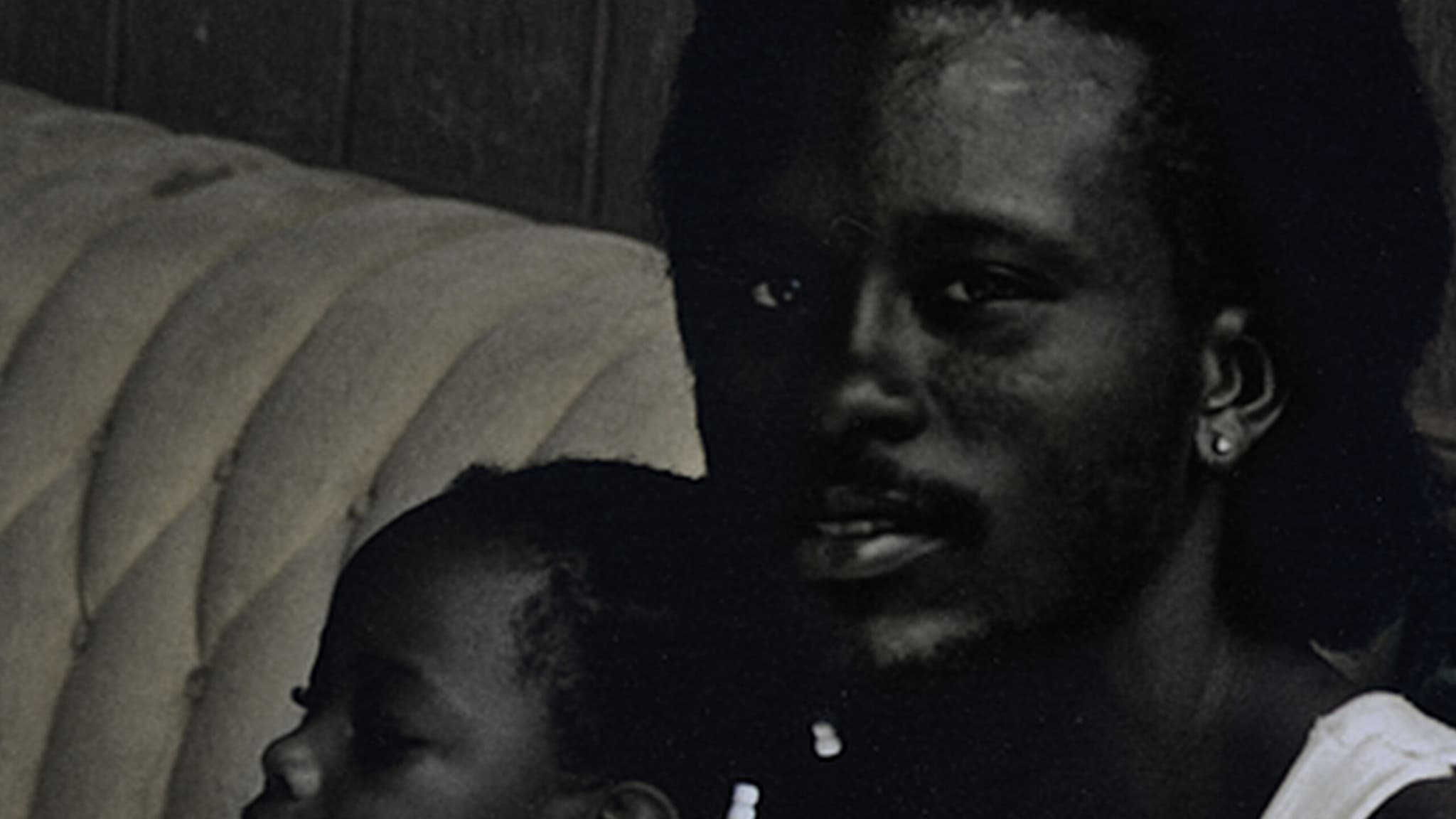
From APEX (2013), dir. Arthur Jafa, courtesy the artist, Gladstone Gallery, Sprüth Magers and Sadie Coles HQ, London.
RT: So, how do you see yourself in the art world?
AJ: I feel very much like I’m emerging, in some ways that I wouldn’t have predicted. And simultaneously, in some ways that I actually did predict. Embarrassingly, in the last year, somebody sent me a video of me from the late ’90s just saying, “I’m going to do this. I’m going to do this. I’m going to do this. I’m going to shift my focus from the film thing to art.” It’s mortifying for a lot of reasons. It’s so nerdy. It’s incredibly nerdy. I hate hearing my voice. I want to take it and slow myself down and lower the pitch of my voice. It’s embarrassing to see, but it’s undeniable. I said, literally, “This is what I’m going to do.”
RT: Who would you love to be in dialogue with artistically?
AJ: I wish Jean-Michel was still alive. I wish he was still active, and I would be doing my thing in relation to that. That would’ve been great, for all the obvious reasons.
I wonder if he really imagined how truly famous he would become. I don’t know if he envisioned himself being on coffee cups and sneakers and T-shirts and all kinds of shit, calendars. He may have, but I kind of suspect he didn’t. When he said, “I’m going to be famous,” it was more in the Warhol sense. When Warhol died, it seemed like he was so old, but he was in his mid-50s, which is in my rear-view mirror. These people, if not your models, are the landmarks that you judge yourself in relationship to. I’ve lived longer than them, and so I’m in a kind of dead reckoning space.
I don’t know what Warhol at 60 would’ve been doing. I don’t know what Jean-Michel at 30, 40, 50, 60 would’ve been doing. The last time I saw him, literally just in the street, he was saying to Greg [Tate], “I’m not doing the art thing anymore. I’m going to be a novelist.” He was so frustrated with the art world. It’s kind of hard to imagine the whole idea of him just stopping, you know what I mean? But I don’t know.
Look, at the end of the day, I’m out here guessing, trying to live my life, trying to get as close to fulfilling my fantasies and my ambitions as I can, trying to stay surprised, trying to meet the love of my life, all these things. I am just like anybody else out here.
RT: Did you imagine you’d be where you are now?
AJ: I never envisioned being where I am. I never would’ve imagined looking forward to doing my first feature film at this age. It didn’t even seem possible at a certain point. I have several projects that are kind of ready to go, and I’m right in the moment of trying to push these things to a certain kind of fruition. But I’m pretty accepting and pleased with where I’m at now.
Share
Related