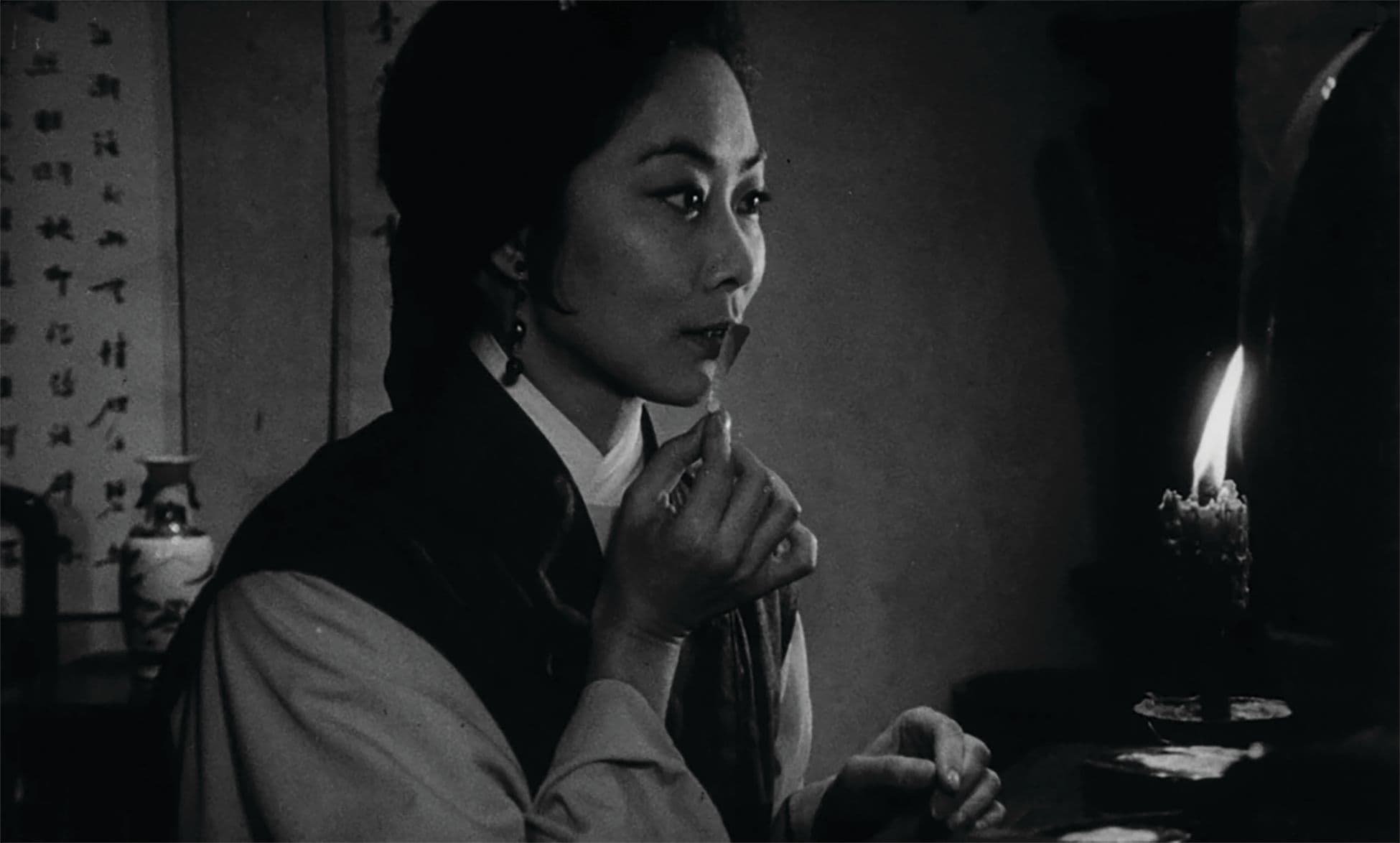
From The Arch (1968), dir. T’ang Shushuen, courtesy M+, Hong Kong.
(Features)
Seen But Not Visible: The Paradox of Film Restoration
Issue 010
MAY 20, 2026
The viewer next to me confessed that they were only at the 63rd New York Film Festival screening of T’ang Shushuen’s The Arch because other festival screenings were sold out.
As the lights went down, the 1968 Hong Kong art house film, newly restored by M+ Museum, would unfold before a half-filled theater to an audience that was—I had to assume—at least partly there as a last resort. A week later at the festival, a showing of Mary Stephen’s newly restored 1978 debut feature Ombres de soie was likewise sparsely attended. Film restoration is generally regarded as a resuscitation, a way of bringing lost films back to life and into circulation—the be-all and end-all of a film’s life cycle. These screenings didn’t feel like isolated disappointments, but quiet reminders of something I’d been thinking about: the difference between a restored film being seen and a restored film being visible.
Visibility is not simply a film projected in front of people, any number of people. In post-pandemic times, when moviegoing audiences have diminished, that definition feels insufficient. Instead, visibility implies sustained availability, whether a film enters ongoing circulation beyond festivals, becomes part of critical discourse, and, more importantly, can be found by someone who wants to see it. A film that’s visible is not just seen once and archived again. It’s written about, referenced, and remembered.
The Arch is often considered a monument in Hong Kong film history, one of the first independent art house films, and so ahead of its time that it preceded the Hong Kong New Wave by a full decade. Adapted from a Ming Dynasty folktale, the plot centers on Madam Tung, who becomes consumed by the desire for a young captain whom her daughter also loves. This happens on the eve of Tung receiving a ceremonial arch, an honor for widowed women who remain unmarried and loyal to their deceased husbands. During a time when kung fu dramas dominated the Hong Kong film industry, The Arch combined a critique of traditional gender roles with radical formal experimentation. Shot by Satyajit Ray’s frequent collaborator Subrata Mitra and edited by Les Blank, the film superimposed multiple images within frames and employed freeze frames and dissolves.
If The Arch struggled to find an audience at a major festival, how else can it reach viewers? If attendance is not the sole parameter of measuring visibility, how do institutions prioritize which films to restore in the first place? Presumably they would favor titles with pre-existing interests. Dan Sullivan, a New York Film Festival programmer, described how the Revivals section tries to “steer people’s attention towards films that are less well known.” He cited Angel’s Egg (1985) by Mamoru Oshii as an example. But Angel’s Egg’s obscurity is relative only to the film festival circuit. The film has enjoyed decades of cult appreciation: Oshii is globally recognized for Ghost in the Shell (1995), and Angel’s Egg was his earlier, more experimental collaboration with Yoshitaka Amano, famed for Final Fantasy character designs. By the time the restoration screened, Angel’s Egg already had anime historians discussing its significance, Reddit threads dissecting its symbolism, and a community of viewers awaiting its release. The Arch had none of this.
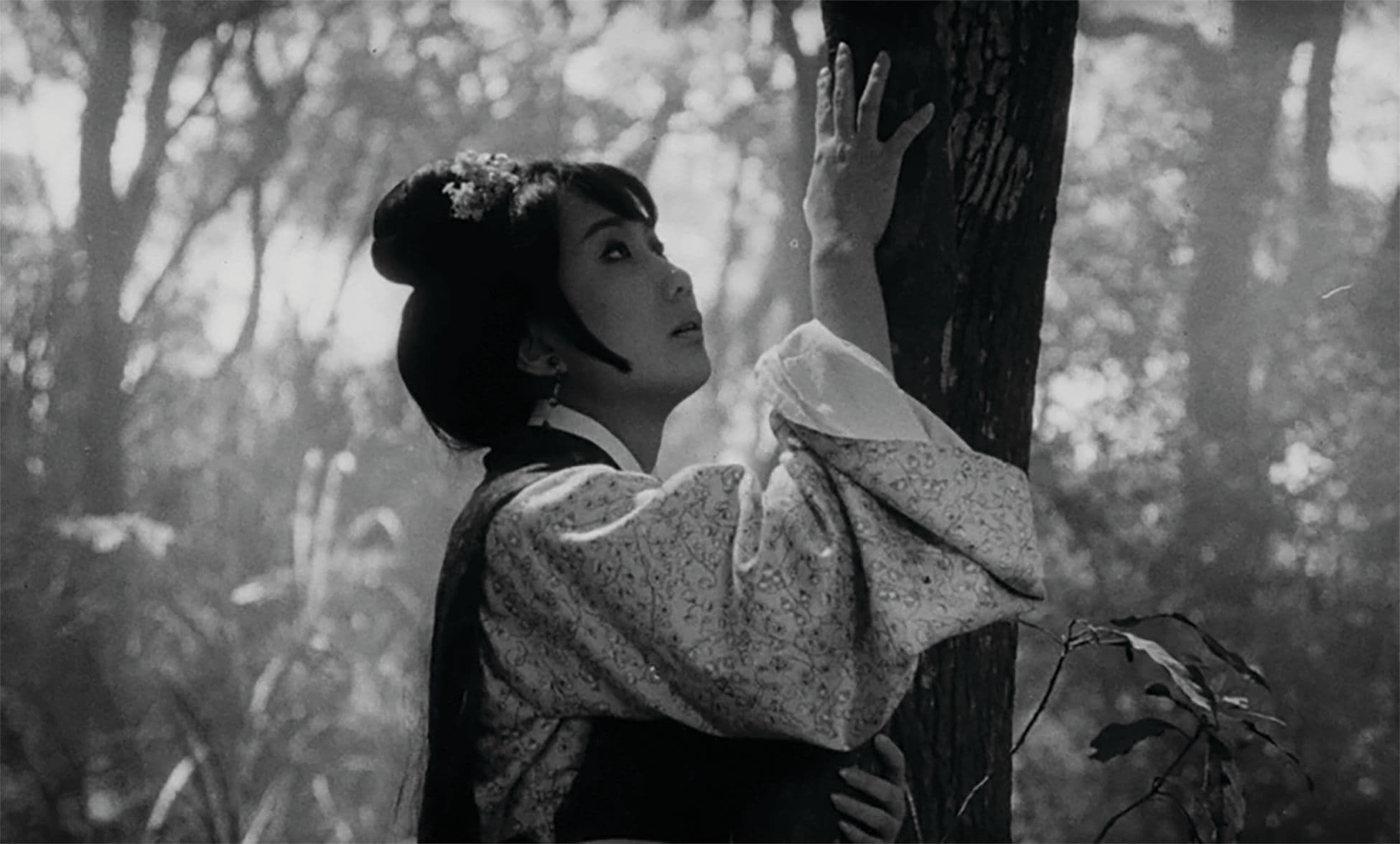
From The Arch (1968), dir. T’ang Shushuen, courtesy M+, Hong Kong.
At M+, the rigorous selection process for restorations begins with a long list of potential films developed over six to eight years. According to Chanel Kong, the museum’s Curator of Moving Image, The Arch represented “a different gesture” that diverged from mainstream Hong Kong cinema. After graduating from the University of Southern California, director T’ang returned to Hong Kong and independently funded The Arch, becoming the first woman in Hong Kong to release a film without studio backing. The film premiered in San Francisco, then at Locarno and Cannes, before being redubbed and released in Hong Kong two years later. After making The Arch, T’ang directed three more features before relocating to Los Angeles, where she opened a restaurant, leaving filmmaking behind.
Before the 1980s, very few Hong Kong films reached international festivals. The Arch was an anomaly. It failed commercially at home but found success abroad. Restoring such a film signals a broader understanding of Hong Kong cinema. It moves beyond local box office success to include transnational and diasporic works, complicating the idea of what Hong Kong cinema is or who it’s for. Kong emphasized that M+ isn’t focused on restoring the “masterpieces”—those are already being handled by film companies and studios. Their goal is to tell a story of Hong Kong cinema that exists outside calcified narratives Western audiences know best: the martial arts epics, gangster thrillers, and the canon of male auteurs like John Woo or Wong Kar-wai.
But the challenge of visibility lies beyond curatorial intent. “For restoration projects, it’s not like, ‘Okay, I just picked some stuff out, and then it’s going to happen.’ Where are the prints? Do we have the relationships to get those prints, to compare them, to have the expertise to adjudicate what we’re actually investing in?” Kong says. The technical challenges alone, including tracing material histories, securing rights, and accessing surviving elements, shape what’s practically achievable.
And then there’s funding. Restoration is expensive. The Film Foundation estimates that restoring a feature film can cost anywhere from $50,000 to $450,000, depending on the condition of the materials and the level of work required. The costs accumulate through the stages of film element acquisitions, digital scanning at high resolution, frame-by-frame dirt and scratch removal, color correction, and audio restoration. This creates a circular dilemma: restorations require funding, funding requires some evidence of potential impact, and impact often depends on existing cultural infrastructure.
Then why do some restored films generate excitement while others don’t? Charles Burnett’s Killer of Sheep (1977) was among the first 50 films placed in the National Film Registry and selected by the National Society of Film Critics as one of the 100 Essential Films, long before its 2007 restoration. When it received a new 4K restoration and Criterion release in 2025, the film already had a critical following. The rerelease wasn’t a revelation but a homecoming, as audiences returned to it rather than discovering it anew. The restoration of Akira Kurosawa’s Seven Samurai (1954) led to sold-out screenings, retrospectives, and the film’s availability on multiple streaming platforms. It drew not only Kurosawa devotees but audiences who’d heard the film referenced in everything from Star Wars (1977) to The Magnificent Seven (1960).
These films succeeded not just because they were restored, but because of the accumulated cultural infrastructure that already existed. Japanese cinema, built on an industry model similar to Hollywood’s, is a revered national art and has had a strong, decades-long presence in New York. By the time a restored Japanese film screens in the United States, it enters a cultural landscape already primed to receive it, whether through existing critical reputation or ongoing discourse. Hong Kong cinema has had a different trajectory. While action films and certain commercial genres have circulated widely, early art house Hong Kong cinema hasn’t had the same sustained visibility. There’s less scholarship, fewer repertory screenings, and a smaller foundation of familiarity.
This doesn’t mean familiarity is a precondition for discovery. In the video store days, you might stumble upon The Arch if its cover caught your eye between titles you recognized—a serendipity that the streaming era doesn’t afford. Now recommendation algorithms feed us content based on what we’ve already watched. “Curated” playlists on streaming platforms hypercategorize films in ways that feel precise but create echo chambers of taste that limit exposure. You’re unlikely to encounter The Arch unless you’re already searching for 1960s Hong Kong art house cinema, but that would require knowing it exists in the first place. Finding something outside our established tastes demands deliberate effort and intention, and festivals are among the last spaces for accidental encounters.
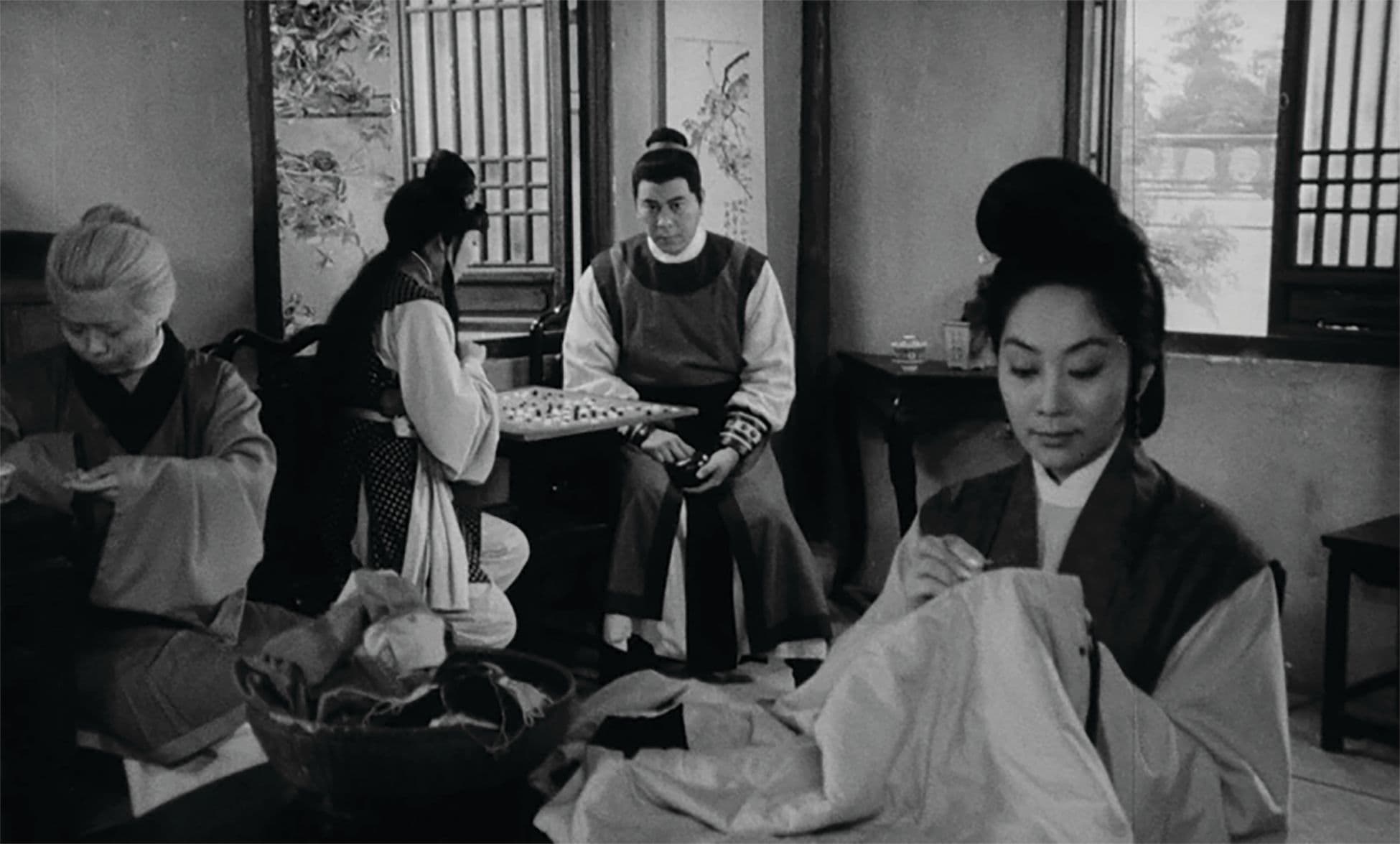
From The Arch (1968), dir. T’ang Shushuen, courtesy M+, Hong Kong.
When Japan Society and Metrograph co-presented a Mikio Naruse retrospective in June 2025, audiences knew where the films fit in the history of Japanese cinema and could critically relate them to Yasujirō Ozu, Kenji Mizoguchi, and Kurosawa. Kong described the Naruse retrospective as “opening a dictionary and then knowing that it’s alphabetized,” meaning that retrospectives of canonical directors like Naruse serve an important taxonomic function. They offer clear entry points and navigable frameworks to our understanding of film history. This systematic approach has its values, but it isn’t the whole picture. “Sometimes,” Kong adds, “you have to read novels and poetry as well.” The Arch is poetry in this sense; it is singular and resists easy historical placement. It doesn’t fit entirely into the dictionary of Hong Kong cinema, because it preceded the Hong Kong New Wave movement that would later define it. Perhaps this makes it harder to program and contextualize, but it’s no less worthy of attention.
I think about that viewer next to me at The Arch who stayed through T’ang’s slow, devastating portrait of female sacrifice. Madam Tung finds herself torn between her own desire and her family’s reputation of chastity and fidelity. Remarrying would take away the chance of arch bestowal, which was an honor of virtue for the entire village. The film defies easy catharsis and lingers in the discomfort of constrained longing. Societal expectations slowly turn into a psychological prison, where virtue becomes a form of violence. I don’t know what the viewer thought, whether it stayed with them, or if they’ll seek out more Hong Kong art house cinema. I think about the people who attended Mary Stephen’s screening, even if the theater never filled. These screenings weren’t failures.
But where does the experience go? Without essays to contextualize or subsequent screenings, the encounter remains fleeting and isolated. Yet perhaps this in itself is a form of resistance: a viewer who stays and carries the film forward without the need for validation. That person next to me at The Arch represents a kind of visibility that is not measured by metrics but by presence and memory. This is what independent cinema has always offered: a space for works that don’t fit neatly into established frameworks of genre, gender, or geography. In a moment when archives are defunded and histories are at risk of erasure, the act of restoring, screening, and watching these outlier works can feel like a civic duty. Restoration may be the beginning of a film’s second life, but how do we ensure that for 90 minutes in the dark a film lives again?
Share
Related