Original illustrations by Pola Maneli
(Features)
Cuffing Season
Issue 010
MAY 20, 2026
In January 2014, the plot of the sitcom New Girl (2011–18) took a strange turn.
Winston Bishop, the fourth in the show’s cast of quirky 20-somethings, announced he wanted to become a cop. Winston, played by Lamorne Morris, was an erstwhile professional basketball player for a D-club-level Latvian team and sports radio show personality. His previous jobs provided a hilarious background for a character whose offbeat life included an undying obsession with his cat Furgeson and love interests ranging from crazy cat ladies to wacky serial pranksters. Winston, his cat, paramours, and professional interests were, in a word, silly. And then, suddenly, in an episode titled “Basketsball,” Winston’s career interests became strangely serious. It was a discordant change for fans like me, exacerbated by the fact that Winston was the only Black series regular.
The year before had given rise to the Black Lives Matter movement in the wake of George Zimmerman’s acquittal for the murder of Trayvon Martin. And in the months immediately after Winston’s decision to become a cop, police officers murdered unarmed Black people in the dozens, including Eric Garner, Michael Brown, Tamir Rice, and Dominique Lewis. Viewers were unsure of the show’s choice for Winston—often tweeting Morris directly about it—given the highly publicized police brutality Black people were facing. However, New Girl was not alone in its decision to lean into a Black cop story arc. The result is a narrowing field of storytelling for Black audiences, lead actors, showrunners, and writers, with increasingly few options outside of police officers, FBI, and CIA agents.
Screenwriter and film producer Robert Maylor suggests that the reasons for this uptick may be more logistical than political. His company, Mental Telepathy Pictures, provided production and legal support to HBO’s crime-drama miniseries Get Millie Black (2024), starring Tamara Lawrance. In an interview, he shared, “Cop shows are going to get greenlit because you are introducing concepts everyone understands. . . . There is less work to do to establish what the world looks like.” Cop shows are reliable; their format is predictable. That predictability puts audiences at ease and keeps them coming back.
Perhaps Maylor is right. According to the annual UCLA “Hollywood Diversity Report,”1 of the top 10 broadcast scripted shows for people ages 18 to 49, 40% in 2019–20 and 50% in 2020–21 were police dramas, procedurals, and limited series. In Black households, police procedurals are even more popular. During the 2020–21 season, The Equalizer (2021–25), 911 (2018–), Chicago P.D. (2014–), FBI (2018–), FBI: Most Wanted (2020–25), and Law & Order: Organized Crime (2021–) all ranked among the top 10 broadcast scripted shows for Black households. However, nine of these top 10 shows had casts that were at least 21% minority, making it unclear whether Black households are more interested in police dramas or if they watch those dramas because they are more likely to see their identities reflected in the leading cast members. No matter the reason, broadcast and streaming television’s dogged portrayal of righteous and good cops—especially Black ones—has provided a strange cultural counterpoint to the many throngs of Americans protesting police corruption and brutality.
Of course, Black cops have existed on American television for almost 60 years. From the 30-minute family sitcom to the one-hour drama format, they have been in and out of our media and pop culture lives since The Mod Squad (1968–73) aired in 1968. However, the slice of the television landscape that Black police officers occupied in leading roles was once a relatively small one.
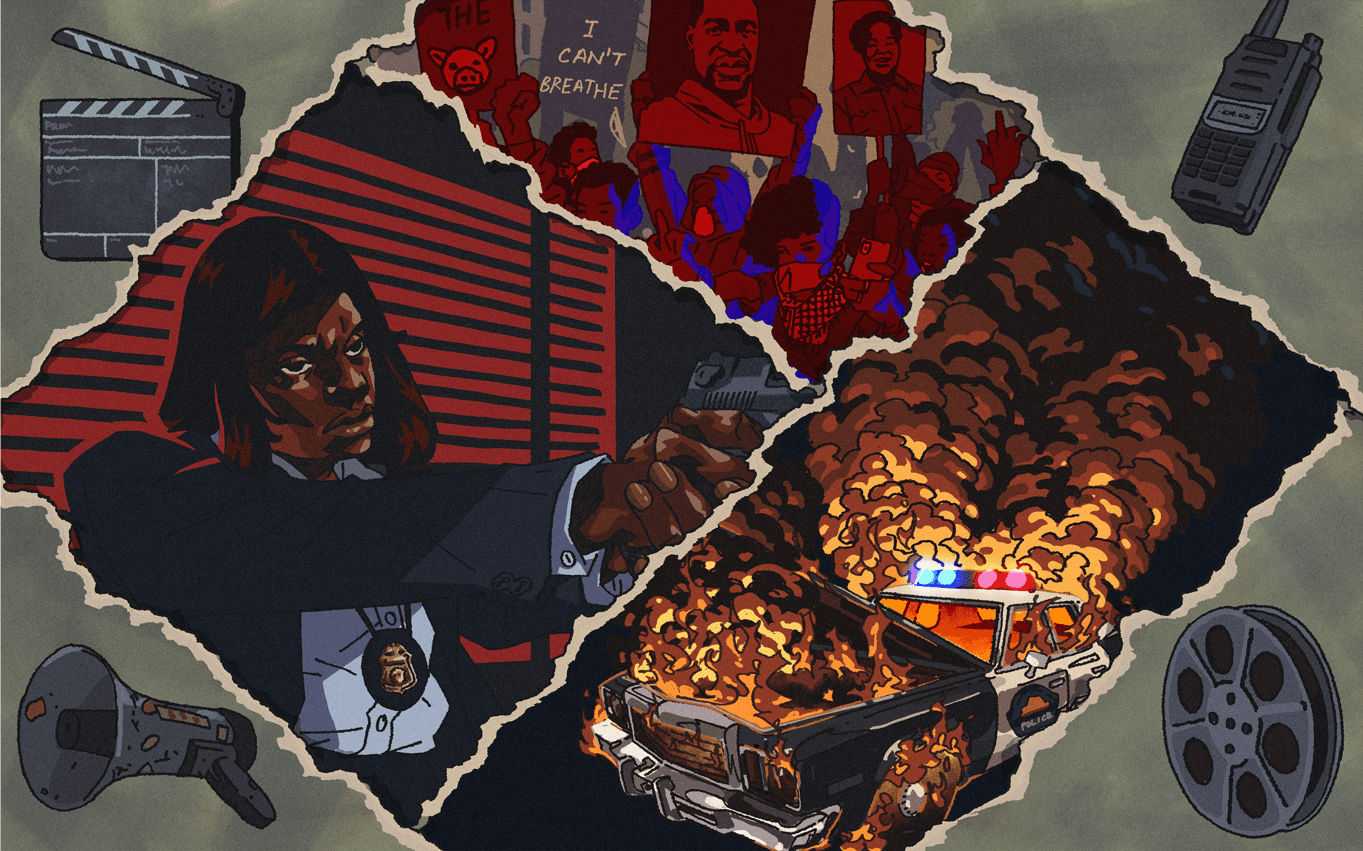
But something happened in the years following the two biggest racial uprisings since the Civil Rights Movement. With the growth of the Law & Order and NCIS franchises, the universe of crime dramas and police procedurals expanded rapidly across the US television landscape. Black lead roles within that terrain were also growing, as seen with leading actors such as LL Cool J on NCIS: Los Angeles (2009–23), Angela Bassett in 9-1-1 (2018–), and Shamar Moore in S.W.A.T. (2017–25) (following his many years on Criminal Minds [2005–]), as well as within the sitcom world, with Terry Crews and Andre Braugher on Brooklyn Nine-Nine (2013–21). In 2020, the murders of Breonna Taylor and George Floyd were in many ways an exclamation point on a decade of highly visible and widely broadcast killings of Black people by police. Despite what scripted TV shows were telling us about the role of cops in our society, our own eyes were informing us that unarmed Black people were increasingly in danger at the hands of cops.
In the midst of the global pandemic, as many of us were holed up in our houses watching these brutal police horrors amass, the need to resist became undeniable. People flooded the streets of every major city in America demanding that Black lives be protected, these murders be put to an end, and police forces be defunded. By some estimates, at least 16 million people across the United States participated in racial justice protests during the summer of 2020. Former President Barack Obama famously dismissed the growing Defund movement, as it came to be called, as nothing more than “a snappy slogan.” His voice was joined by other Black neoliberal and centrist Democrats, celebrities like Killer Mike, pundits like Al Sharpton, and political leaders like Lori Lightfoot and Muriel Bowser. Their counterargument to Defund aligned alarmingly with pro-police and right-wing voices and roughly amounted to: there are good cops (somewhere), and we shouldn’t punish them for what bad cops do. Ultimately, after the summer of 2020, “defund the police” was dulled to “reform the police” in mainstream discourse. Police budgets ballooned, and while police abolition work continued, it was significantly muted.
The rise in police budgets, the resistance to Defund, and the increase in Black leads on police shows are deeply intertwined in the web of copaganda. Color of Change, a racial justice organization, defines copaganda as “police propaganda: any instance of media promoting debunked ideas that position law enforcement and the legal system as being above scrutiny and beyond accountability.” In the 26 TV series studied in their 2020 “Normalizing Injustice”2 report, researchers found only six conversations about police reform and structural injustice in policing. And while more cop shows were confronting these issues after 2020, the 2025 report found that these shows also worked to mitigate audiences’ emerging political sensibilities about police accountability by debunking proposed reforms, minimizing racial injustice, and glorifying police who broke the rules in order to achieve “justice.”
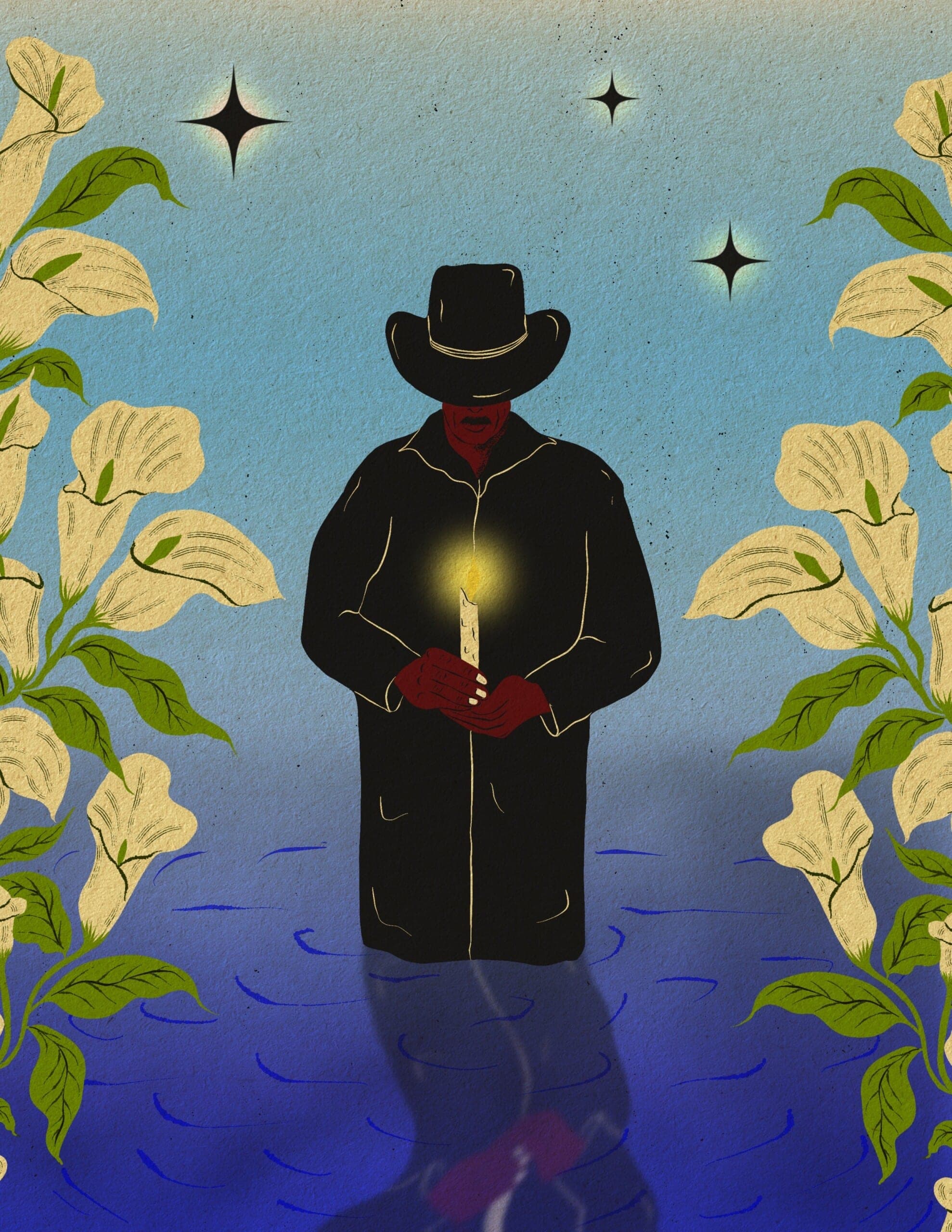
Original illustrations by Pola Maneli.
One of the ways Hollywood has attempted to remedy the racial diversity questions that arose in the wake of the 2020 protests has been casting Black actors and actors of color in these police roles. When 79.6% of television’s leading characters are white and only 8.3% are Black, thoughtful and layered storytelling is often hard for Black audiences to find. And so, despite their problematic format, this gesture at representation feels like it should matter.
In 2025, I watched The Residence (2025), starring Uzo Aduba as the eccentric Detective Cordelia Cupp, who is called in as an expert to help solve the murder of the White House’s chief usher. As the quirky series progressed, I remember thinking that it was one of the most interesting roles I had seen for a Black woman lead on TV in years. In particular, an episode titled “The Last of Sheila” dives deep into Detective Cupp’s obsession with birding and how her single-mindedness impacts her relationships with her sister and nephew. Both the episode and the series walk the tenuous edge of exploring a Black character’s potential neurodivergence without veering too far into overexplaining or being patronizing.
Earlier, in 2024, I watched Get Millie Black, unique in its portrayal of a Black Jamaica that existed outside the gaze of white tourists and tropical exoticism. The series engaged with issues of class and the realities facing trans women on the island. The show follows Lawrance as Detective Millie-Jean Black, who leaves Scotland Yard in disgrace. She returns to her native Jamaica to join the police force there and to reconnect with her estranged sister, who is essentially living on the streets. Everything goes wrong when Millie’s local investigation crosses paths with a corrupt Scotland Yard detective who comes to Jamaica. What’s left is a dark and complicated view of both Jamaica and the two sisters. In The Residence and Get Millie Black, the police procedural format allowed the respective writers’ rooms to portray two Black women characters that I, at least, had never quite seen on TV before. However, both stories are inextricable from the copaganda woven throughout their genre.
By choosing police scripts and opting into a format that is culturally legible and easily replicable, Black actors are often selecting positions that have job security. After all, the Law & Order franchise is one of the longest-running series on television and has employed countless now-famous actors. But many Black actors are also trying to select roles that offer the most opportunity for depth and character exploration. While some Black actors like New Girl’s Morris might want to play cops, others are limited by the choices available. Maylor pointed out that Get Millie Black’s creator and writer Marlon James had been attempting to produce this show, based on his own mother’s story, for over a decade. Funding and interest in developing it didn’t come until after 2020, when studios and Hollywood executives were trying to prove their responsiveness to industrywide calls to diversify writers’ rooms and champion Black storytelling.
A lack of choice and funding in Hollywood means that Black people’s relationship to the crime genre feels burdened. Michael Tran, one of the UCLA “Hollywood Diversity Report” authors and lead researchers, says that looking at series and episodic budgets is one way to assess what’s really happening behind the scenes in Hollywood. According to their 2023 report, “Even with the steady increase in opportunities for people of color and women to become show creators … in 2020–21 and 2021–22, television shows created by people of color and women tended to receive smaller budgets than those created by White men.” When funding and interest in a wider range of Black storytelling is limited, Black audiences and creators are funneled into Hollywood’s pipeline of copaganda, no matter their own politics or beliefs.
In writing this piece, my attempts to find Black showrunners, writers, or actors who would speak candidly about their experience on police television shows consistently came up short. Black writers who had secured a coveted place in these TV writing rooms shared that they did not feel secure enough to go on record. Showrunners who helped bring some of these images of Black cops to life were also reluctant to be interviewed. It’s no wonder. In 2025, Color of Change released “Normalizing Injustice 2,” a follow-up to their 2020 report cataloging copaganda in American television. Of the 71 police and crime shows included in their research, 44 had zero or only one Black person in creative leadership. Overall, Black writers were more likely to be junior and vulnerable to firing, with less leverage to push back against problematic or stereotypical storylines.
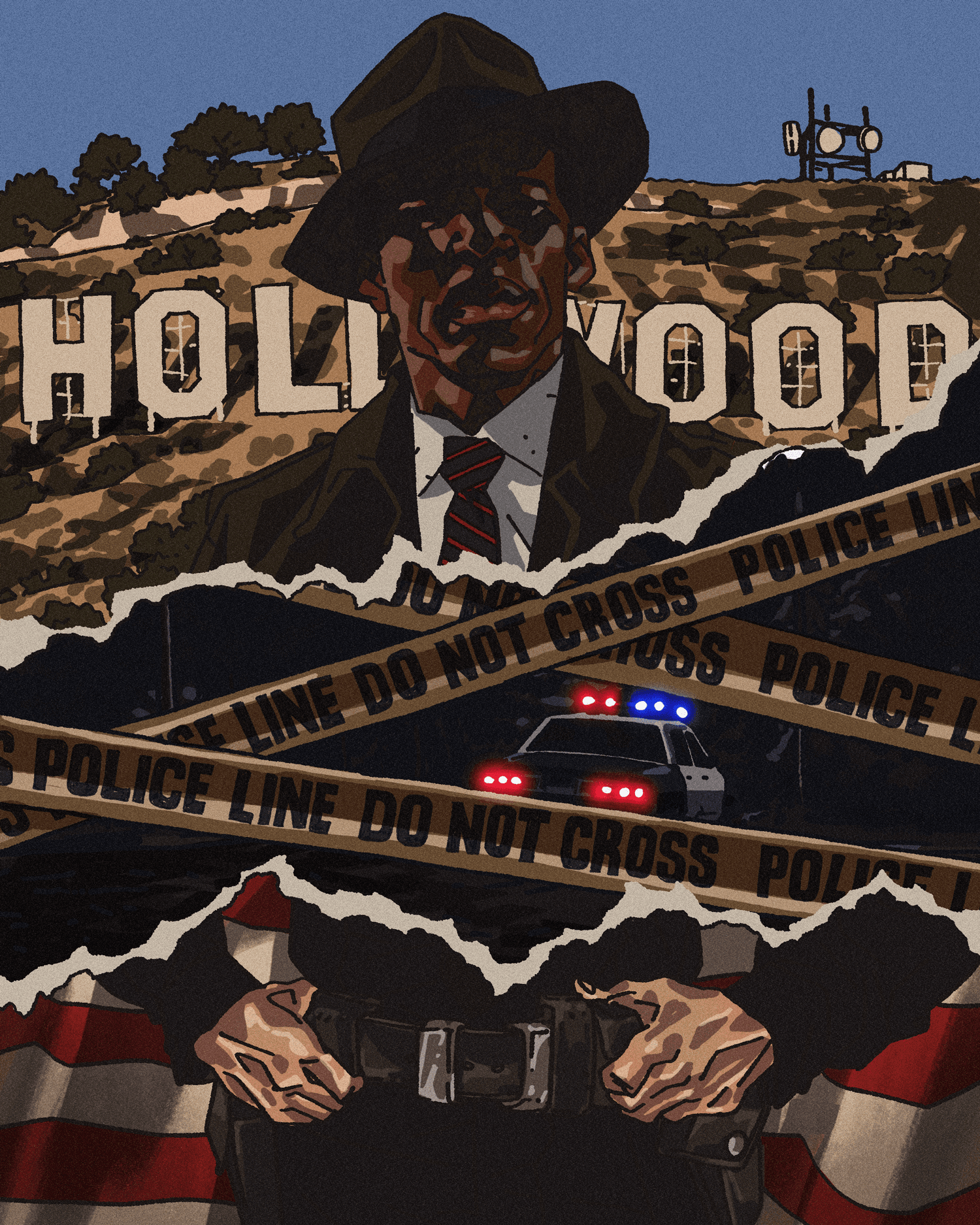
Original illustrations by Pola Maneli.
When shows portray police as largely competent, with only a few bad apples in the bunch, or policing as a necessity in civil society, our real lives are impacted. Over and over again, police shows remind TV audiences that cops solve crimes at a high rate. In reality, police solve less than half of reported violent crimes and less than 20% of reported property crimes each year. When TV shows depict cops as mostly sympathetic to the concerns of good, upstanding citizens, they craft a contradictory narrative that makes Black resistance to the police state seem unnecessary, silly, and dangerous. The result is a fictional message that reinforces the arguments made by the real-world Defund deniers. According to the “Normalizing Justice” report, fictional Black cops are often given speeches or monologues designed to undermine meaningful conversations about racial profiling and systemic reforms. Furthermore, it’s clear that scripted Black cops, like New Girl’s Winston, are designed to ennoble a profession undeniably fraught with violence and corruption.
About a year after Winston Bishop joined a fictionalized version of the LAPD, Freddie Gray was murdered in the back of a police van in Baltimore, Maryland. There was communal shock that three of the six officers responsible for his death were also Black. Copaganda—in particular the kind that casts Black people as “good” law enforcement—helps to further a myth that police reform is possible and racial identity can be used to transform a corrupt system from within. While we might feel a little stronger watching Queen Latifah “bend the rules” to deliver justice or Ice Cube rough up a fast-talking teen to get answers, we also know that these narratives make stop-and-frisk acceptable, criminalize Black children and teens, and dampen revolution by glorifying the status quo. The machine of Hollywood grinds on, but it is within our power to question whether these are the narrative choices we want for ourselves as Black audiences and creatives. Because when we turn Black cat dads into cops, we miss out on the silly, fantastical, tender, and novel stories that exist somewhere beyond the world of law and order.
- “Hollywood Diversity Report,” UCLA College of Social Sciences Initiatives, https://socialsciences.ucla.edu/initiatives/hollywood-diversity-report/.
- “Normalizing Injustice,” Color of Change, https://colorofchange.org/resources/normalizing-injustice/.
- “UCLA Hollywood Diversity Report Presents: Streaming Television in 2024,” December 2025, https://socialsciences.ucla.edu/wp-content/uploads/2025/12/UCLA-HDR-Presents_Streaming-Television-in-2024-12-16-25.pdf.
- John Gramlich, “Most violent and property crimes in the U.S. go unsolved,” Pew Research Center, March 1, 2017, https://www.pewresearch.org/short-reads/2017/03/01/most-violent-and-property-crimes-in-the-u-s-go-unsolved/.
Share
Related