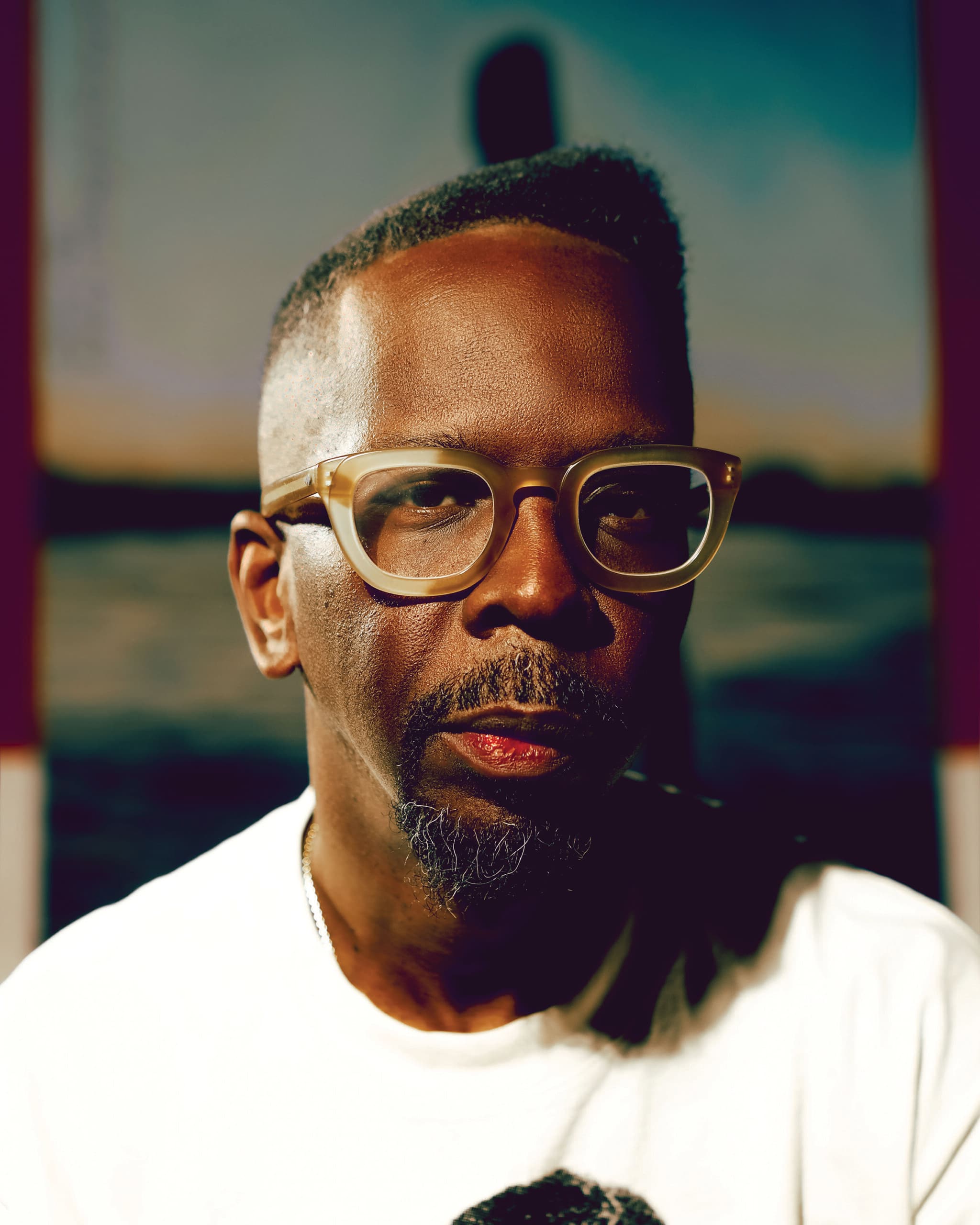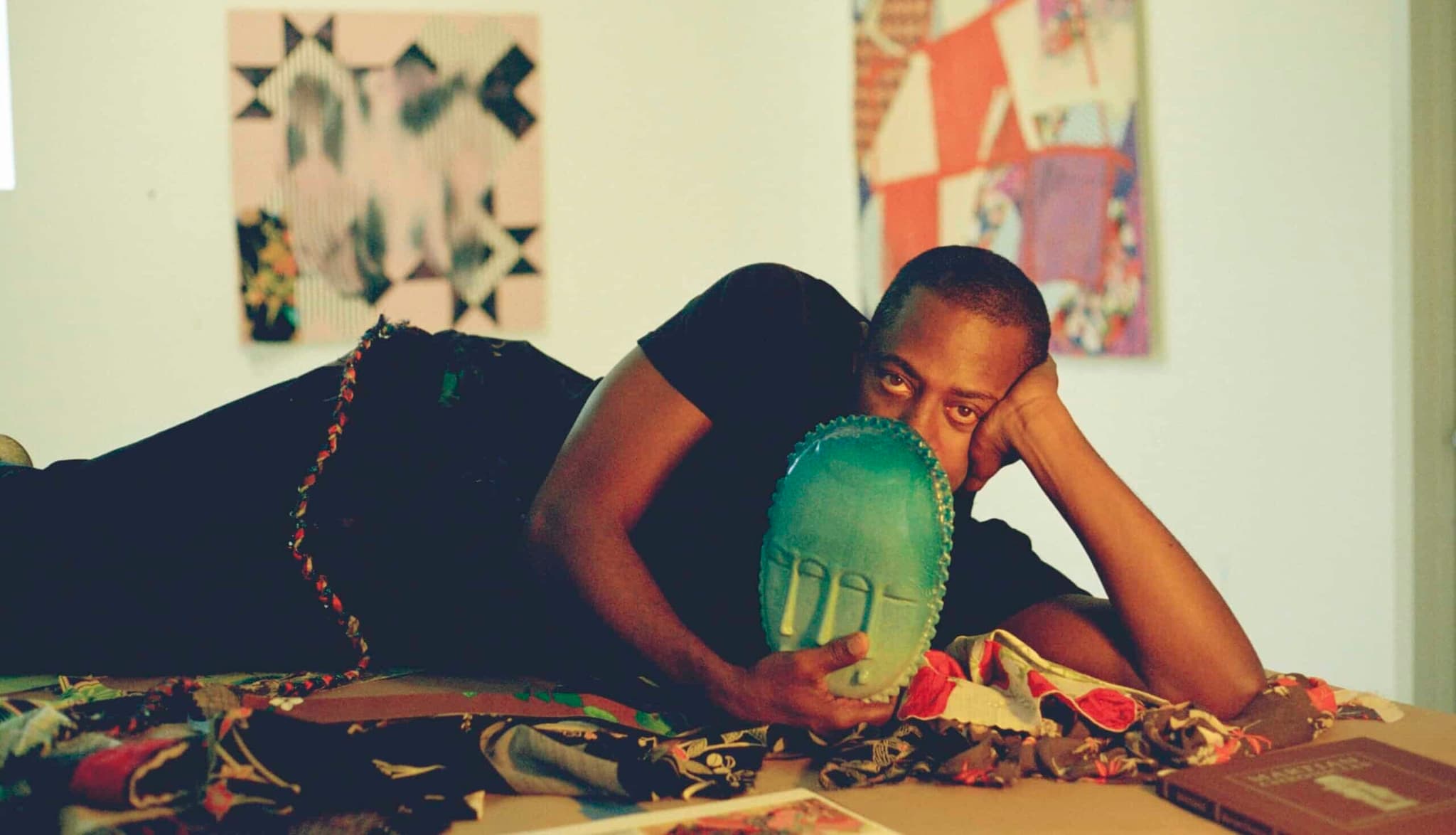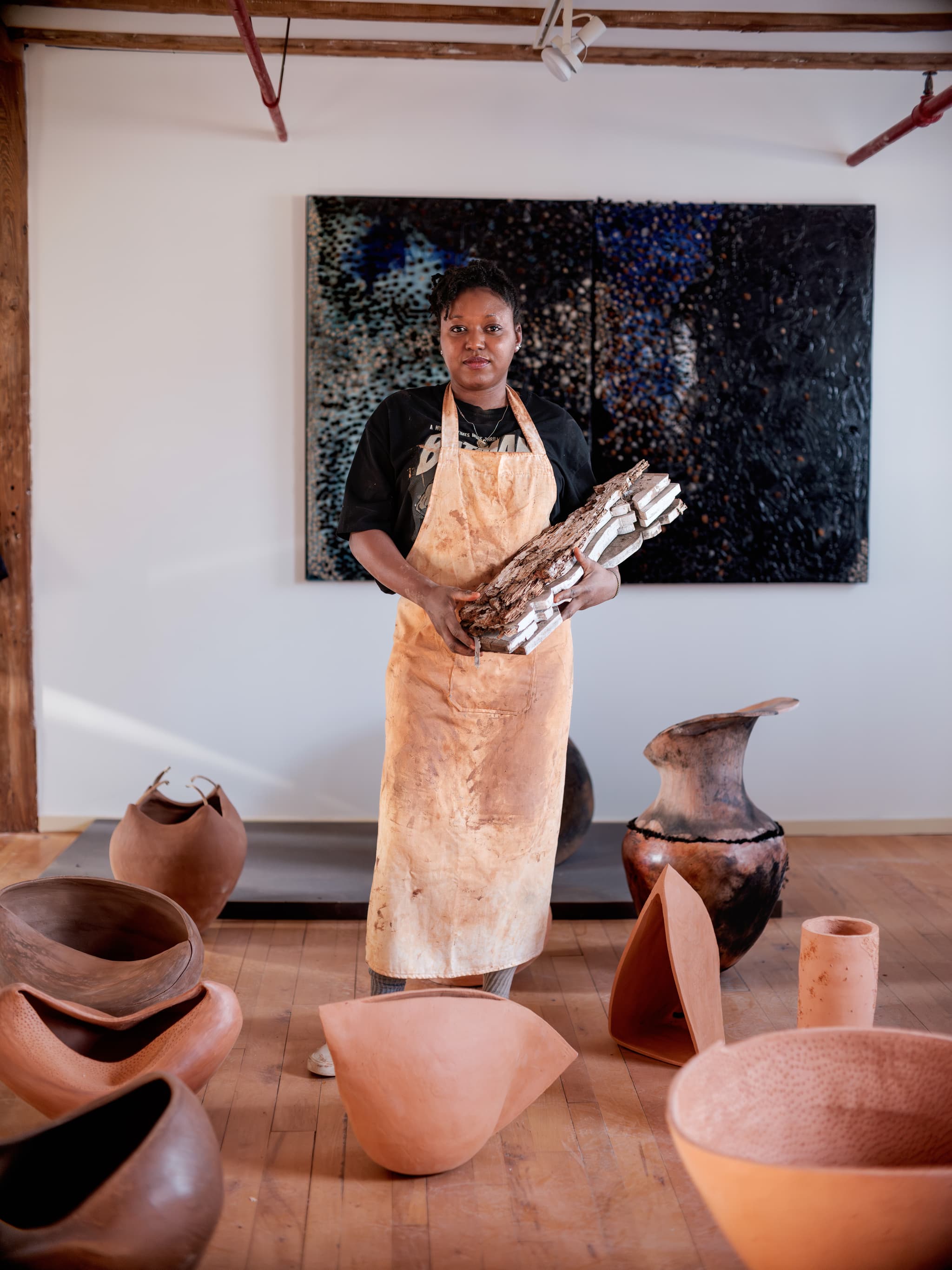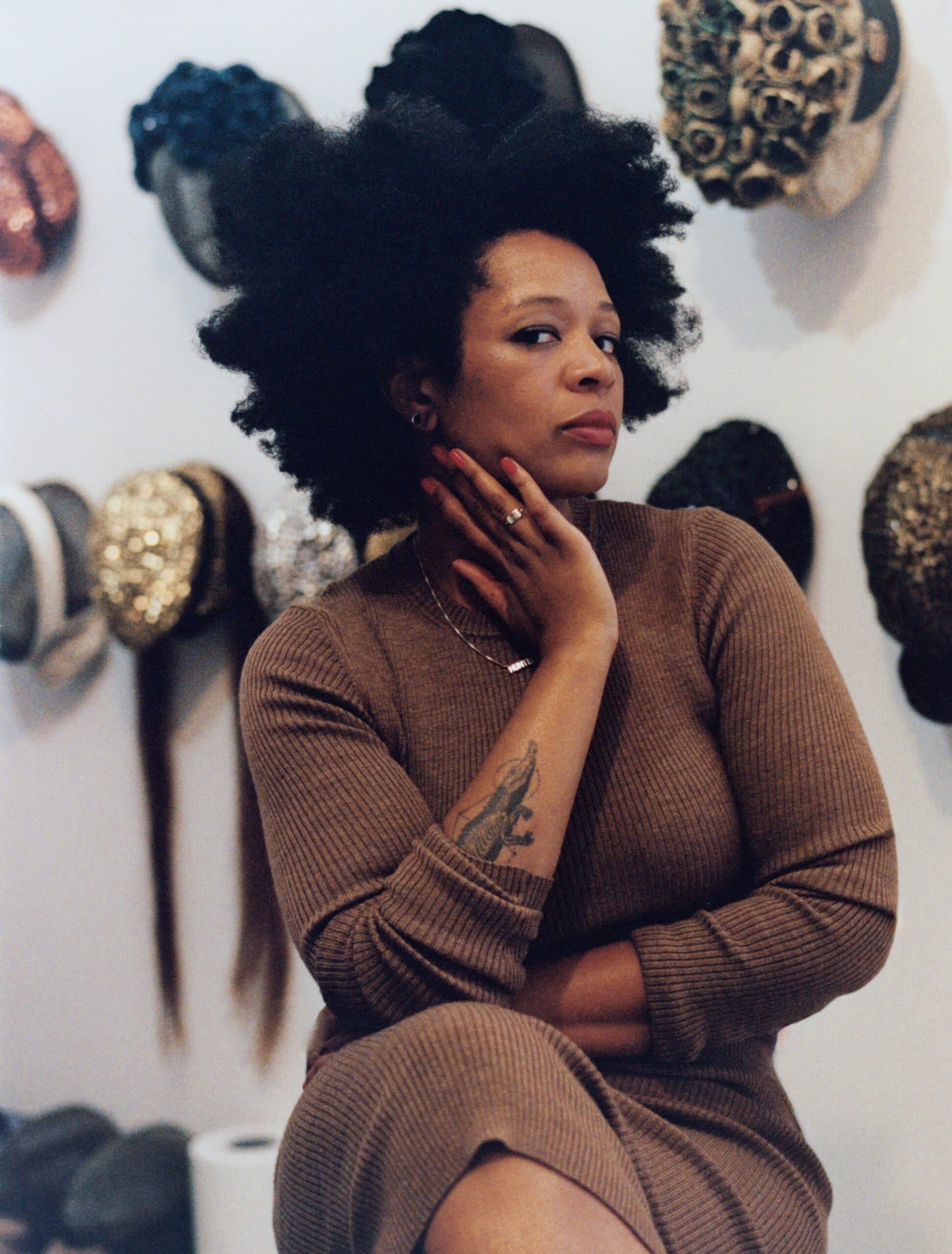
Photography by Andy Jackson, 2026.
(Studio Visit)
Studio Visit : Allison Janae Hamilton
Issue 011
OCTOBER 21, 2026
I meet Allison Janae Hamilton at her Chelsea studio on an early summer day. From her window, I can see the sun glistening over the Hudson River. As an interdisciplinary visual artist, Hamilton has a practice that takes on many forms but always holds the archive as central, starting with her own family history. It’s no wonder, considering she comes from a family of casual archivists. Adorning her desk area are dozens of family photos going back eight generations, compiled through meticulous work by relatives over the years. Speaking of her ancestors, she says, “It’s important for me to bring them into all of my work.”
Hamilton’s desk, made of reclaimed wood, sits in the heart of the studio and brings a grounding element of nature. As a child, Hamilton spent hours outdoors exploring her surroundings in Florida. “Growing up there definitely gave me part of my keen interest in landscape and the changing climate,” she says. Hamilton references the environment in works such as Untitled (White Ouroboros II) (2023), where the traditional ouroboros image is fashioned as an alligator—a classic Floridian symbol. Most significantly we see the landscapes of Florida show up in her film projects, exploring complex, ancestral land-based knowledge.
In 2025, she made her film festival debut with Celestine (Florida Storm) at BlackStar Film Festival. The experimental short combines time-lapse images of the North Florida night sky overlaid with a soulful rendition of the 1928 hymn “Florida Storm” by Judge Jackson. The combination of imagery and music evokes a meditative experience as the film examines relationships between “natural” disasters, like the Great Miami Hurricane of 1926, and the capitalist endeavors (mining, chemical manufacturing, and oil and gas production) that seek to create them.
Hamilton initially studied fashion at Florida State University, which at the time was the closest thing she could “conceptualize as a creative life.” Fashion got her to New York, where her pursuits expanded to visual culture and contemporary art studies, and then to painting and sculpture. As Hamilton showed more work, she began incorporating moving image media into her practice. Eventually, for her first solo show at MASS MoCA in 2018, she created a multichannel film installation. The success of that installation, titled Floridaland, inspired her to use film as a primary medium. Today, everything comes full circle as Floridaland gains new life as the title of her upcoming debut narrative feature.
Set in the 2000s at a fictionalized version of Hamilton’s alma mater, the film takes a more structured approach while still incorporating the elements of magical realism that run through her body of work. Regarding the two versions of Floridaland, she notes, “I wanted to pay homage to that early world-building even though that was a much more experimental format.” Despite Hamilton utilizing a more traditional storytelling structure, her exploration and curiosity is integral to her practice and lives at the heart of her work.
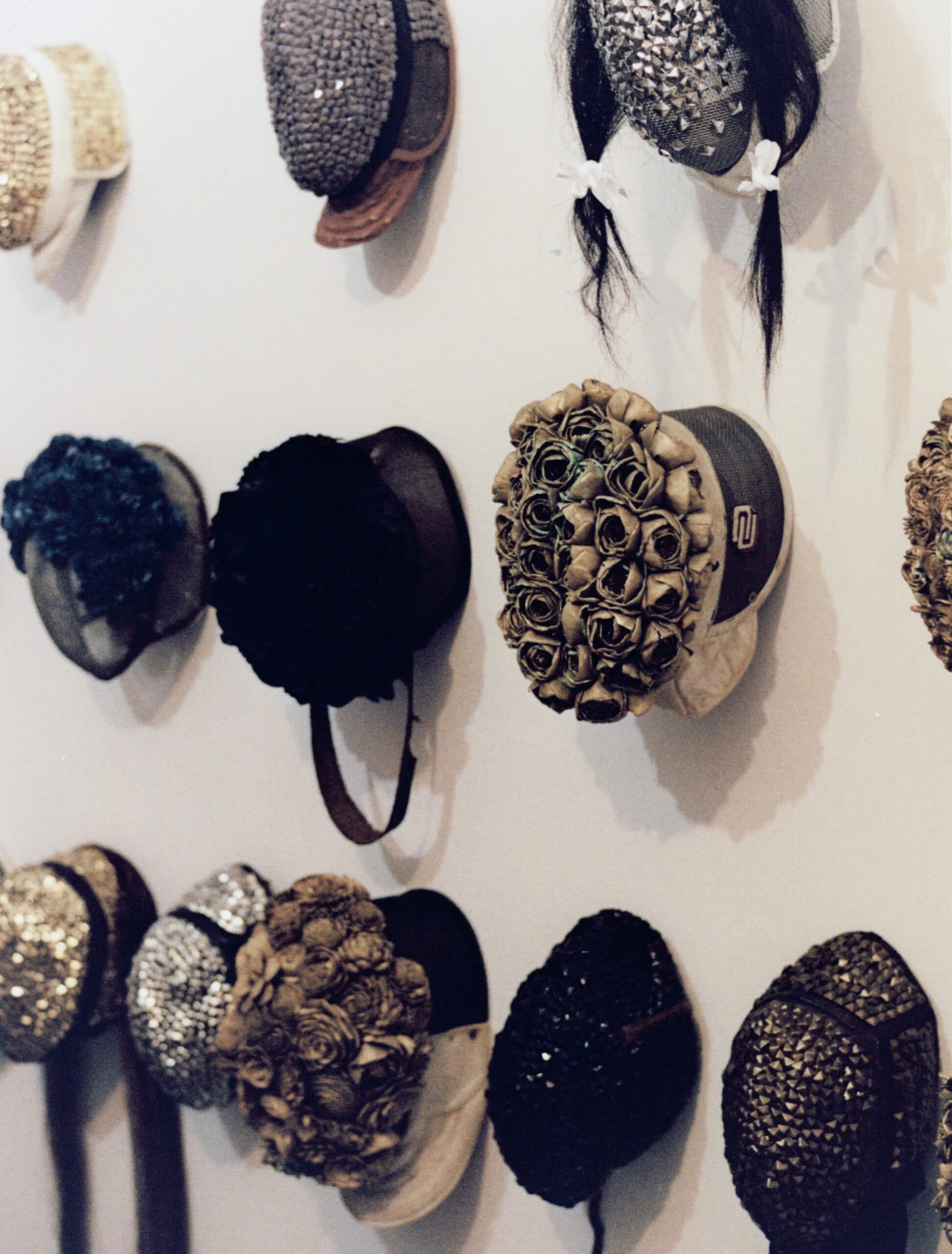
Photography by Andy Jackson, 2026.
1. Tell us about your studio. Where is it located, and how long have you been here?
We’re in the Chelsea neighborhood of Manhattan in New York City. I’ve been in this studio on 26th Street for about nine years, since graduating art school. I like the area for a lot of reasons—one being that I can bike to work whenever I want to because the West Side Highway bike path is right here. I’m also near my gallery, Marianne Boesky Gallery, and I just enjoy being in the neighborhood around a lot of other artists, art spaces, and galleries.
2. How did you find this place?
New York Foundation for the Arts has a classifieds section, and when I was getting ready to finish school, I kept refreshing the page to see if something would come up that felt right and was convenient location-wise and affordable. I think I was the first person to inquire, and once I came and visited, I said, “I’ll take it.”
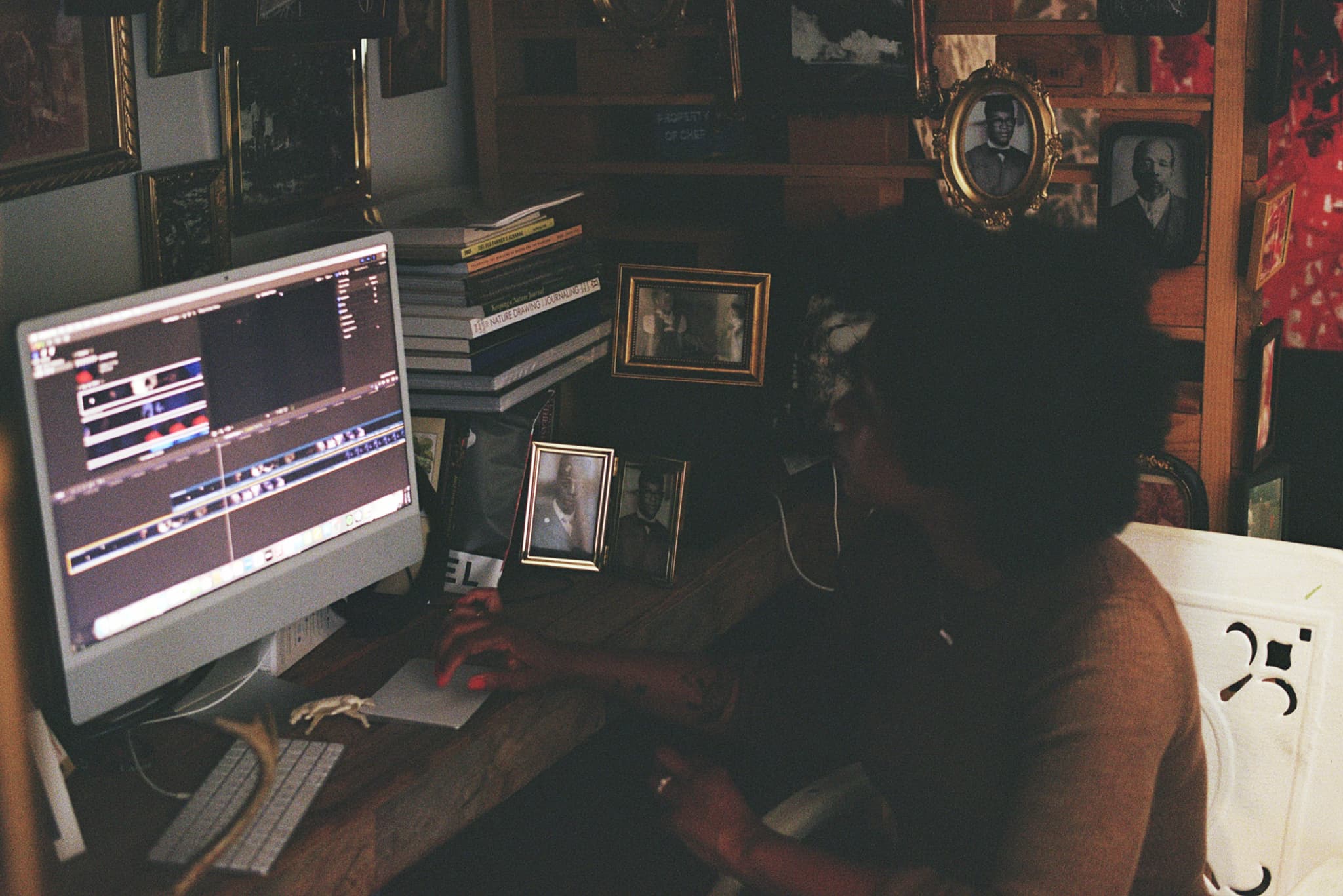
Photography by Andy Jackson, 2026.
3. Has living and working in this place changed your practice in any significant ways?
I think that it might be the opposite actually. It’s a little chicken and egg. I think what I’m working on at any given time shapeshifts the studio more than the other way around. Right now I’m working on two film projects, so when I come here I’m surrounded by all these sculptural objects that plant me in the aesthetic of the world that I’m building. But I don’t always have to work at the studio these days because I’m writing, so I can plop down at a coffee shop or something like that and take inspiration from the “stuff” of life, so to speak. So, it just depends. But I think being here in this physical space with its openness has allowed flexibility, whether that’s painting, screening videos, editing, et cetera.
4. Where in your studio do you enjoy working the most?
By the window. I get the view of the Hudson, which is nice. The light is beautiful, and I just love the water so much. Any little sliver of water I’m happy about.
5. Do you have a uniform while you’re working?
Sometimes. I have a drawer in my house of things to wear for messy work so I can get to work quick. I have the same sneakers that have paint all over them and the same little work shirt and work pants so I don’t have to think about it. Since I’ve been working on this script the last couple months, I just wear whatever and I can have a little more fun with it.
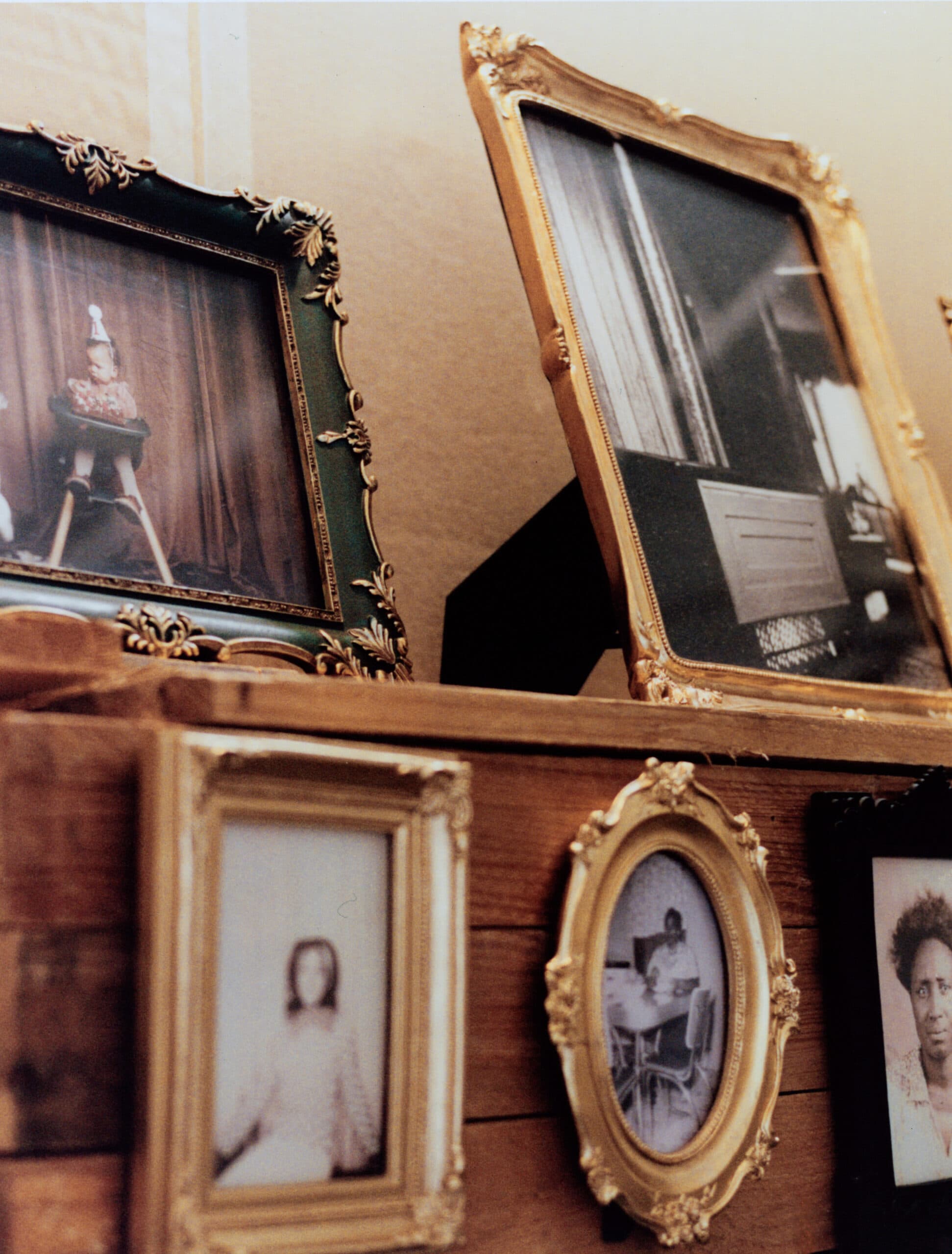
Photography by Andy Jackson, 2026
6.Can you describe your studio schedule or artistic rhythm?
I’m an early bird, so I wake up very early and start working from home. I think it’s the country girl in me. I feel locked in and focused, and it’s my time to myself because no one in my house is awake yet. I know that’s the artist stereotype of working all night, but I’ve never been that way. When my daughter gets up and her caregiver comes, I get a good walk in with my dog, have breakfast with my daughter, and get her started for her day. Then I go do my mid-morning chunk of work. I try to come home for lunch, and then I go back out again for a second, afternoon/evening push.
7. What’s the first step in your creative process and where do you begin?
Music is a go-to. I’m listening to a lot of really good early 2000s hip hop right now. I also like looking at imagery and my mood boards to get into the imagery of what I’m working on. I usually need quiet time to get my thoughts together and think about what I want to start with in my workday.
8. If you had to describe your ideal creative conditions in three words or phrases, what would you choose?
Rainy day, good music, good coffee.
9. What’s something that you enjoy doing outside the studio?
I love cooking and having people over. I love going to see films and shows and just seeing other people’s art, whether that’s film or theater or literature or what have you. When I’m home in Florida, I’m always out on the river. That’s one of the first things I try to do when I’m home.
10. What are you currently working on?
I’m working on my first feature film, called Floridaland. It’s part of the Sundance Feature Film Development Track. I also have a solo show opening at ICA Philadelphia in spring 2027, which will be anchored by my short film Holler. It’s an interdisciplinary show, so there’ll be some sculpture and works on paper, including my first monograph.
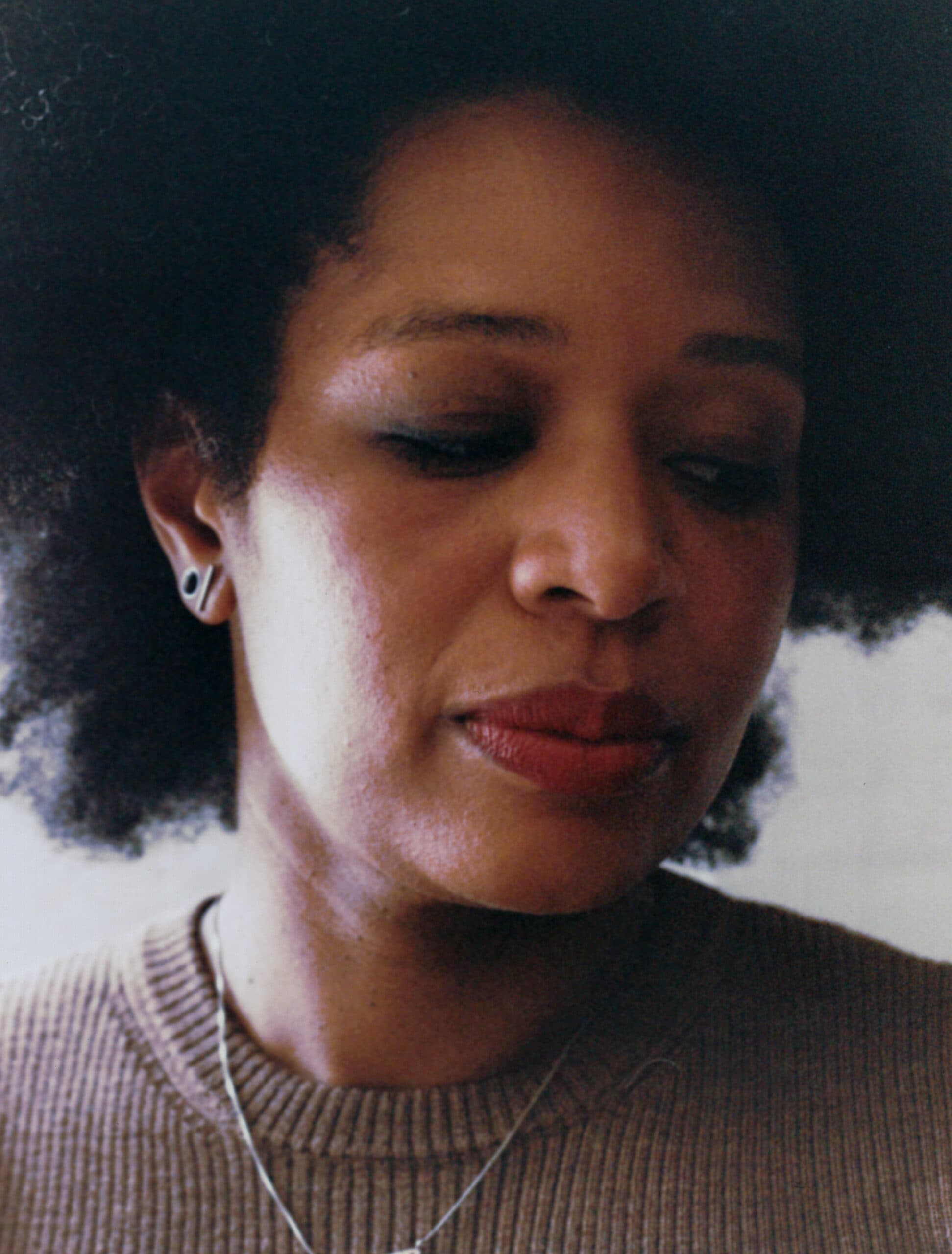
Photography by Andy Jackson, 2026.
Share
Related