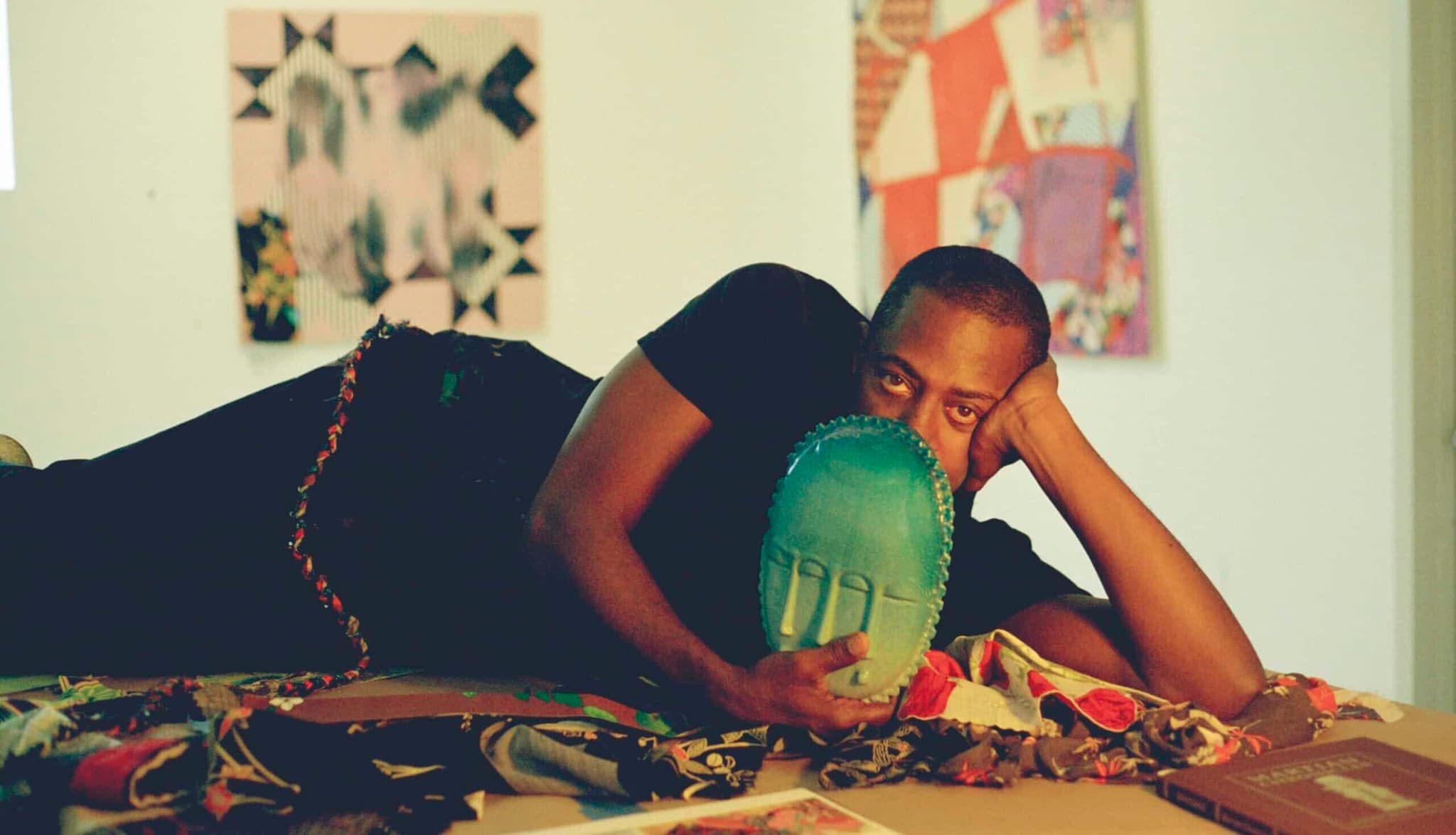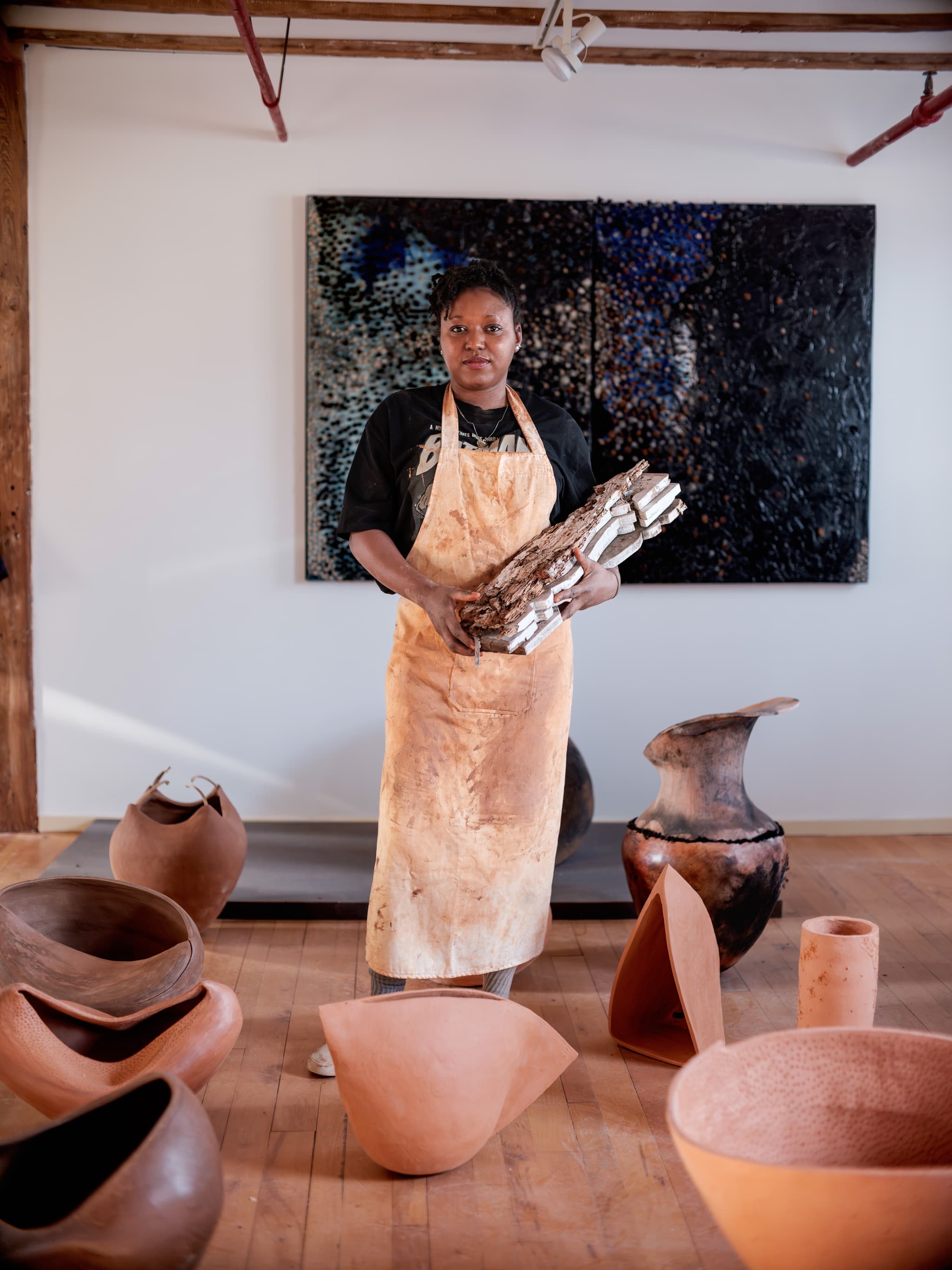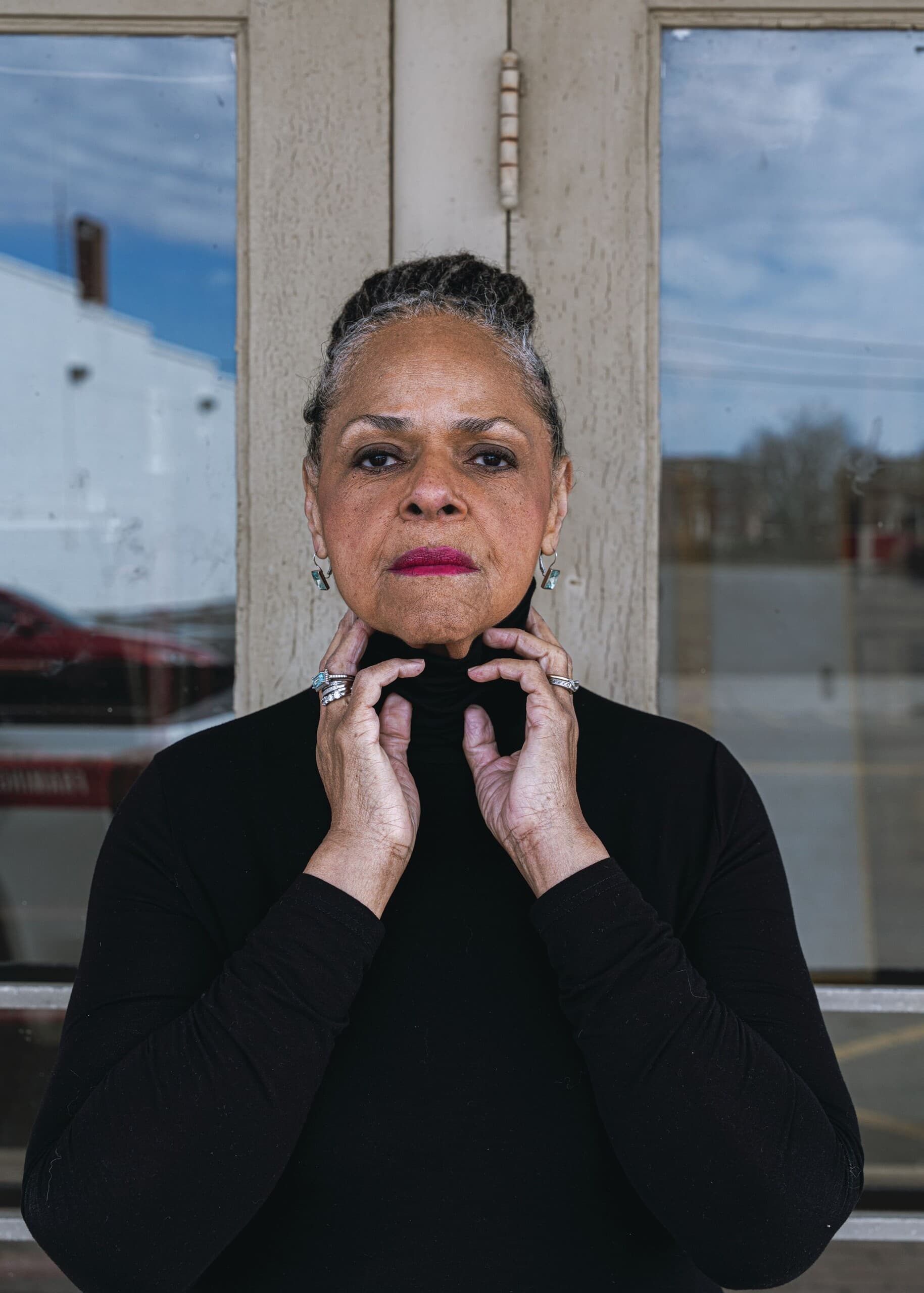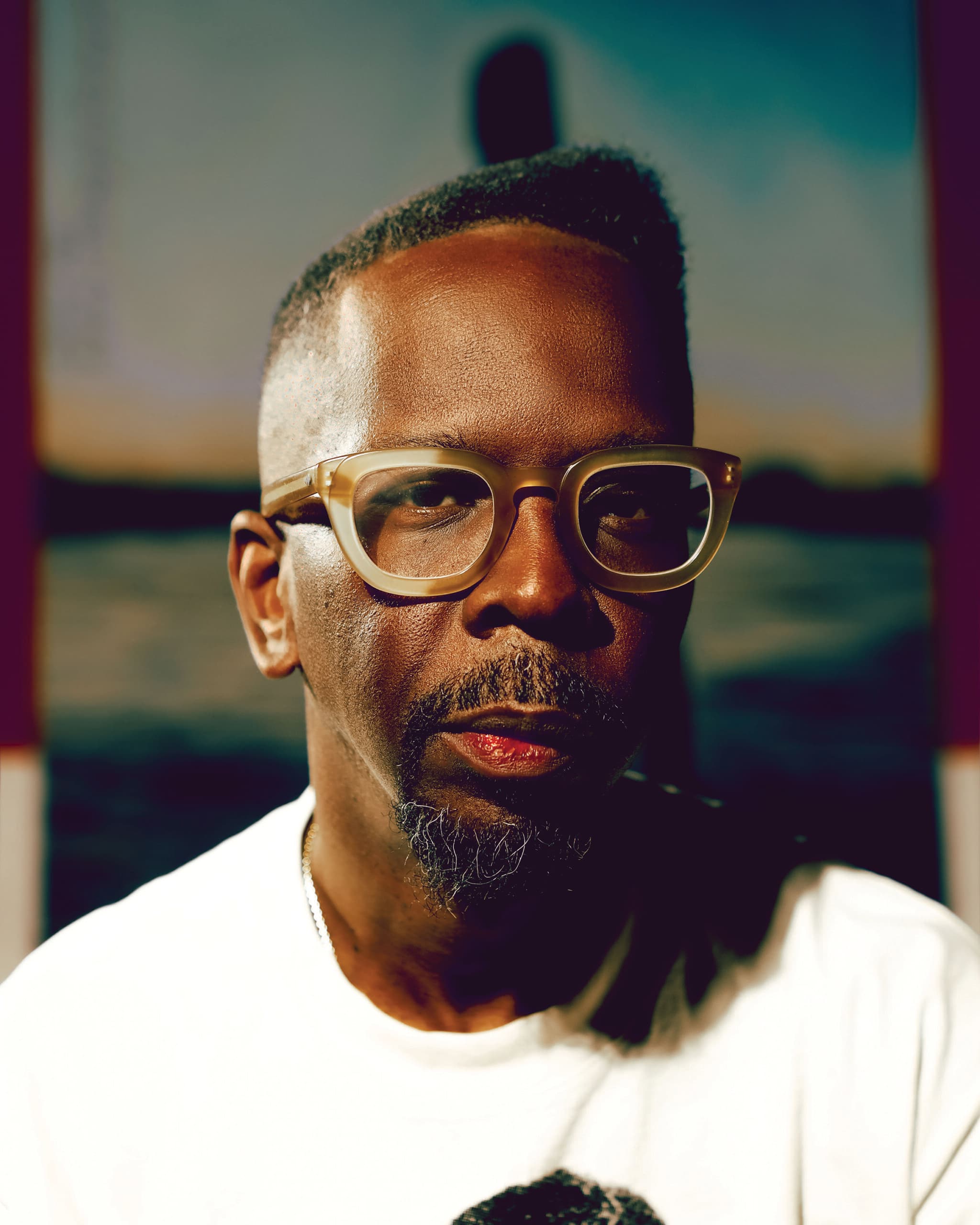
Fahamu Pecou photographed by Jhalin Knowles, 2026.
(Studio Visit)
Studio Visit: Fahamu Pecou
Issue 010
MAY 20, 2026
In a building tucked away along the Atlanta Beltline, Fahamu Pecou brings his art to life.
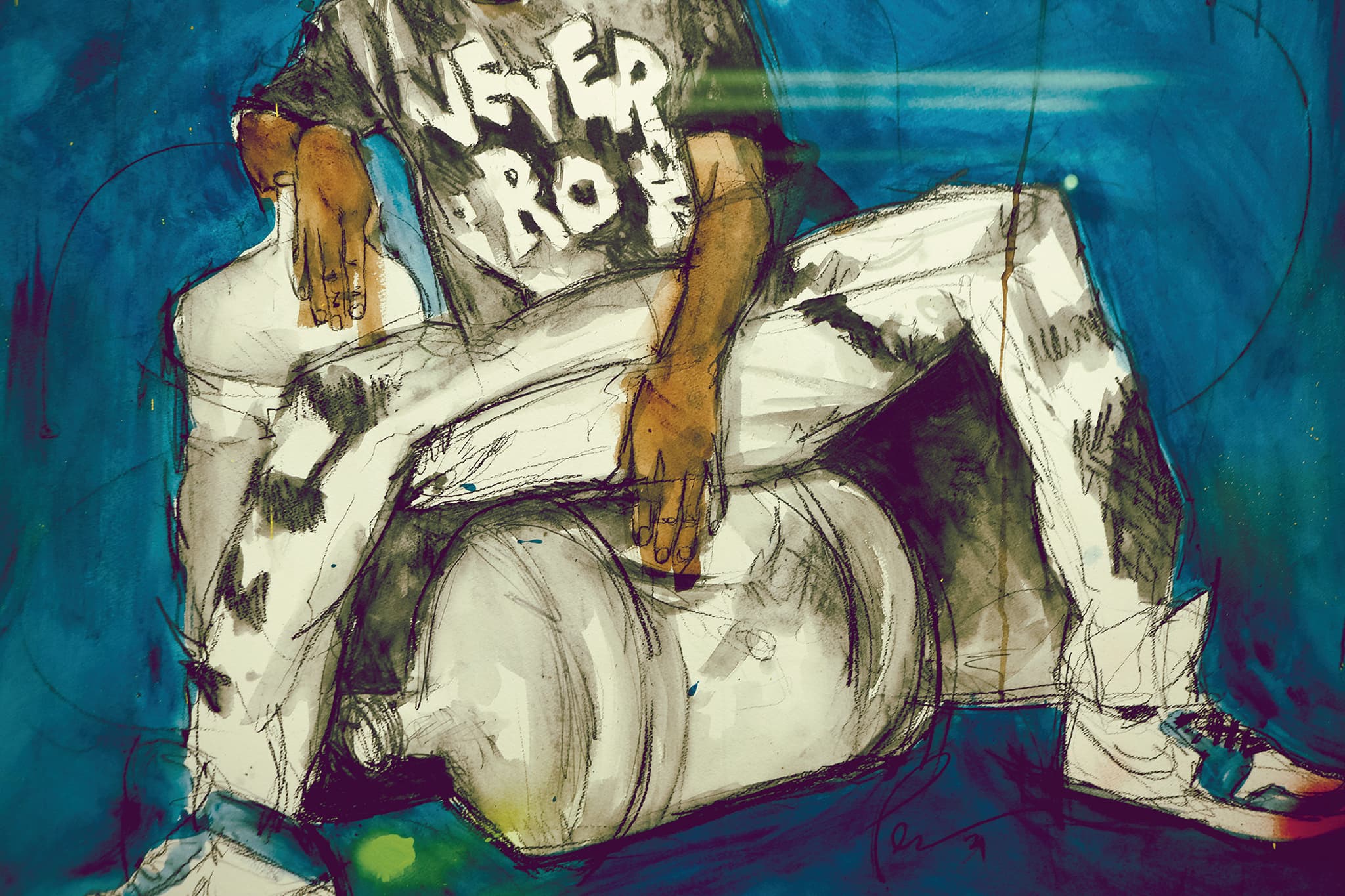
His paintings are coated with backgrounds of rich, vibrant colors that punctuate his subjects’ powerful stances or stoic gazes. In the Trapademia series, bodies twist and move across multiple canvases, showing off the intricacies of Black dance styles. In that same series, he explores the harsh contrast between the richness of Black skin color and the blank white covers of books. The central figure in one piece uses the book as a bodily extension, leaning towards the viewer with an unspoken invitation, and in another curls under the weight of the books on his back.
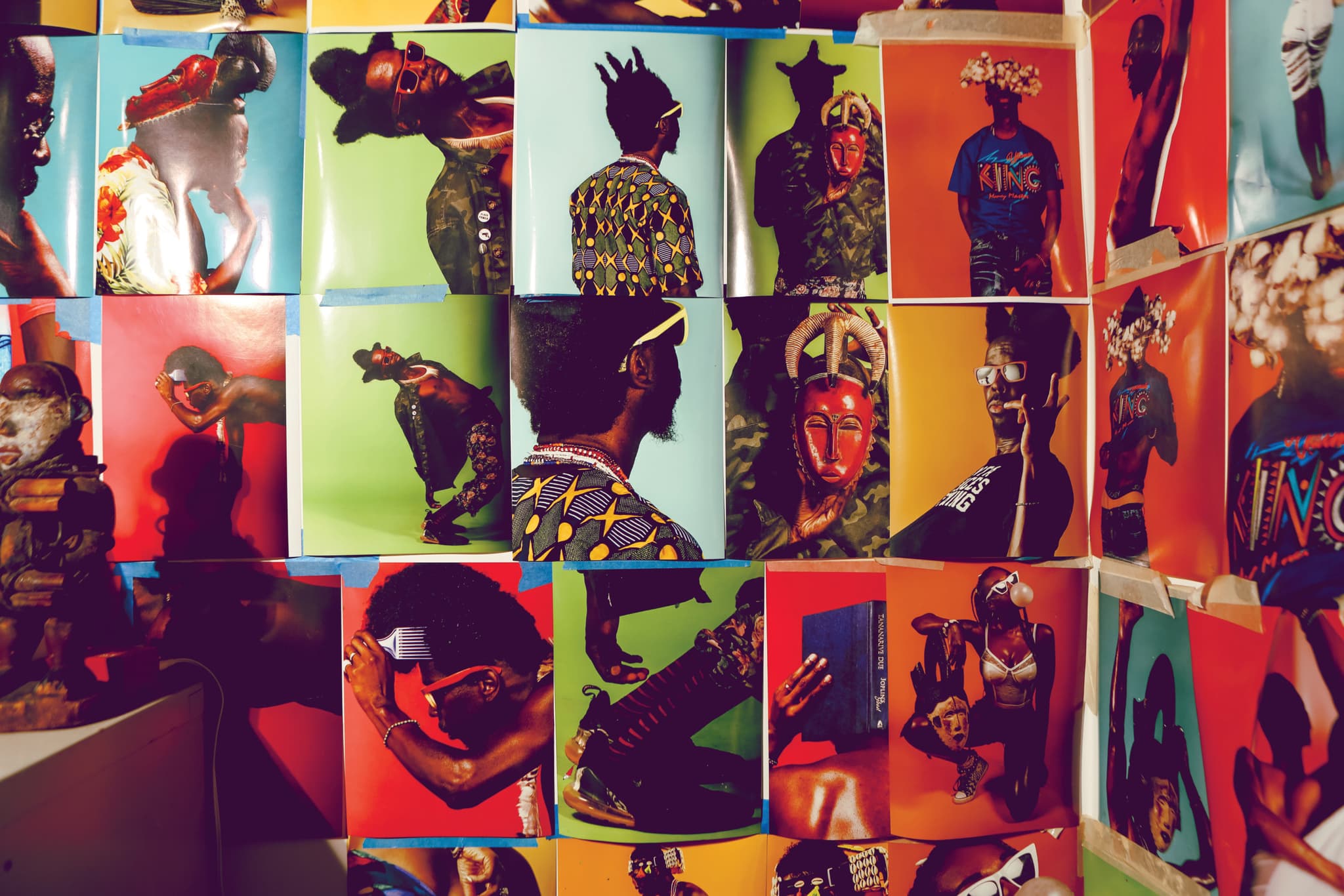
When developing new ideas, Pecou often starts with a photo shoot to work out the concepts and stylistic intricacies of the world he’s trying to create. He’ll pose himself in front of the camera, trying to determine the motions that his future figures will take. Sometimes he needs to sit behind the camera to let another model take a turn experimenting with movements. The process feels reminiscent of a magazine cover shoot, with a central protagonist attempting to embody the look and feel of a certain aesthetic. Ideas can percolate for years in Pecou’s mind before getting to this step, blossoming from a dream, conversation, book, or rap lyric. Speaking on his artistic process, he says, “When I see it, I’ve got to do it,” and “doing it” requires an obsession with the details.
Pecou strives to create work that is responsive to the needs of his community, most often by holding a mirror up to the audience and providing an opportunity for self-reflection. In his 2023 series The End of Safety, Black male bodies feature prominently from the neck down while the figures wrestle with long cloths that obscure their faces. The images are juxtaposed against titles like “Introspection,” “To Bear the Unbearable,” and “Freedom Ain’t Free,” and the viewer must consider the relationship between the fighting figures on the canvases and the words that accompany them.
Pecou treats his audience as thought partners in the artistic process and at the African Diaspora Art Museum of Atlanta (ADAMA), where he’s the founder, executive director, and main curator. The ADAMA ethos acknowledges call and response as an integral part of its cultural production process and aligns with generations of traditional African diasporic methods of engagement. It acknowledges the museum as a site for discovery and collaboration rather than a decisive executor of knowledge. Pecou eschews “curatorial language rooted in inherently anti-Black concepts and ideas.” The reward in creating that space is robust, he says, because “having this kind of curatorial intentionality has really opened up my own practice and how I’m approaching ideas in my own work.”
Photography by Jhalin Knowles, 2026.
1. Tell us about your studio. Where is it located, and how long have you been in this space?
It’s called Studio Kawo, and it’s located in the Oakland City neighborhood of Atlanta. I’ve been here since 2019. It’s called Kawo because that’s a way you salute Shango, the Yoruba orisha.
2. How did you find it?
For four years, I had a studio in Inman Park in a space called The Waddy, and I shared it with the building owner, Scott Dunn. He was a very laid-back guy. I would try to pay him rent, and he would say, “No, just do your thing. It’s cool. I like having you here.” At a certain point, though, I started feeling like I really needed my own space, but I didn’t think I could afford rent anywhere. Then one day in 2018, Scott calls and tells me that The Waddy burned down, and it’s a total loss. I lost everything—all my tools, awards, even some of my personal art collection. And then I found out my insurance policy barely covered anything, so I had to start from scratch.
In early 2019, a friend reached out to me, saying he had a building that might work as my studio. I went to look at the building and saw it had a loading dock and a gallery space already, and I said I’d buy it on the spot. It’s been one of the greatest blessings I’ve had. This past summer I did some renovations in the back and I put in a pétanque court.
3. Has living and working in this place changed your practice in any significant ways?
Owning this building and having my own dedicated space has been immensely rewarding, especially considering my journey to get here. I grew up poor in a very small town called Hartsville, South Carolina, where there was no such thing as museums or galleries, but art was always my north star. I never could have imagined the breadth of experiences, connections, and opportunities art would afford me.
For the first half of my career journey, I was a graphic designer during the day and worked on painting through the night. Sharing space with Scott was how I transitioned to being a full-time artist in 2012. The fire was devastating, but it became the fertile ground from which I’ve been able to rebuild and expand my practice in new directions.
4. Where in your studio do you most enjoy working?
I find myself spending a lot of time in my main studio space in the back of the building, even if it’s just sitting, smoking a joint, putting my feet up, and being with my thoughts.
5. If you had to describe your ideal creative conditions in three words or phrases, what would you choose?
Unlimited resources, physical space, a good soundtrack.
6. Describe your studio schedule or artistic rhythm.
I’m in every day around 9 a.m. and I stay until 6 or 7 p.m.
Photography by Jhalin Knowles, 2026.
7. Do you have a uniform while working?
Usually it’s a T-shirt, jeans, and sneakers or some comfortable slides. Most of my pants are covered in paint, and people often say, “Oh, where’d you get those from? How’d you make those?” And I’m like, “Man, these are my work clothes.”
8. What’s the first step in your creative process? Where do you begin?
There’s a lot of moving parts to it and it’s not always linear, but the process is to generally live with the idea, come up with a visual vocabulary, do a photo shoot, sketch, paint, and present. Once I have a visual direction, that’s when I move into coordinating a photo shoot where I do styling, art, and directing. After that I determine which images actually work and convey the ideas most strongly. I’ll also choose which ones might be paintings, which ones might be drawings, maybe this is a sculptural idea, maybe this is a film idea. So all of these things are happening before I get to the actual canvas.
9. What are you currently working on?
I have an untitled show with Arthur Roger Gallery in New Orleans that will open in May and an untitled show that will open in New York in September. Then there’s everything going on with ADAMA. I curate most of the shows that we do in addition to being the founder and executive director.
10. These days, what’s one thing you really enjoy doing outside of the studio?
I am the world’s greatest karaoke performer, and I thoroughly enjoy being on a stage and performing. That gives me joy like no other. I even have a karaoke setup at the studio, and I invite friends to come over, and we just sing karaoke in my studio.
Photography by Jhalin Knowles, 2026.
Share
Related