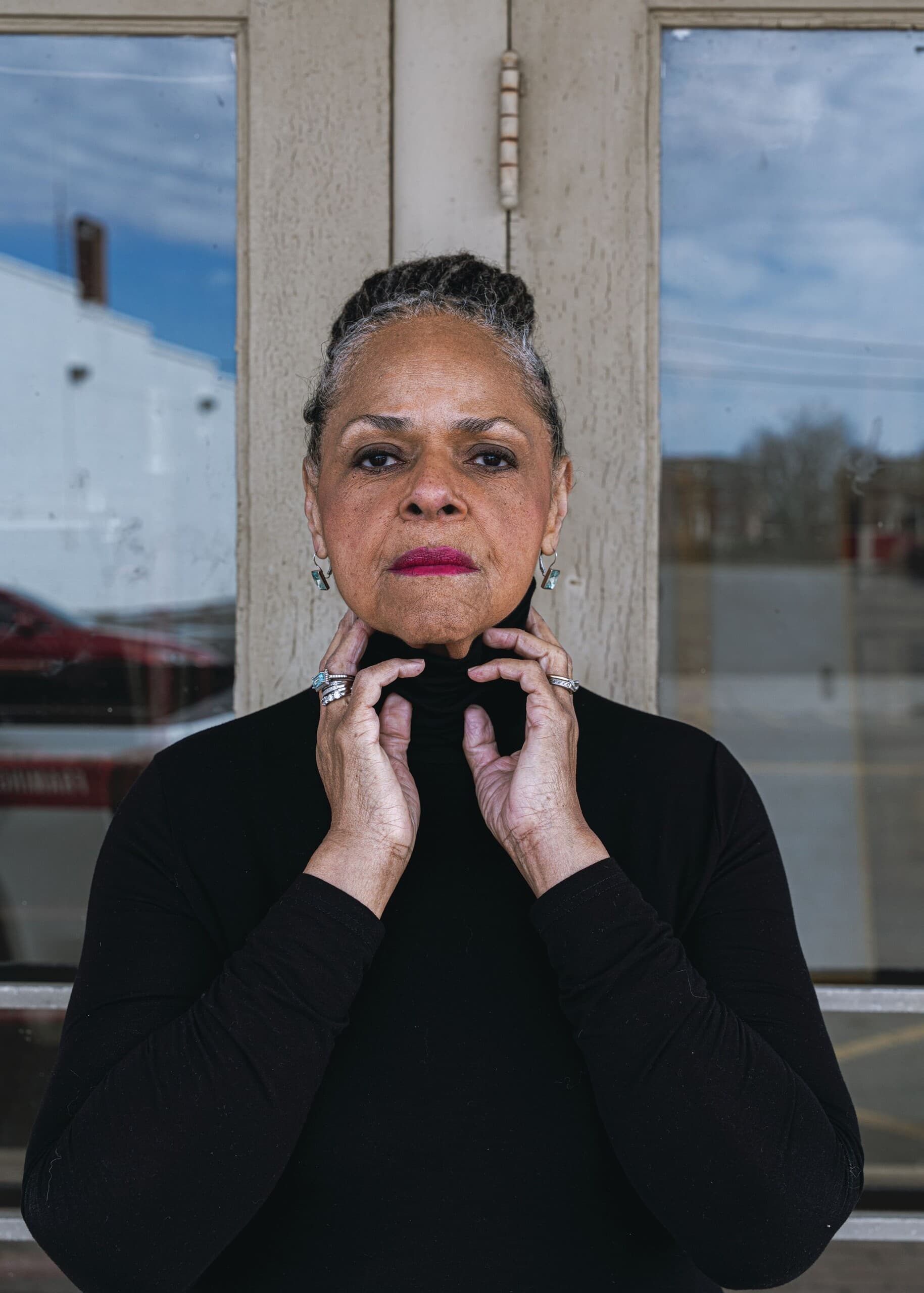
Beverly Wood photographed by Derrick Beasley, 2026.
(Profiles)
Beverly Wood, Hollywood’s Color Whisperer
Issue 010
MAY 20, 2026
A movie’s closing credits provide evidence of its extensively collaborative nature. But the fascinating career of film chemist Beverly Wood is a gentle reminder that credit sequences don’t always tell the whole story or acknowledge all the hands that touch a production.
During her 20-plus years at the film processing laboratory Deluxe, Wood co-developed a proprietary model for silver retention, a chemical process of preserving silver on the film print to manipulate the image’s grain, contrast, density, and color saturation. She also facilitated the enhancements of some of the more visually arresting films of the last few decades, including Sleepy Hollow (1999), Selma (2014), Monster’s Ball (2001), and her personal favorite, The Assassination of Jesse James by the Coward Robert Ford (2007). If you were a Hollywood auteur, Wood was who you called to achieve a desired look for a film’s theatrical release—like, say, the gritty “color-noir” aesthetic of David Fincher’s Seven (1995) or the stark shadows of the Coen brothers’ neo-noir homage The Man Who Wasn’t There (2001).
Sometimes, you can catch her acknowledgment in the credits of those movies, sometimes not. It doesn’t bother her. “I was never about a credit,” she says. “The [cinematographers] gave me credit. The directors gave me credit. Yes, they didn’t put it on a movie necessarily, but it was just not something that I expected.”
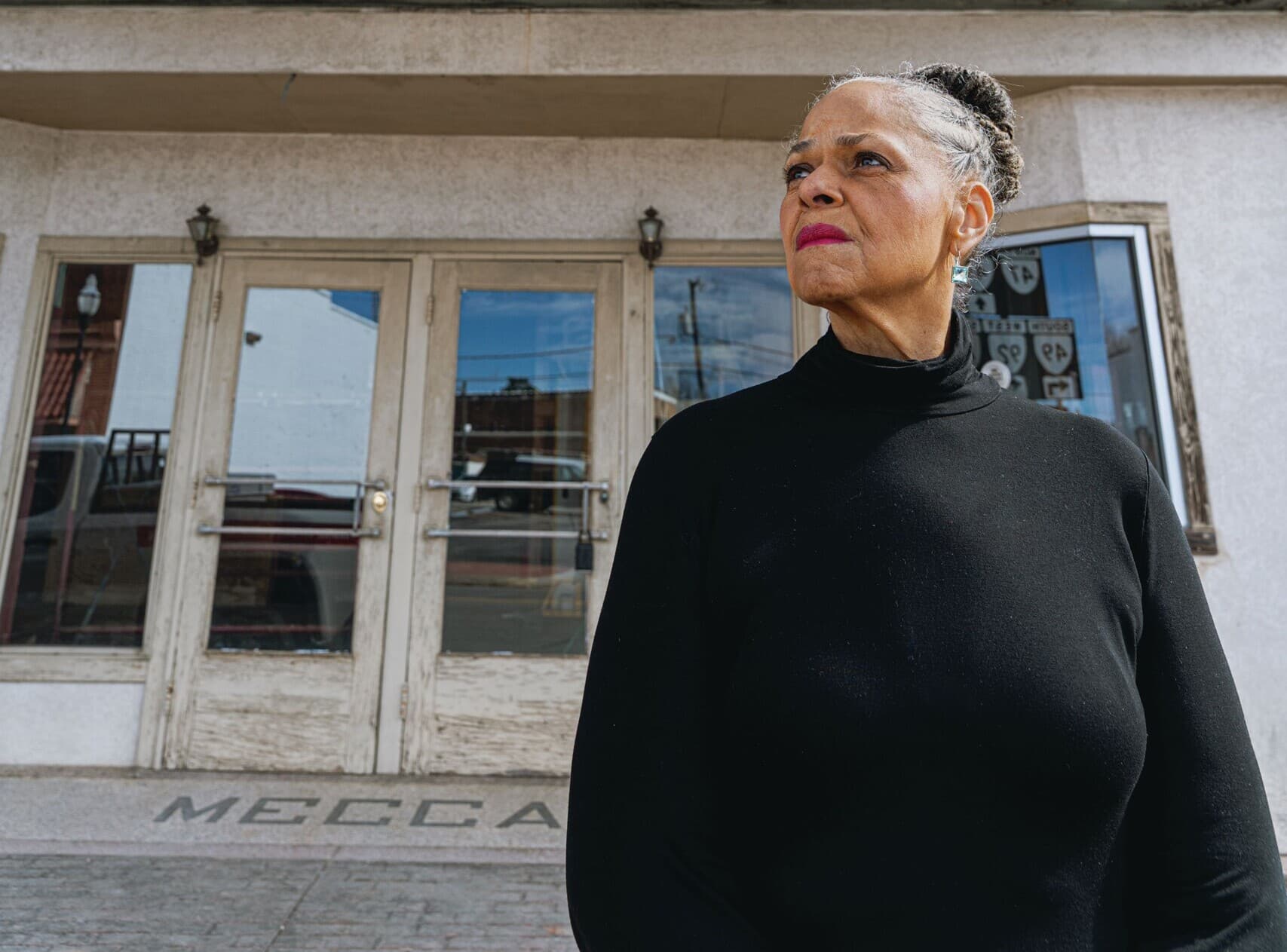
Wood didn’t have any grand ambitions of working in filmmaking when growing up in Chase City, Virginia, but she frequented The Mecca, the local downtown theater boasting a moderne design with 600-person capacity. At the time, Jim Crow was still the law of the land. “[It was] segregated, and all Black people had to sit up in the balcony,” she recalls. While some people assume she felt terrible, she says, “No, there were rats upstairs and there were rats downstairs. . . . I just love the fact that we could go to the movie theater and see a movie.”
Hollywood eventually found her. Upon earning a master’s degree in analytical chemistry in 1980, she landed at one of the industry’s major film stock vendors: Kodak’s headquarters in Rochester, New York. In her first year, the job allowed her to work in a different division every few months. One of those rotations, where she studied black-and-white toning, proved fateful.
Her presentation on silver halide, the light-sensitive color compound used in photographic processing, caught the attention of the motion picture division’s corporate personnel manager. He asked her to interview for an open position as a sales and engineering representative, and Wood says she “almost fell off the phone.” Up to that point, she hadn’t connected her work—analyzing and experimenting with film color and exposure—with the business of moviemaking. “I was still seeing a couple movies a week,” she says, “but I wasn’t thinking about it from the standpoint of, ‘Oh, I’m at the place that manufactures the film.’ After I started interviewing with them and I started going to the plant and getting tours and seeing how they made film . . . I got into it then.”
When problems arose on a client’s production, Wood functioned as a troubleshooting liaison between field representatives based in New York, Chicago, and Los Angeles and the chemists in the manufacturing facility. Her approach was to ask questions: was the issue with the camera, the chemical processing, or something else? Eventually she transferred to San Francisco and later Los Angeles, where she forged more direct connections with cinematographers and directors.
After nine years at Kodak, a short stint at MGM’s Metrocolor labs, and a brief pivot to producing, she transitioned to Deluxe Laboratories in 1993; someone recommended her to the company’s chief operating officer, Cyril Drabinsky. Deluxe, founded in 1915 by movie executive William Fox and later sold to a UK conglomerate, was refurbishing its labs at the time. Simultaneously, industry standards for prints were rising, and Drabinsky recognized the need for a photo chemist with experience in the film business, a rare combination.
“We went for dinner, and I talked about our plans [at Deluxe],” says Drabinsky of the first time he met Wood. “And she said, ‘You know what? I’m not sure I want to come back to working a lot again.’ And I said, ‘I tell you what. Give me six months. If you don’t like what you’re doing you can leave, but I really need you.’ And we shook on it that night.”
Wood would stay with Deluxe for more than two decades.
To compete with Technicolor’s proprietary silver retention process, ENR—named for Ernesto Novelli Rimo, who originally developed it for the 1981 historical epic Reds—Wood and executive vice president of engineering Colin Mossman developed Deluxe’s own version, called Color Contrast Enhancement, or CCE.
Beverly Wood photographed by Derrick Beasley, 2026.
Fincher’s Seven marked a turning point for Wood and Deluxe. To achieve the distinctive aesthetic Fincher and cinematographer Darius Khondji were going for, CCE was applied to the film prints throughout all stages of production, from dailies to release—an uncommon practice that made Deluxe stand out from competitors like Technicolor. “To do silver retention on dailies is a huge undertaking,” says Wood. “The fact that we were willing to do it for [Fincher and Khondji] made them understand that we wanted their business.”
“This was the first time they had somebody like me who knew photographic chemistry,” she adds, “and who knew specialty stuff, and was gonna watch their movie from day one until the end. They loved that because it was like protection. Lots of stuff can go wrong in a laboratory, and I was sitting there saying, ‘I’m going to take care of your movie.’”
One factor of the process that had to be accounted for was skin tone. Wood says she’s been lucky to have worked with directors and cinematographers like Khondji who were cognizant of properly lighting performers of various complexions, which is key to achieving quality results for the print process. “Richard Roundtree¹ is what I consider to be blue-black . . . and Darius, of course, made sure his exposures were right on and he lit him really well. But when we added the silver retention to the print, it also made it darker. And there were a couple scenes in there with [Morgan] Freeman that we had to be very careful to make sure that the silver retention wasn’t overly heavy. We printed it at a density where we could see the details in his face.”
Seven’s acclaim, and Fincher and Khondji’s praise in interviews for Deluxe, kickstarted a fruitful new era for the company, as well as for Wood’s career. She was made an executive vice president and given her own division to manage high-profile clients’ projects.
On Hype Williams’s visual feast Belly (1998), Wood applied the same CCE process as was done with Seven, though the effect cinematographer Malik Sayeed was going for was quite different from Khondji’s on Seven. “It was that almost burnished look, where, depending on the level of silver that you leave in the film, you have a layer of color dyes which are in the film, and you’re leaving a layer of silver on top of it, which mutes the colors. But it also makes the blacks really black and dense and makes the highlights pop,” she says.
Of all the films she’s worked on, Belly is the one she gets asked about the most, especially by Black filmmakers. “People don’t even talk about the movie as a movie,” she says. “They talk about the shots in the movie and the look of the movie. That’s a testament to Malik. He shot the hell out of that movie. And to add the silver retention to it just gave it a really beautiful look.”
In speaking with Wood about her career’s many paths, a pattern begins to emerge: her work spoke for itself. As a Black woman making her way through predominantly white and male spaces in the 1970s and 1980s, she certainly dealt with assumptions and some resistance—peers and colleagues questioning her presence and not taking her talent seriously. (In a 2023 conversation presented by the Smithsonian’s Lemelson Center for the Study of Invention and Innovation, she recalled that a man didn’t hire her for a job while she was at Kodak because he considered her “too brash and too self-assured.”) Yet, she remained focused and benefitted from having the right people know who she was.
Her expertise carried over as digital began to supplant film, and she shepherded Deluxe into the new era. She describes that digital intermediate period as exciting, because the new technology made color timing (adjusting the printer light to gain color consistency across the production) much easier than with film. However, she began to observe that such ease invited more involvement from people other than just the director and cinematographer—editors, VFX teams, and so on: “Sometimes there are too many chefs in the kitchen when you’re making a movie.” And in hindsight, she acknowledges this period as the beginning of the end for her career.
She retired from Deluxe in 2015 and soon afterward moved back to Chase City, where she resides with her husband and is spearheading the restoration of The Mecca, the theater where she first fell in love with movies. It’s been closed since 1980, but Wood hopes to be able to reopen it as a second-run movie house and hub for local film festivals by 2028. She remains an Academy member and still keeps up with new films.
These days, she seems a little more open to accepting public credit for her accomplishments. In 2020 she received the Natalie M. and Herbert T. Kalmus Medal, an honor given in the name of the onetime husband-and-wife duo who developed Technicolor. She’s also the subject of an in-progress documentary being directed by her longtime friend, filmmaker Julie Dash. “She was the go-to person for finding out what you could and could not do . . . with your film stock when you were shooting,” says Dash. “She has so many stories and so many directors and cinematographers who owe the look of their film to her assistance, so [I thought], let’s do a story about Bev. I think she’s fantastic.”
Wood is honored to tell her story with Dash: “At least the kids growing up one day will maybe see that and say, ‘Who was this girl, Bev Wood, and what did she do? Oh, she did that, and she was from a tiny little town. Well, if she can do that, I can do that.’ That’s all I want them to know.”
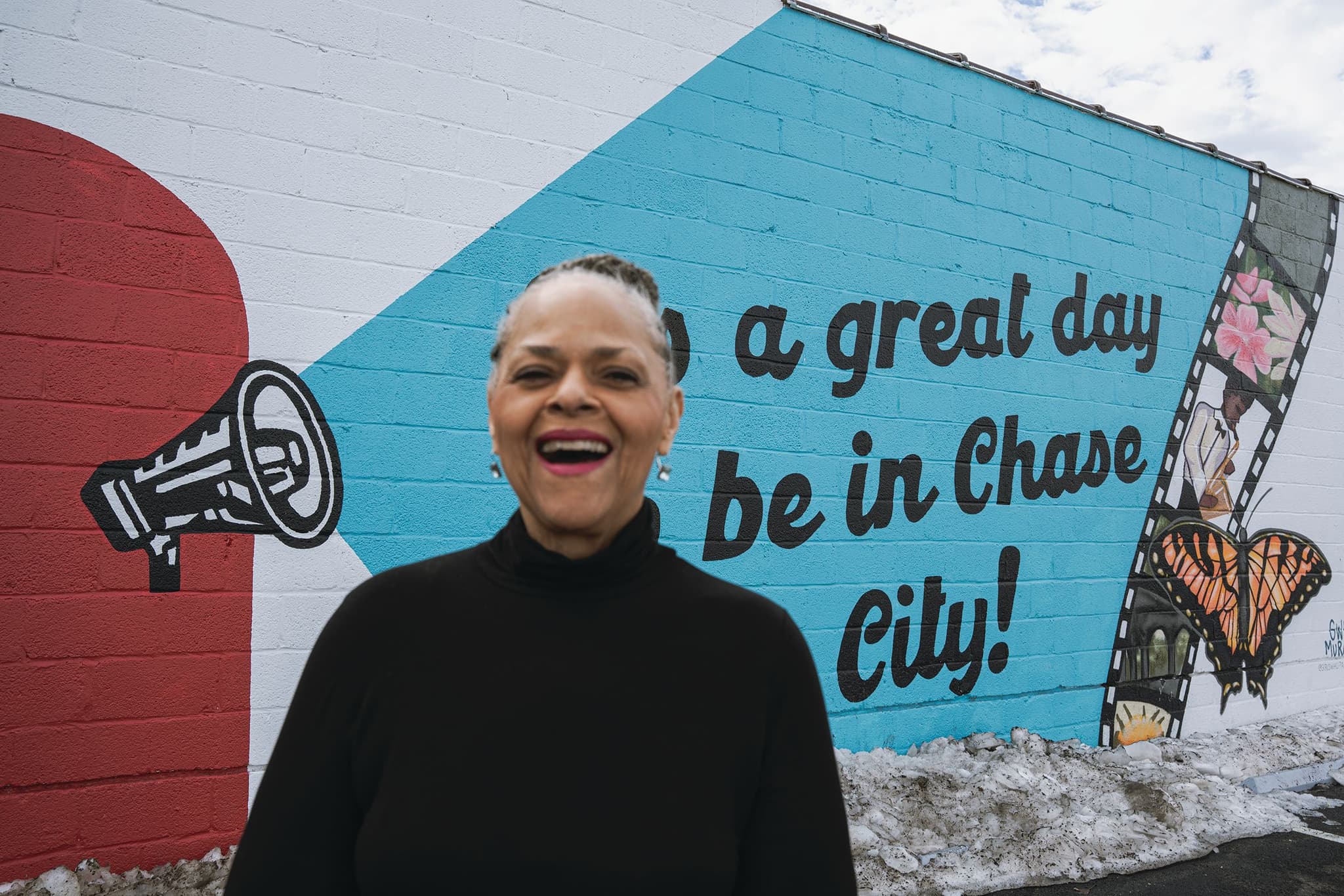
Beverly Wood photographed by Derrick Beasley, 2026.
- Roundtree plays district attorney Martin Talbot, who oversees the serial murder case being worked by detectives Mills (Brad Pitt) and Somerset (Morgan Freeman) in Seven.
Share
Related