(Profiles)
Centering Collectivity, ruangrupa is Shifting the Art World’s Balance of Power
Issue 004
JUNE 16, 2022
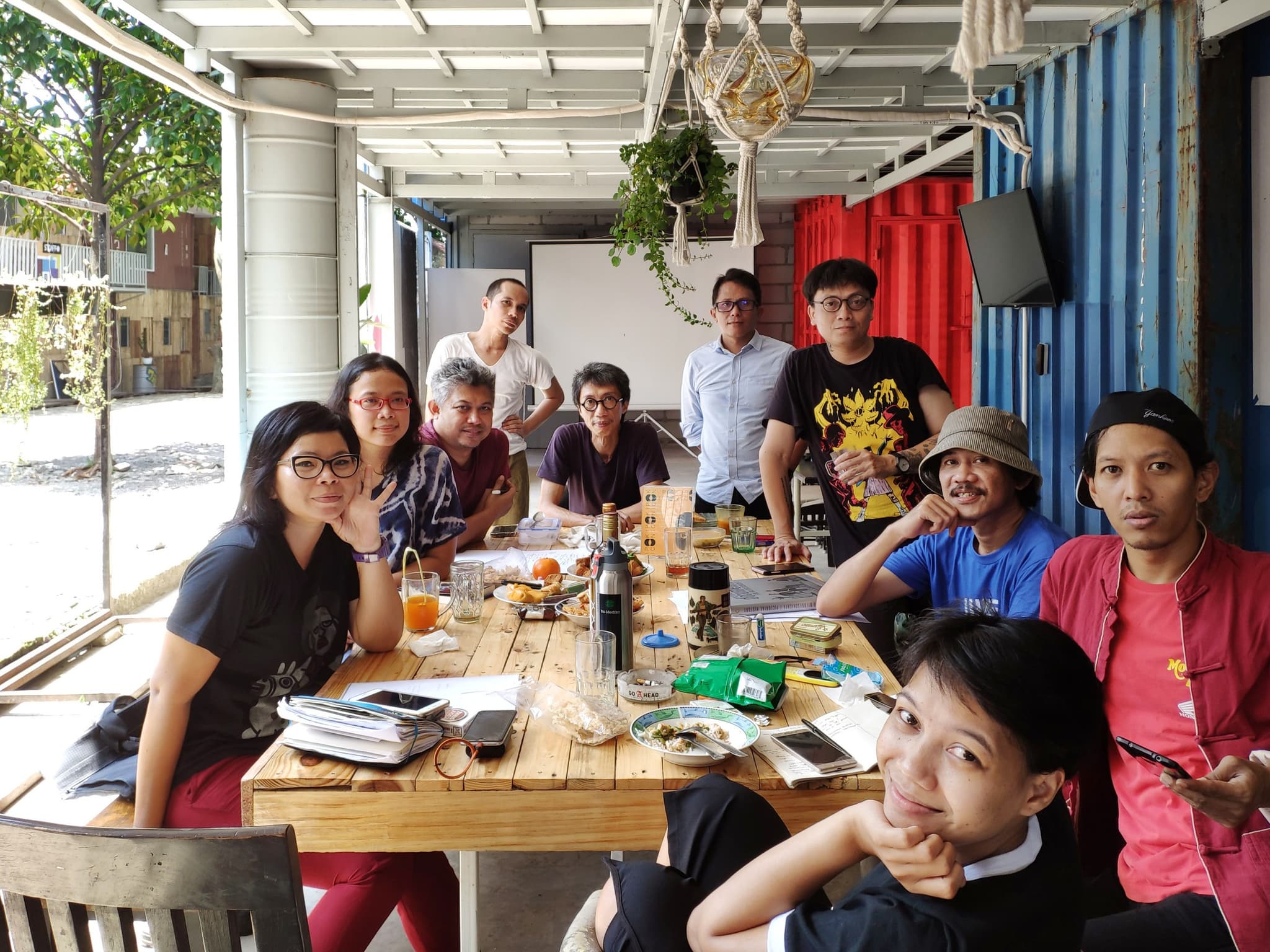
Ruangrupa has become one of most powerful cultural agencies in the global art world, especially since the announcement of their role as the artistic directors of documenta 15 in Kassel in 2022. Collectively, they are not only powerful but are also redefining the meaning of power itself.
I think that is the interesting part of why Ade Darmawan, Hafiz, Ronny Agustinus, Oky Arfie Hutabarat, Lilia Nursita and Rithmi founded ruangrupa in 2000, the idea being to share power and visions for making a communal artistic playground in a city such as Jakarta. Their playground created a new possibility of art making and shared vibrant energy for young people. Who would think that this playground would bring them to Kassel twenty-two years later?
They started creating ruangrupa when Darmawan came back from his residency at Rijksakademie in the 2000s, when he worked with the RAIN network to facilitate (visual) artists’ initiatives from countries in Africa, Asia, and Latin America. These initiatives were set up by artists who are former participants of the Rijksakademie residency to create a new platform of artistic practices. In the years since, ruangrupa has not only provided exhibition spaces, but they have also built a complex practice, creating an ecosystem of their own by running workshops, residencies, festivals, and small music concerts for young artists and curators, and also publishing journals and books.
With the title “Lumbung” for documenta 15, they revisit their initial will of sharing power and resources with art communities around the world. The word lumbung refers to a community’s system for food storage to create resilience in agricultural villages. As Darmawan explains in one of our conversations, “Instead of focusing on exhibition making, the curatorial strategies of documenta 15 [will] be more presented as results of various collaborations, discussions, happenings, projects, and many other forms from global art collectives.”
While documenta is certainly being seen as a milestone of their collective achievement, how does ruangrupa develop their collective on the ground in Indonesia? I have an interesting and important story to revisit here. Two decades ago, I was still a newcomer in the art world, with a very uncertain position in my youth—I was either an art journalist, a curator (or a wannabe one), or just an ordinary audience member—when I stepped into one of most celebrated art spaces in Indonesia in the early 2000s: the Cemeti Art House, in the provincial city of Yogyakarta. I was not very sure what to expect when I read the poster announcement about an exhibition by ruangrupa, an art collective from Jakarta. I had not gone to the opening a few nights before, and every time I asked people about it, they just told me, “You should come and experience it yourself!”
Intrigued by the sneak peek above? Wonderful.
Order your copy of Seen 004 today to enjoy the full-length version.
Share
Related