(Studio Visit)
Studio Visit: Camae Ayewa
Issue 004
JUNE 23, 2022
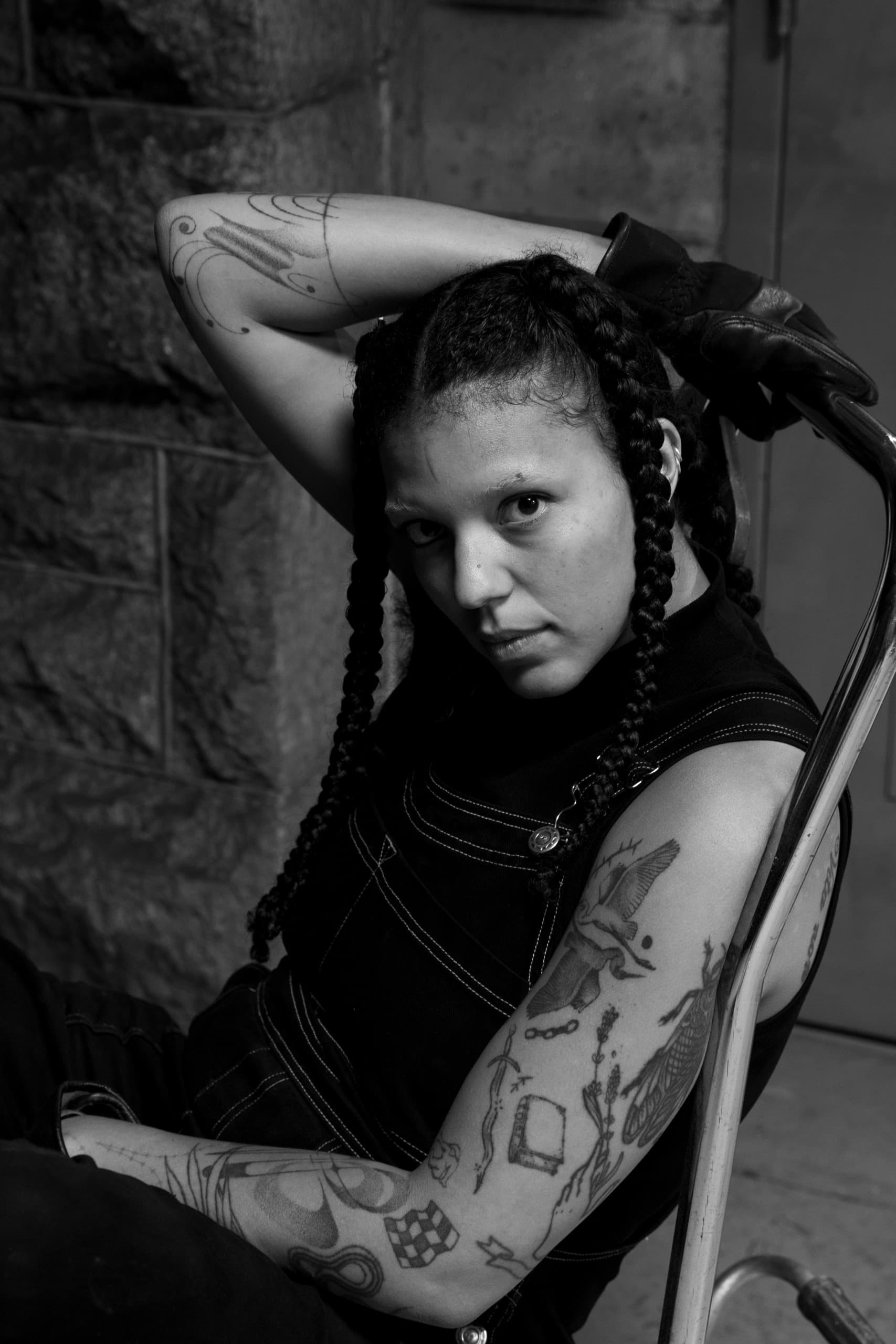
Camae Ayewa, aka Moor Mother, is an artist best described as transcendent.
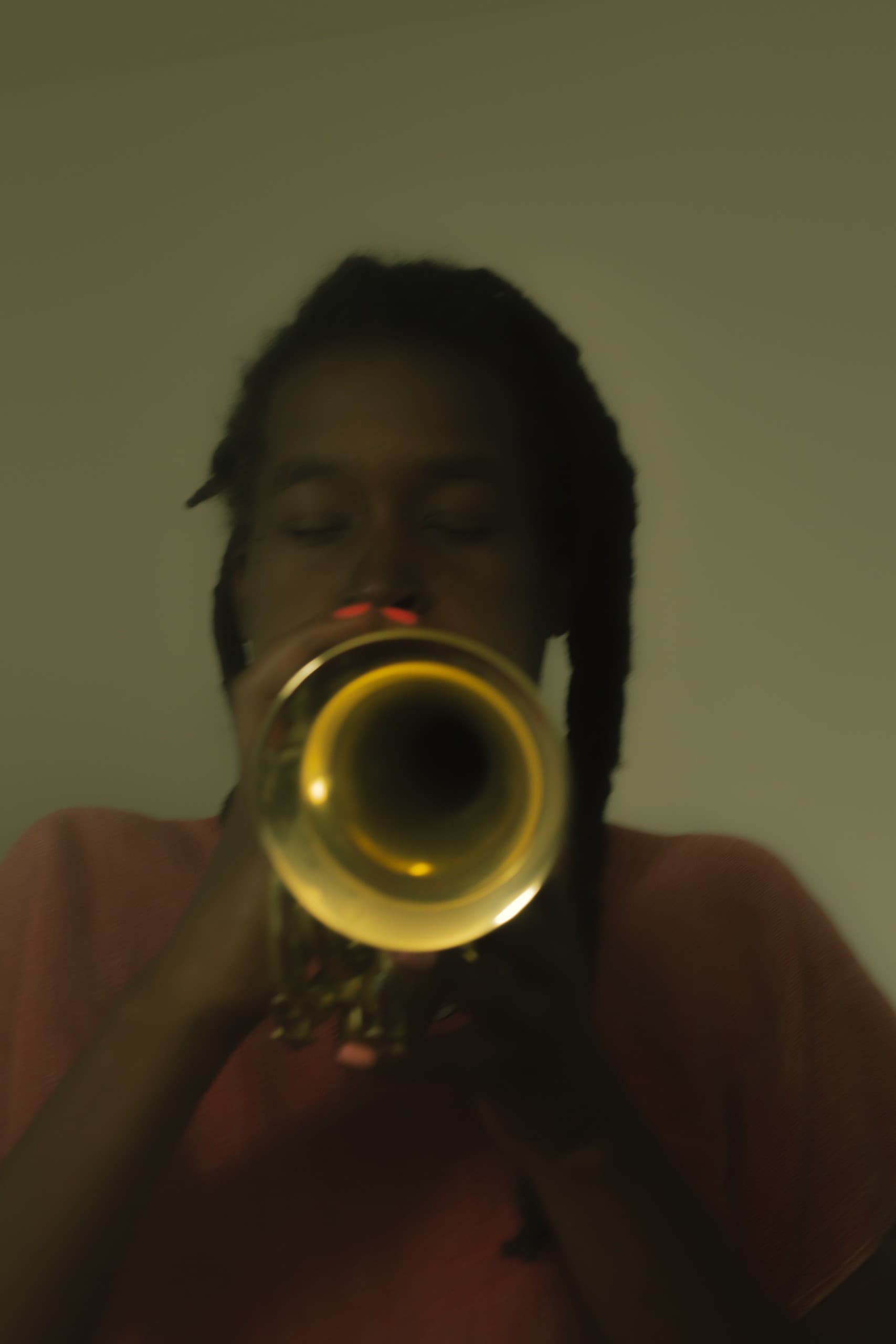
A musician, poet, sonic artist, storyteller, and one half of the interdisciplinary artist duo Black Quantum Futurism, she’s someone who can’t be pinned down by a single label.
Ayewa leans into the experimental, and that general ethos weaves through her style, sounds, and performances. She explores science, mathematics, future imaginaries, science fiction, and the past. She is a punk rocker, a jazz musician, and a rapper. Ayewa has something important to say, and she uses her creative talents deftly, communicating across mediums and to different audiences.
In September 2021 she released her latest album as Moor Mother, Black Encyclopedia of the Air, for which she identifies herself as both curator and conductor. The music videos, available on her website, represent a variety of aesthetics—from gritty CGI animation delivering punchy messages about gender and racial inequality to softer videos shot on pristine beaches. She is now working on collaborative records and her next solo album.
Together with Rasheedah Phillips (her other half in Black Quantum Futures), Ayewa also recently finished a short film, Write No History (2021), and the duo will be presenting work at documenta 15 in Kassel, Germany. Black Quantum Futures has also launched a new collective experiment called the Time Zone Generator on their website. Additionally, their project, Time Zone Protocols, which explores “local practices of time,” will take the shape of an exhibition and an “unconference” called Prime Meridian, presented by the Vera List Center in New York.
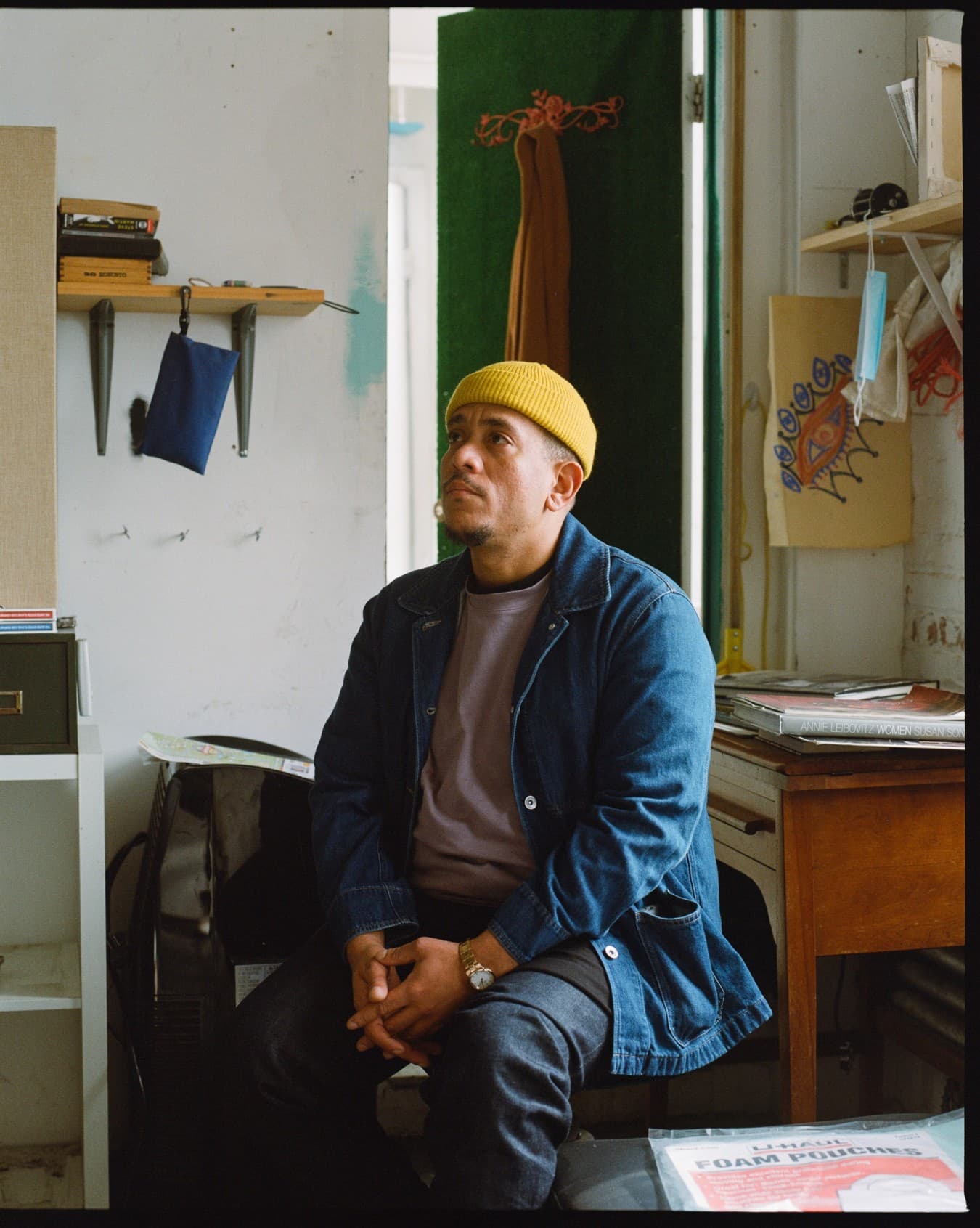
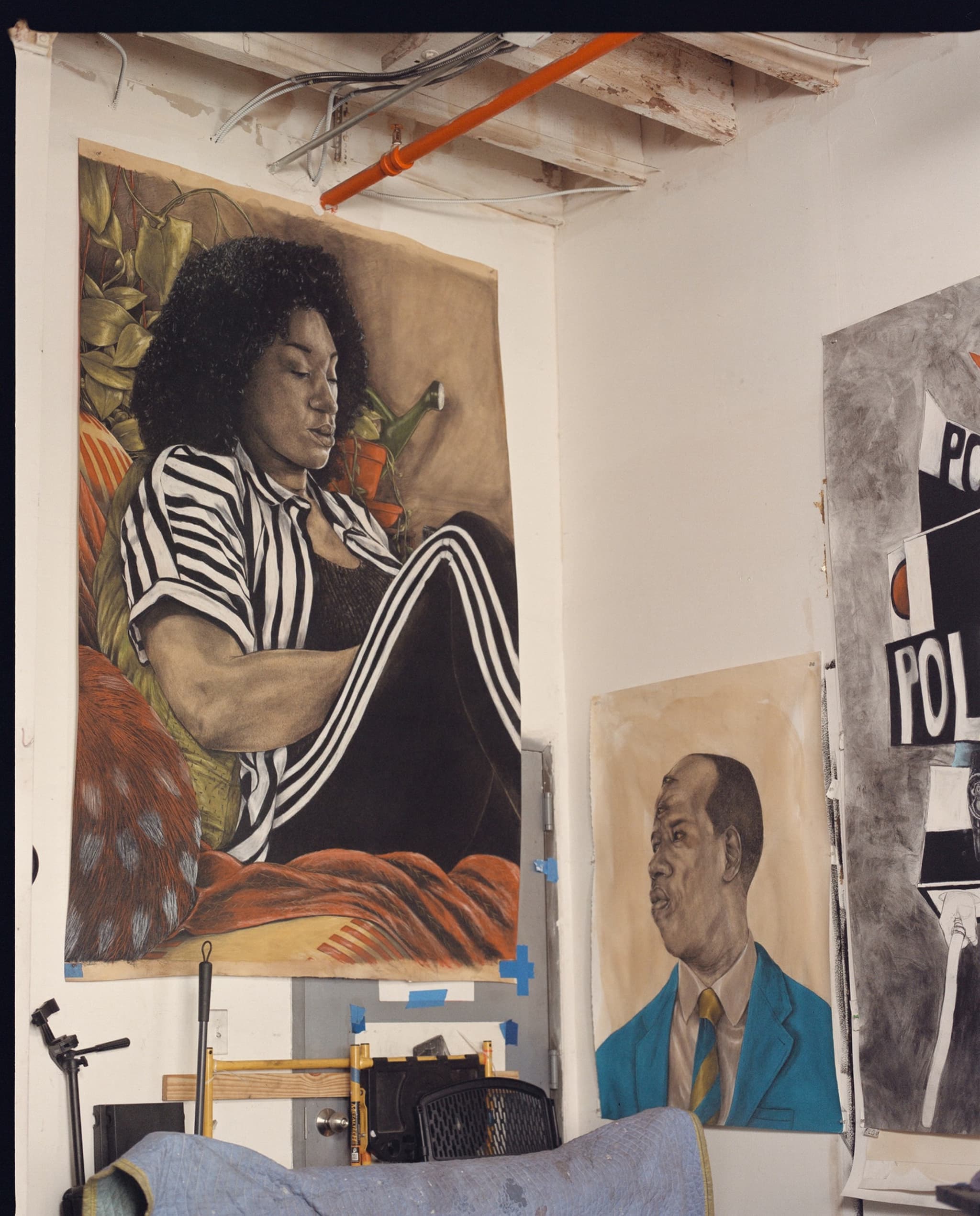
Between projects, we caught up with the prolific Ayewa at her new-ish studio in Los Angeles, where she relocated to from Philadelphia after accepting a position as assistant professor at the University of Southern California’s Thornton School of Music. She tells us a little about her space and gives us a peek into her creative process.
1. What’s the first step in your creative process? Where do you begin?
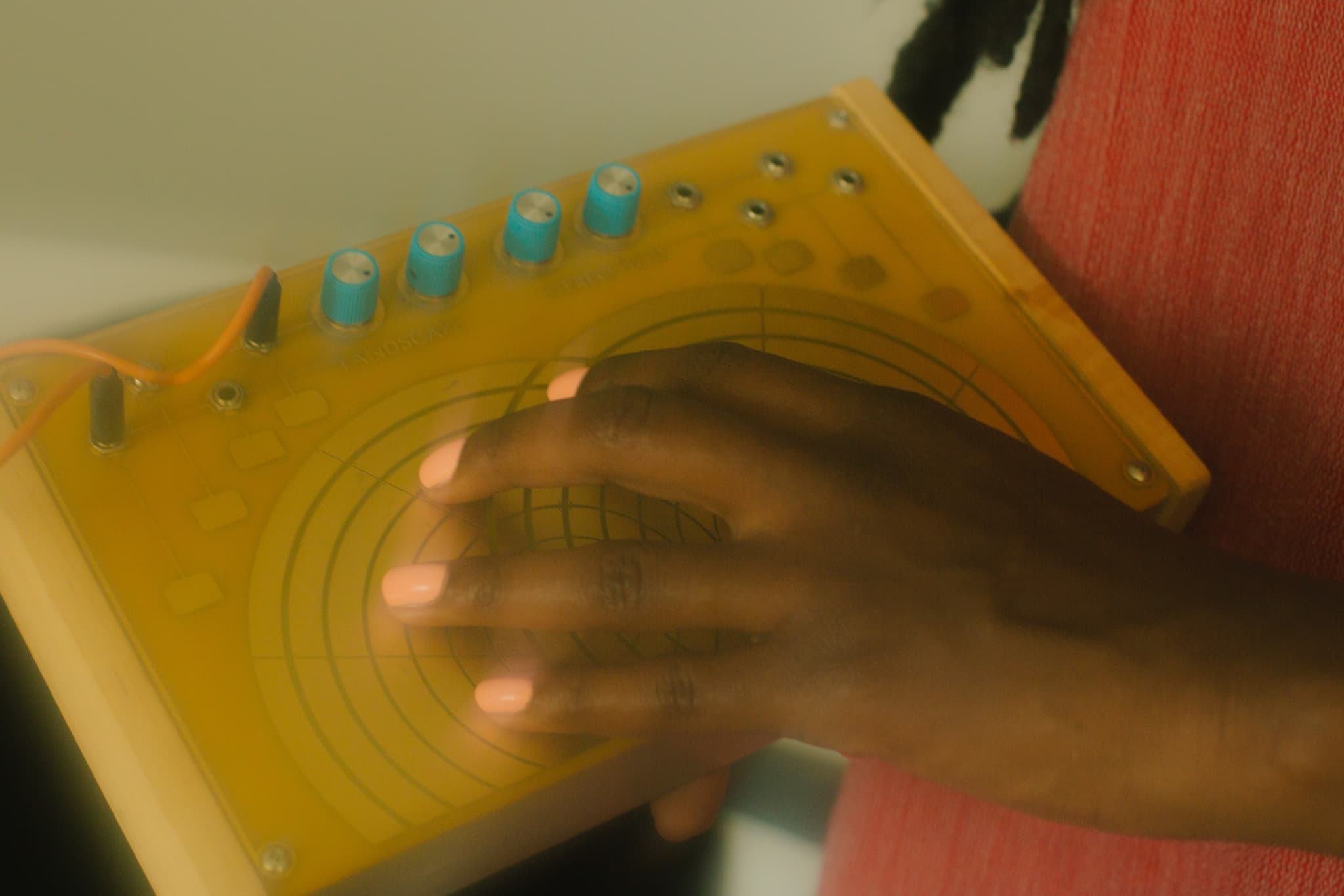
My first step is to sit down and plug in everything, then it’s time to go. From there I move through all my latest demos/projects.
2. If you had to describe your ideal creative space in three words, what three words would you choose?
Open, natural, light.
Intrigued by the sneak peek above? Wonderful.
Order your copy of Seen 004 today
to enjoy the full-length version.
Share
Related