(Reviews)
Renting the American Dream
A Review of Minari
Issue 002
AUGUST 3, 2021
[T]he reality for the Yis is that this dream is a rental, one that doesn’t fit the shape of their collective needs.
Chung—and the Yis—already know this about life in America. And the film reminds us of this lived reality when the Yis arrive at a church service about halfway through the film. A series of vignettes reveal racially fraught exchanges with the locals: David makes friends with one of the white boys, whose first words to him are, “Why is your face so flat?” Meanwhile, Anne patiently responds to a young white girl spewing racist gibberish who hopes to inadvertently utter a word of Korean. These moments are distinctly unremarkable, framed mostly in medium-wide shots using a long-focus lens that evoke a politely distanced observational aesthetic, in lieu of the conventional close-ups and quick cuts often used to depict interpersonal conflict. Chung deploys this careful visual grammar to capture many of the daily horrors that bubble and blister throughout the film.
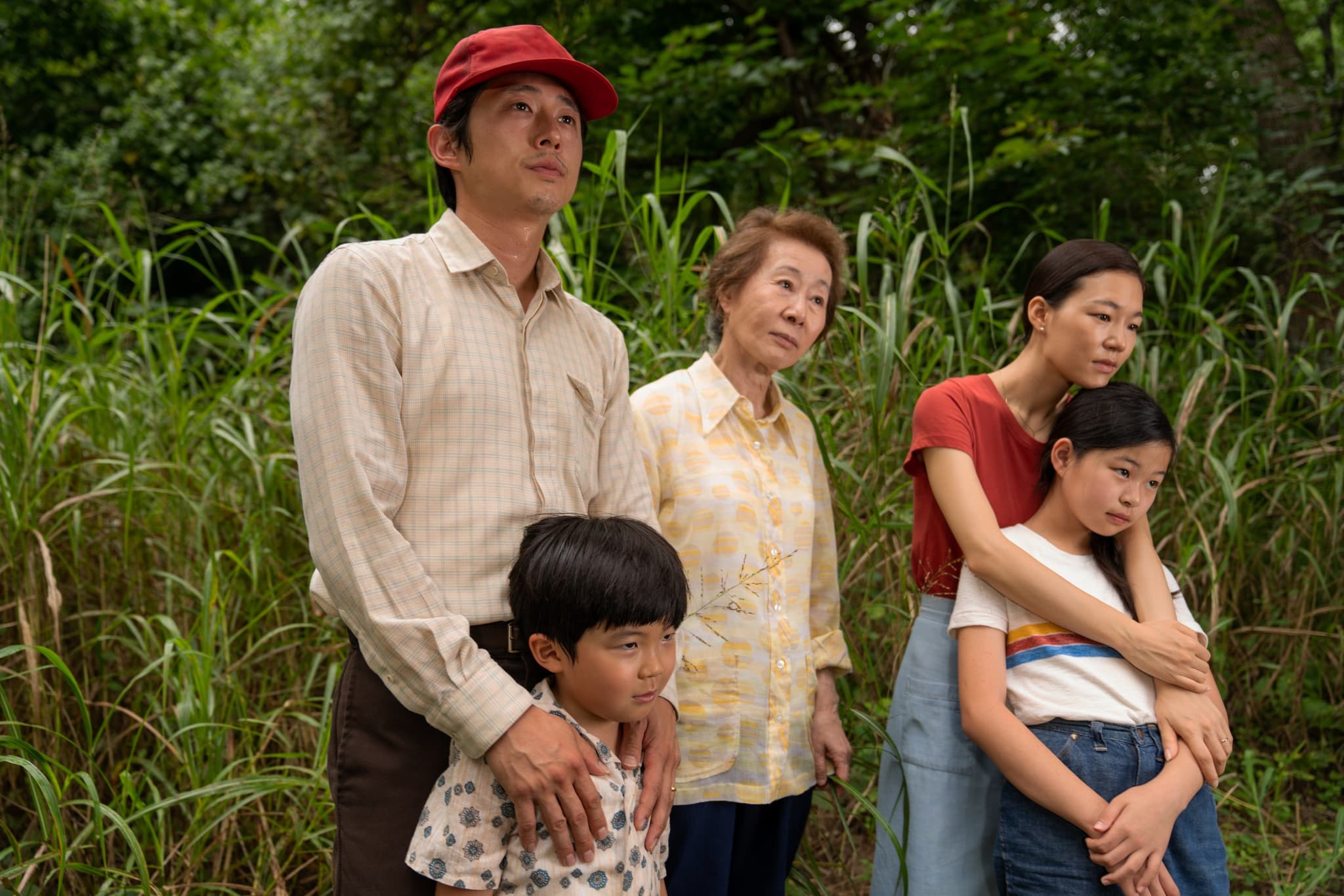
Despite being set worlds away, Minari brings a similar sentiment of life in the ongoing aftermath of unspoken trauma to the characters of Jacob and Monica, who have left all they know behind to shelter in a tiny trailer and try to start again. While they remain tight-lipped about what they had to endure to immigrate to the United States, the peripheral references to the Korean War and United States military interventionism in East Asia are apparent even in Minari’s rural Arkansas town.7 This is most explicit in the character of Paul (Will Patton), a white Korean war veteran whose friendly but strange overtures turn into an enduring relationship with Jacob as they work together on the farm, where the two bond while tending to the vegetables in the garden.
The problems of translation here are as internal to the family dynamic as they are between the film and a non- Korean-speaking audience.
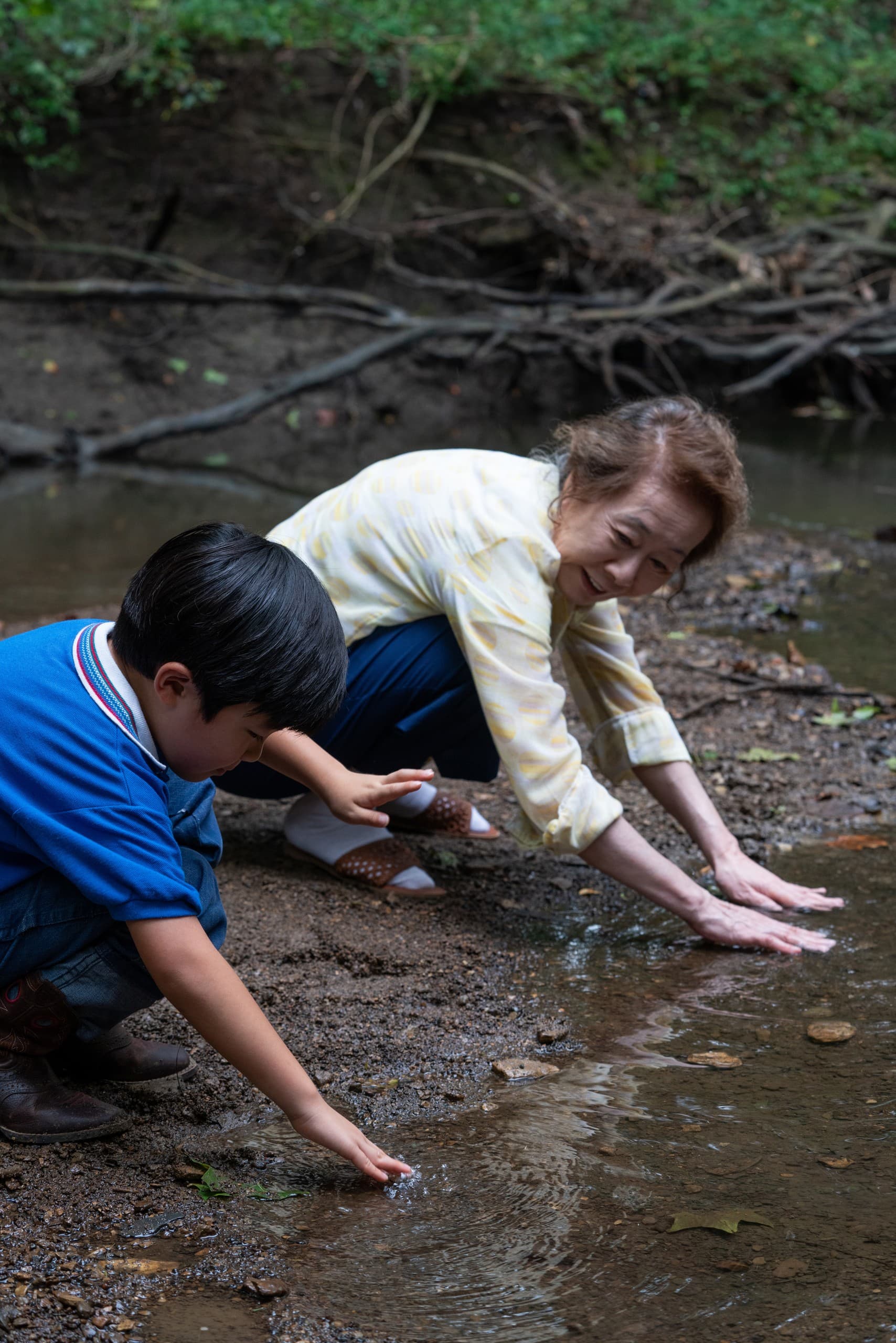
With the introduction of Soonja, these newly emerging routines are thrown into disarray. Soonja arrives with bags full of delicious foods and medicine for her family. She also plants the eponymous minari, a variety of Korean watercress, in the wilderness that borders Jacob’s precious plot of neatly farmed land without his knowledge. The metaphor of uprooted weeds surviving in the wilds of a foreign land is made explicit as we see the minari flourish without any oversight, in sharp contrast to Jacob’s increasing troubles with his farm produce, which has now cost him his savings and the family’s entire water supply.
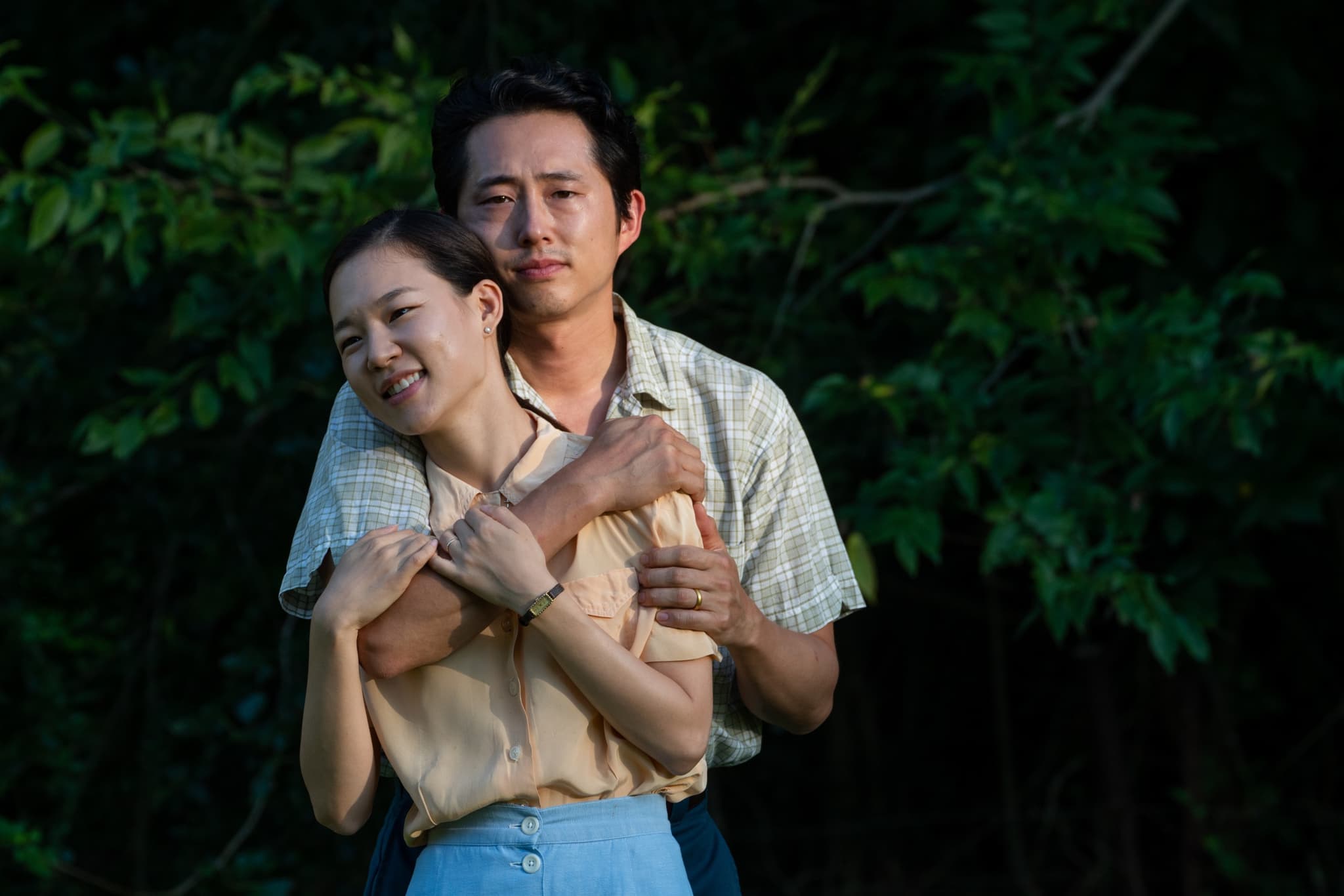
The narrative careens toward catastrophe in the final minutes of the film, with a tragic accident involving Soonja. Within the bounds of the story, this accident is just one more unfortunate event arising from a series of choices that the family, and specifically Jacob, make. But this event also highlights what’s left out of the frame: the real lack of public infrastructure that turns a minor domestic incident into a life-threatening event. In this sense, Minari is a very American story, one of a government that has subjected its poorest and most needy to absolute systemic abandonment, and sold that sense of isolation as the mark of true individual freedom.
1.Lee Issac Chung, “Artist: Lee Isaac Chung,” Image, https://imagejournal.org/artist/lee-isaac-chung/.
2. Willa Sibert Cather, “Nebraska: The End of the First Cycle,” The Nation 117 (September 5, 1923): 236-38.
3. Caity Weaver, “Wait — Who Runs the Hollywood Foreign Press Association?,” New York Times, January 10, 2019, https://www.nytimes.com/2019/01/10/style/hfpa-golden-globes.html.
4. Josh Rottenberg and Stacy Perman, “Who really gives out the Golden Globes? A tiny group full of quirky characters — and no Black members,” New York Times, February 21, 2021, https://www.latimes.com/entertainment-arts/business/story/2021-02-21/hfpa-golden-globes-2021-who-are-the-members.
5. Glenn Whipp, “Review: After an exhausting 2020, the gentle ‘Minari’ is the movie we need right now,” Los Angeles Times, December 10, 2020, https://www.latimes.com/entertainment-arts/movies/story/2020-12-10/minari-review-steven-yeun.
6. See Jane Hu’s response to this line of criticism in “The Specificity of ‘Minari,’” The Ringer, February 21, 2021, https://www.theringer.com/movies/2021/2/17/22286185/minari-review-asian-american-representation.
7. Peter Kim George, “Minari Isn’t Really About the American Dream. It’s About US Empire,” Hyperallergic, February 11, 2021, https://hyperallergic.com/621441/minari-review-steven-yeun/.
8. See Summer Kim Lee on these scenes of quotidian gendered labor in Minari: “Greener Pastures,” Artforum, February 11, 2021, https://www.artforum.com/film/summer-kim-lee-on-isaac-lee-chung-s-minari-2021-84988.
9. Anne Anlin Cheng, “The Double Meaning of the American Dream,” The Atlantic, February 19, 2021, https://www.theatlantic.com/culture/archive/2021/02/minari-lee-isaac-chung-visual-melancholia-american-dream/618064/.
Share
Related