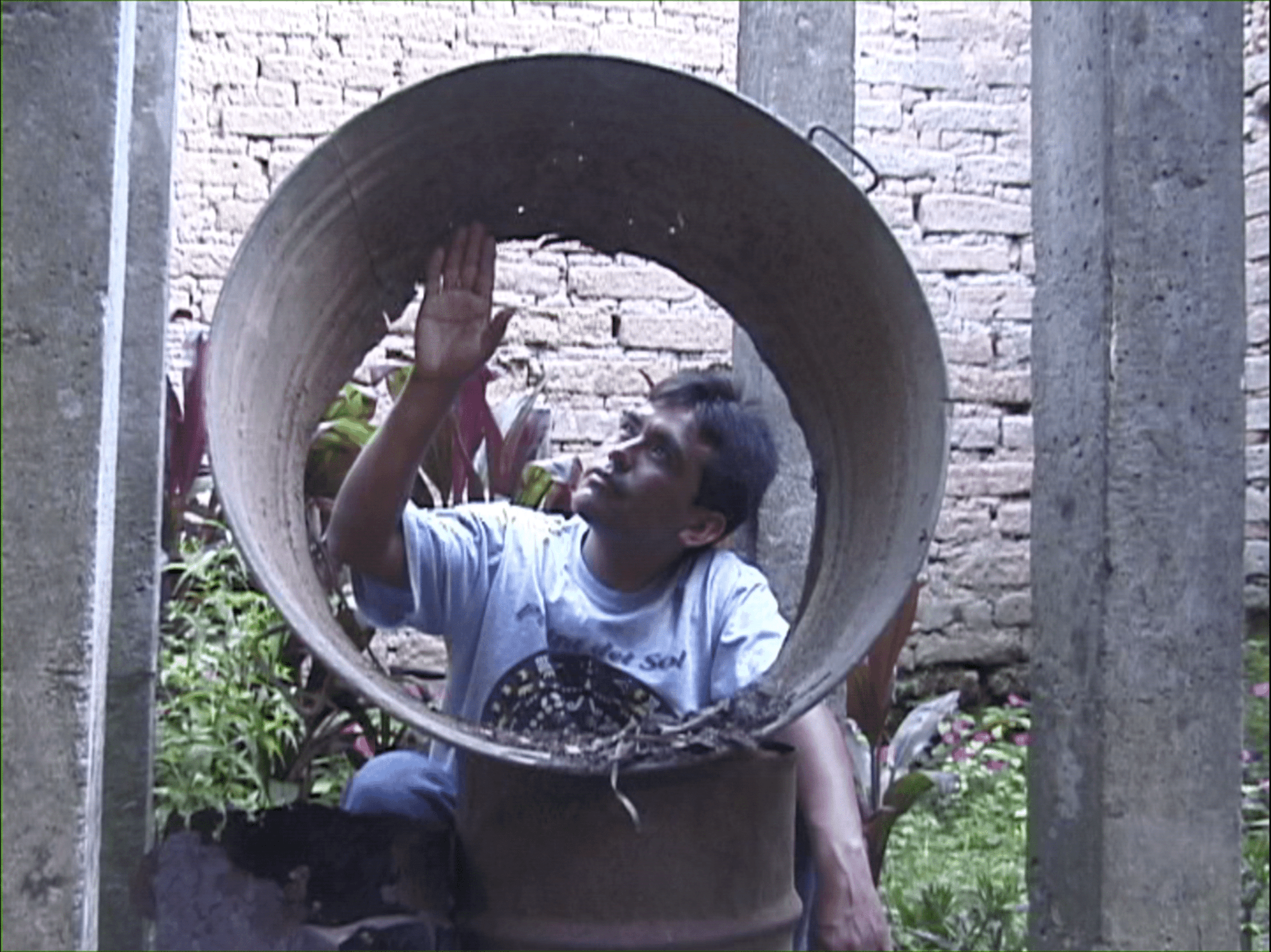
Mood (2014). Film still courtesy of Hermenegildo Rojas.
(Essays)
Archival Impulse
The Desire of the Narrator
Issue 002
AUGUST 3, 2021
“The alchemy of the archive: it is supposed to belong to everyone. The community of time, the feeling according to which we would all be heirs to a time over which we might exercise the rights of collective ownership: this is the imaginary that the archive seeks to disseminate.”
But since the late 1990s, access to video cameras and the knowledge required to produce our own images have become increasingly common, allowing more autonomous types of stories to be told. However, ethnographic and self-determined depictions do not usually inhabit the same spaces. The former exist in public and private archives, while the latter are often kept in family collections or stored by the creators themselves.
Commemorating vivid experiences via audiovisual storytelling plays a key role in preserving cultural knowledge. It serves as our own way of representation. But what happens to those images when they are stored and preserved in archives? Should we desire the archive? Should we claim for ourselves these modes of accumulating, categorizing, keeping, and safeguarding? Do we wish to appropriate the categorical language of the museums, encyclopedias, and archives that have been complicit in conquering our territories?
Do we wish to appropriate the categorical language of the museums, encyclopedias, and archives that have been complicit in conquering our territories?
Approaching the concept of the archive from an Ayuuk perspective creates a space for dialogue about the permanence of pictures and their potential for preserving local memory. This requires the value of the images to be continually reiterated to benefit the common interest, and a preservation perspective is a necessary step to get there. The short video Éstado de Ánimo (Mood; 2014)2 offers an example of what can happen when such images sit dormant. The found-footage video was recorded by Genaro Rojas when he was working as an elementary school teacher in San Juan Juquila Mixes, and highlights concerns about the potential of memory that inhabits forgotten objects, as well as the need to create tales of both what they meant to others and what these memories offer for multiple contemporary readings. Recorded at the turn of the century, it sat for more than ten years until Hermenegildo and Carlos Pérez (cousin of the Rojas brothers) began working on a collaborative documentary, Barras de Color (Color Bars), about TV Tamix’s history.
Seated before the camera in Mood, Genaro is visibly frustrated, aware that dusk is approaching and worried about not having enough light to record the objects before him: cups, mezcal bottles, dustpans, and more. He ponders the possibilities of using video as a tool to impress this moment, saying: “These objects are abandoned now. Forgotten in some corner. No one sees them. They seem totally useless. All these objects you are seeing are part of my surroundings. I live with them; I share this part of the Earth with them.” Genaro’s concern for the objects in the shabby courtyard parallels a later problem: the deterioration of the cassettes on which the images from TV Tamix are preserved.
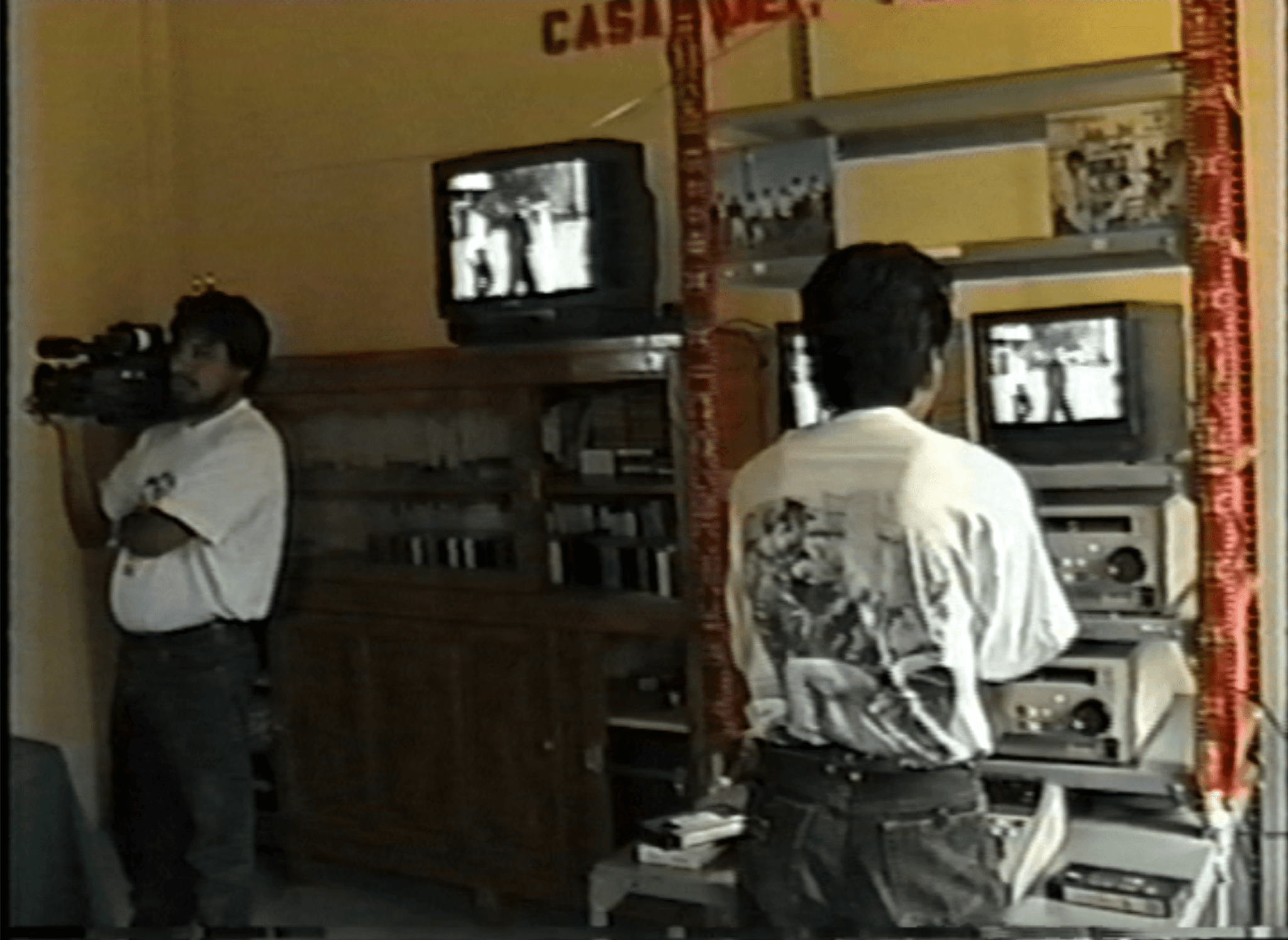
Tamazulápam del Espíritu Santo, circa 1992, Oaxaca, México. Image from TV TAMIX Archive, courtesy of Hermenegildo Rojas.
In this context, I ponder the meaning of the archived image. Why does it become a desirable project to generate spaces to contribute to a community’s culture via reflection, discussion, and creation? I understand the desire of archiving—collecting, safeguarding, cataloging, and sharing with a community—as a response to the anguish of forgetting lost or waning community traditions and as an engine of action to maintain them.
Mood addresses two concerns: the imminent deterioration of the magnetic tape these cultural memories had been recorded on and the quest for recognition of TV Tamix’s importance to its community. This idea was described by Hermenegildo as: “Exta’n pujxjetyp tamp. Exta’an jëk pëjkëkp. Exta’n jëk pëjkmujkp, exta’n jëdëkojk jënpejtp.” Translated from the Ayuuk language into English, this means: “An audiovisual work is in itself an archive that encloses our lived experiences. An accessible archive is an archive that stays alive in order to be able to appreciate those lived experiences again.”
I understand the desire of archiving—collecting, safeguarding, cataloging, and sharing with a community—as a response to the anguish of forgetting lost or waning community traditions and as an engine of action to maintain them.
The importance for communities to have their own space for historical documentation is a common concern among archivists. These spaces frequently develop discussions about how land possession has changed, the relationship between Indigenous communities and the central government, and the ownership of memory through appropriated images. However, they often fail to gain collective support for activities such as fundraising and do not have enough resources to properly catalog or attend to the archives. This is often exacerbated by prohibitive technical vocabulary surrounding archives, which prevents some communities from seeing them as a priority.
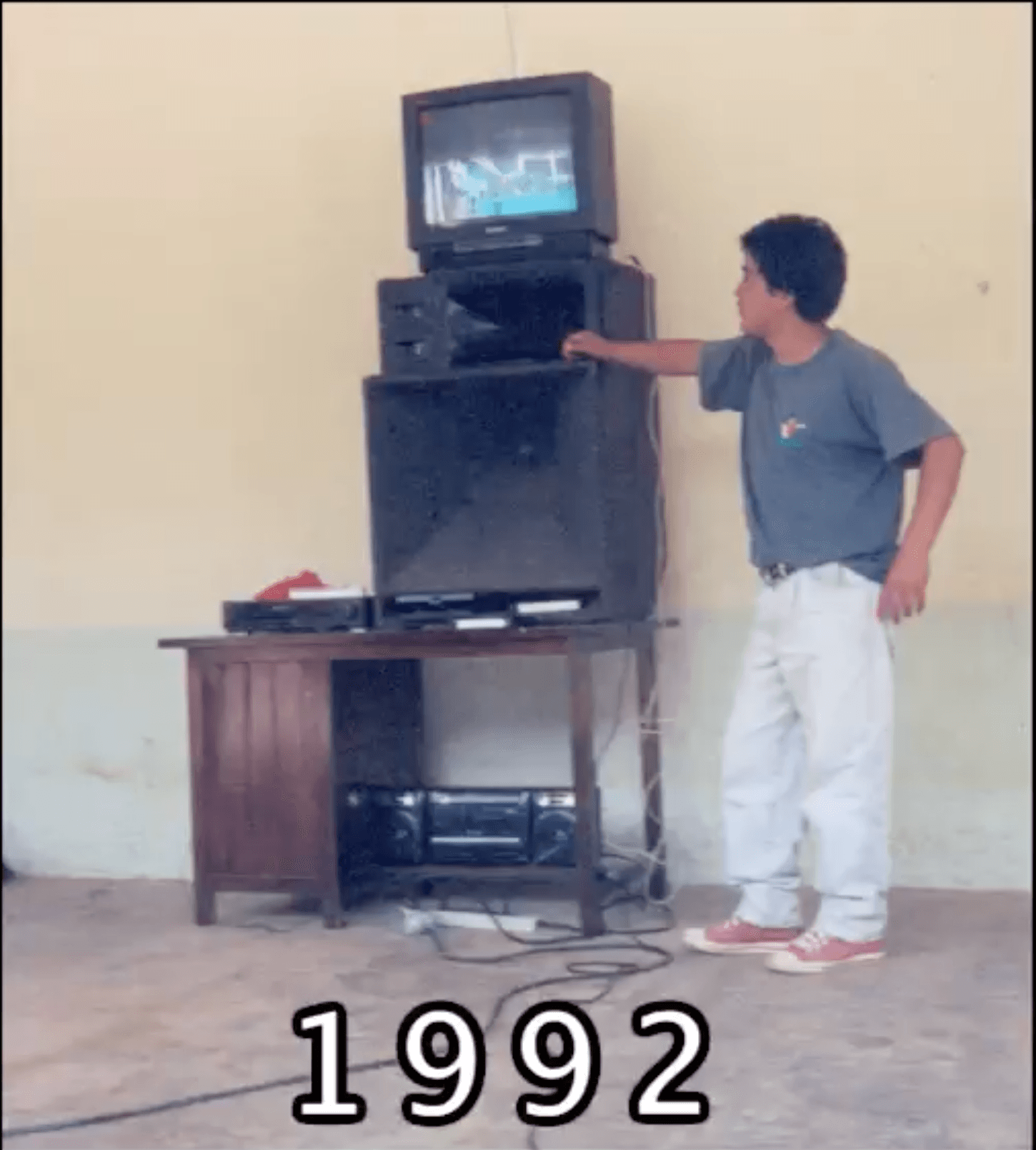
Tamazulápam del Espíritu Santo, 1992, Oaxaca, México. Image from TV TAMIX Archive, courtesy of Hermenegildo Rojas.
Finally, for archivists, people dedicated to an archive, and whoever wants to narrate archive images—their own and those of others—the goal is to generate connections between members of the community. In this way, the archive is imagined and constructed as a place for the dialogue. As in Mood, these documentation processes reveal the importance of listening to those who narrate found objects, giving a new meaning to the images created by others.
1. Achille Mbembe, “The Power of the Archive and Its Limits,” in Refiguring the Archive, eds. Carolyn Hamilton, Michèle Pickover, V. S. Harris (Heidelberg: Springer Netherlands, 2002), 19–27.
Share
Related